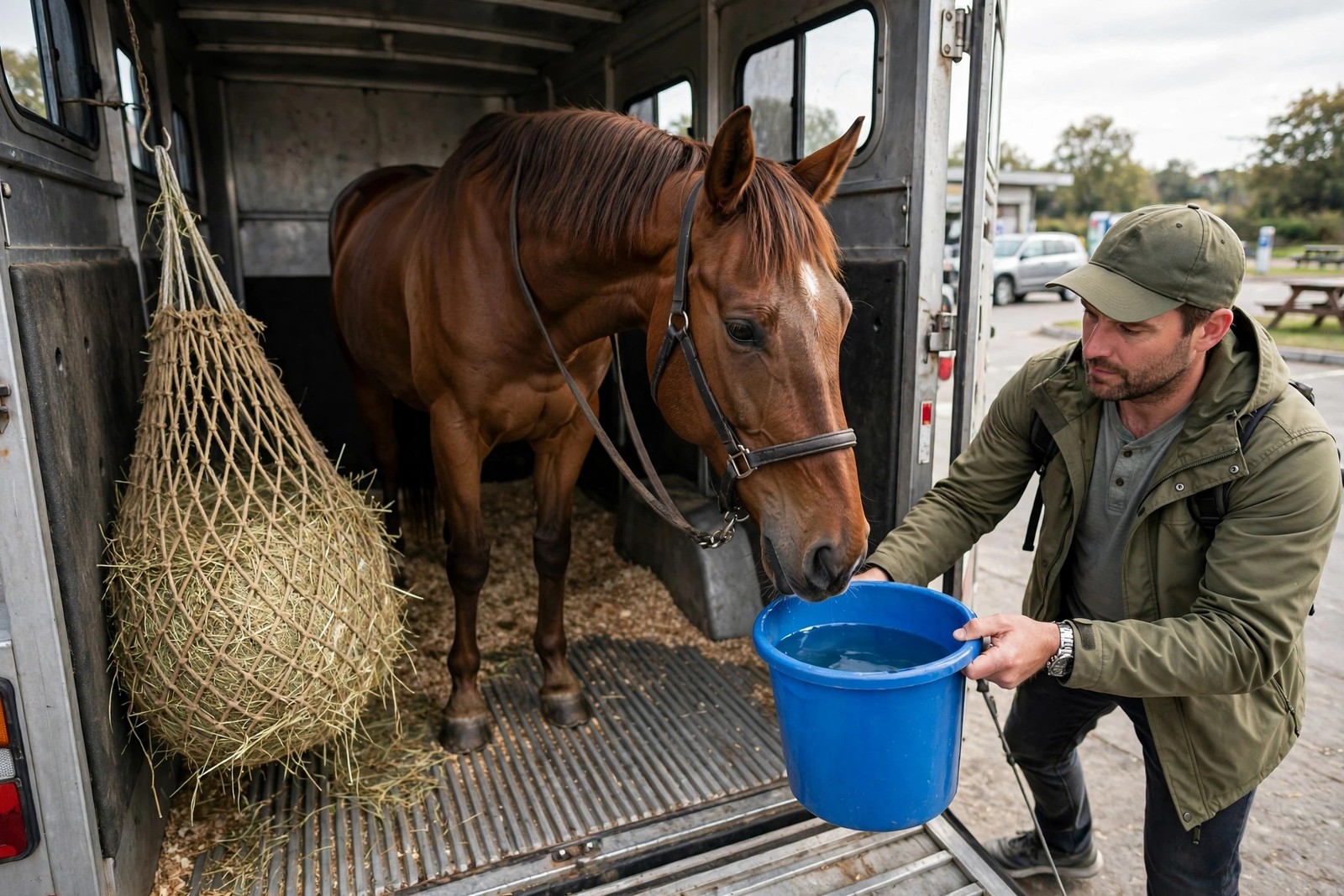
Stop every 3 to 4 hours when you are travelling a horse, and make each stop last about 30 to 45 minutes. At the stop, offer water, top up hay if the horse travels with a net, check legs, breathing, and droppings, and let the horse stand still on a parked trailer or lorry so the muscles it uses constantly for balance can rest. On that pattern, two driving legs of 3 to 4 hours each, plus one 30 to 45 minute stop between them, make a travel day of about 6.5 to 8.75 hours in total. A longer day than that calls for unloading the horse overnight somewhere it can lie down, drink, eat, and pass droppings normally, rather than pushing on with extra roadside stops.
Why horses tire in a trailer even though they are only standing
A travelling horse is working. Every acceleration, brake, and bend asks it to brace and rebalance, usually with its head held higher and more fixed than it would choose, which also makes it harder to clear dust and mucus from its airways. Heat builds up in a stationary or slow-moving box, and many horses drink less than they need because the water, the bucket, and the motion are all unfamiliar. Fatigue, dehydration, and respiratory strain therefore build on time, not on miles, which is why the stopping interval is set by the clock.
Plan the route around the stops before you set off: fuel stations and services with room to park a long outfit safely, and somewhere level to stand away from traffic for the check. Leaving the horse loaded while you take a long break indoors is not a rest stop for the horse unless someone performs the watering and checking.
What to do at each stop
Offer water first and give the horse several unhurried minutes to decide, because many horses refuse the first offer and drink at the second. Note whether it drank, how much hay it has eaten, and whether there are droppings in the box, since a horse that has produced none across two stops, is off its hay, is sweating heavily at rest, or is breathing fast with flared nostrils needs veterinary advice before you continue, not simply more miles. Run a hand down each leg for heat or filling, check ropes, partitions, and any travel boots or bandages for slipping, and look at ventilation: openings should move air through without a direct blast on the horse.
Do not unload at ordinary roadside stops unless the place is enclosed and genuinely safe; unloading and reloading beside traffic adds risk and stress, and a horse standing quietly on a parked box recovers well. Full unloading is for the overnight halt, into a stable or secure pen with water, forage, and bedding.
Building the whole journey around the horse
Travel in the cooler parts of the day in hot weather and build the overnight halt into the booking, not in as an afterthought once the horse is already tired. A horse new to travelling, a young horse, or one returning from illness should have shorter legs and a shorter day than an experienced traveller. Arrive with time in hand, because a horse that has travelled well still needs an hour or more to drink, urinate, eat, and settle before it can fairly be expected to work.
Write the plan down for anyone sharing the driving or meeting you at the overnight stop: leg lengths, stop tasks, what the horse drinks from, and who to call if something looks wrong. KinsLe's Care Pass gives that helper temporary, time-limited access to your horse's journey plan and care details for the trip, so the stops happen to the same standard whoever is on duty.