
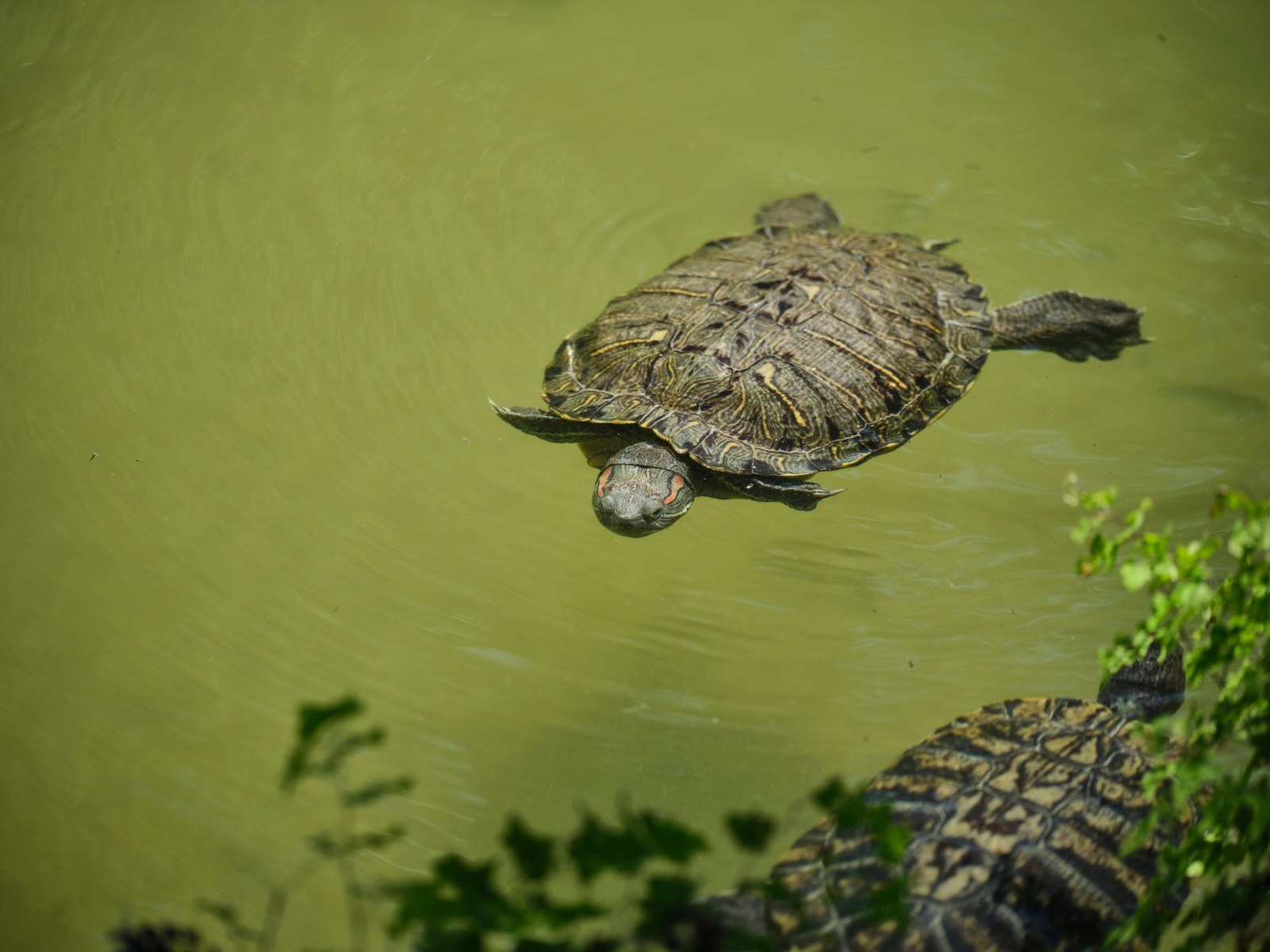
A weekly check keeps a turtle tank honest: measure ammonia, nitrite, and nitrate with a liquid kit before small drifts turn into filter trouble. Test more often in a brand-new tank, after a filter cleaning or media change, and whenever your turtle seems off. Ammonia and nitrite should read zero; nitrate should stay low, kept in check with regular partial water changes.
What the Big Three Numbers Mean
- Ammonia comes from droppings, uneaten food, and rotting debris. It irritates your turtle's skin, eyes, and lungs and is the first thing chlorine-like stress shows up as.
- Nitrite is the next stage of the nitrogen cycle. Healthy filter bacteria convert ammonia into nitrite and then into the far milder nitrate.
- Nitrate is the end product. It is much safer, but turtles are messy eaters and big producers, so nitrate creeps up steadily and only comes down with water changes.
A reading above zero for ammonia or nitrite is your signal that the filter bacteria cannot keep up — usually the tank is new, the filter was cleaned too aggressively, or the waste load jumped.
How to Test Without Fooling Yourself
- Use a liquid test kit rather than dip strips. Strips are convenient, but they expire, read inaccurately in stored samples, and many keepers find them inconsistent.
- Test before a water change, not after — a fresh change can hide the very problem you are trying to spot.
- Scoop water into the test tube from the tank, not from a cup that has seen soap or food.
- Read the color in natural daylight against the kit's chart, and jot the numbers down somewhere. A single reading is a snapshot; three weeks of numbers show you the trend.
When to Water Change and When to Worry
Swap a portion of the water weekly — roughly a quarter to a third is a workable share — using dechlorinated water at a similar temperature. If ammonia or nitrite shows anything above zero, do a larger partial change that day and test again the next; if it keeps rising despite that, the filter likely needs attention or the tank is overstocked for its size, and an aquarium or reptile vet can talk you through it.
New tanks deserve extra vigilance: the beneficial bacteria that run the nitrogen cycle take time to establish, and a new setup can spike ammonia before anything looks wrong to the eye. During that first stretch, testing every couple of days is worth the small effort.
Water Questions to Ask Before a Small Drift Grows
Weekly numbers are only useful if you know what to do with the odd one. Ammonia shows a faint reading the week after a deep filter clean — did the cleaning set the bacteria back, or is waste outpacing them? Nitrate climbs faster than your usual quarter-to-third change can hold — change more water, change more often, or feed in a separate container? A test taken after a water change looks perfect while the pre-change trend does not — which reading should you trust? Working through questions like those before you change more water keeps a small drift from becoming a filter problem.
For a question that outlasts the chart — why nitrate climbs so fast, or what a filter setback does to ammonia — put a follow-up question to KinsLe's Kinny; he answers using the KinsLe Answers library.