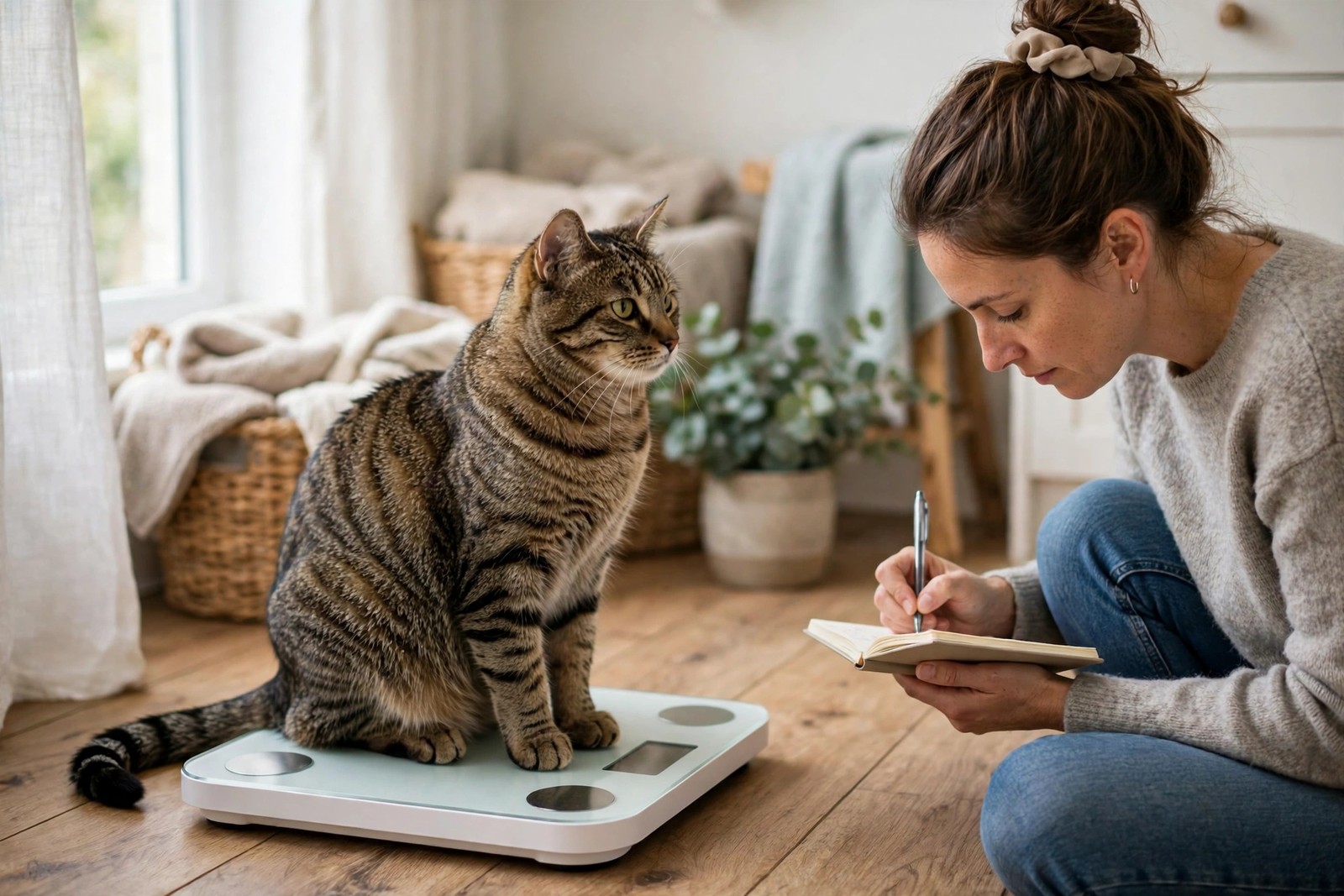
For a healthy adult, a monthly weigh-in hits the balance: often enough to spot a drift while it is still small, spaced widely enough that day-to-day fluctuation cannot lead you astray. Kittens, still growing, need the scales every week or two; seniors and any cat following a weight plan do better with monthly weigh-ins plotted against a target you have agreed with your vet. The easiest accurate method at home: step on bathroom scales holding your cat, then weigh yourself alone and subtract. Weigh at a similar time of day and write the number down with the date — memory is not a trend.
What Changes Mean
On a typical 4–5 kg cat, a change of 200–300 grams is meaningful. Slow gain usually traces to measured-food drift, extras and treats, reduced play in winter, or a post-neutering appetite — fix it with weighed portions and play, never by sharply cutting food, since rapid loss in an overweight cat risks a serious liver condition. Unexplained loss is the more important signal: it can be an early sign of thyroid, kidney, dental, or gut problems, especially in older cats, and it often appears before any other symptom. That is why the monthly number is a health tool, not just a diet tool.
Taking the Numbers to Your Vet
A weigh-in log is observation, and observation is where your role ends — diagnosis belongs to the veterinarian. Note when a change began and what moved alongside it: appetite, thirst, energy, litter habits. Reading guidance like this can help you judge how urgent a trend feels and what else to track, but an examination is what turns a falling line on a chart into a cause, and the vet will read your dated numbers far more usefully than a summary offered from memory.
Report unexplained weight loss — or gain — at the next appointment, and book promptly if the change is fast (half a kilo within a month), or comes with appetite, thirst, or energy changes. Bring your weigh-in log; vets genuinely use it.
Let the monthly entries sit inside a wider dated health log rather than on a scrap of paper: weight alongside appetite, water intake, toilet habits, energy, and any symptom with the day it started. A lone number can mislead; a number in context shows whether the cat is eating less, drinking more, or simply moving less through winter. Look back over that log whenever life changes — a new home, a new pet, a new medication, or a new life stage all shift what 'normal' weighs for your cat.
At appointment time, the log earns its keep when it travels with the rest of the record instead of staying on the kitchen counter. In KinsLe, the Pet Passport keeps everything unified — weigh-ins, vaccination record, and visit history in a single portable packet that goes to the vet, into boarding, or across a handover intact.