
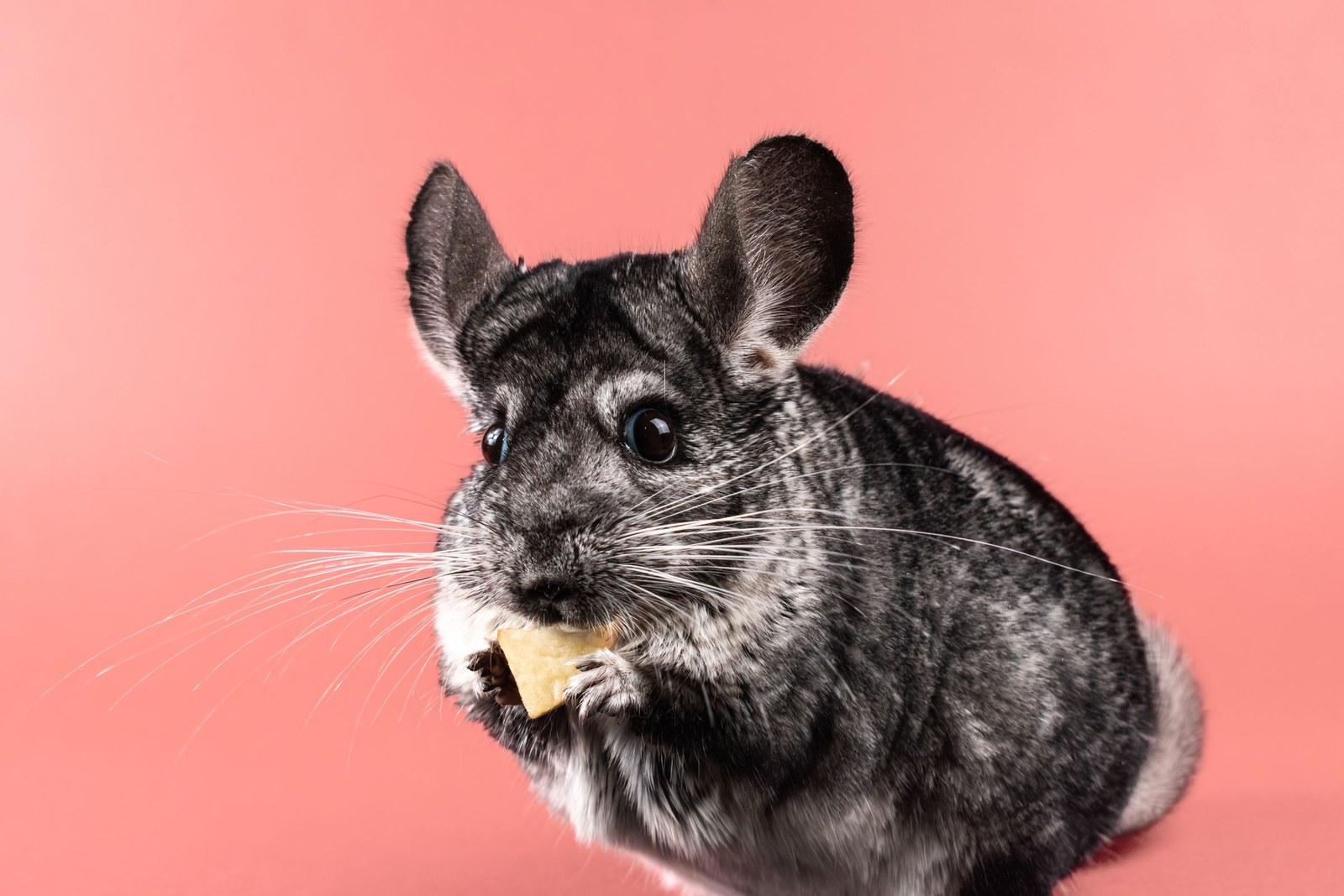
Most chinchillas should be offered a dust bath two to four times a week, for about 10 to 15 minutes at a time. Place a sturdy container of proper chinchilla dust in their space, let them roll enthusiastically, then take the bath away again — leaving it in full-time tends to dry out their skin and eyes and quickly turns the dust into a toilet.
Why Dust, and Never Water
A chinchilla's coat is among the densest of any land mammal, with many fine hairs sprouting from each follicle. That plush coat keeps them warm in cold mountain air, but it creates a problem in water: the fur traps moisture against the skin and dries extremely slowly, which can chill the animal and encourage skin problems. Chinchillas should never be bathed in water.
Dust bathing is their natural solution. Rolling in fine volcanic dust draws oils and loose dirt out of the coat and leaves the fur soft, clean, and full. It is also clearly enjoyable — most chinchillas dive in the moment the bath appears, flipping and twisting with total commitment.
Dust Is Not the Same as Sand
Buy dust sold specifically for chinchillas, not sand and not generic small-pet bathing products. Chinchilla dust is fine enough to penetrate that dense coat; sand is too coarse, does a poor job, and can irritate eyes and skin. A little dust goes a long way — a layer of roughly an inch or two in the bath container is plenty, and you can sift out debris and top it up between uses, replacing it fully once it looks soiled or clumpy.
Running a Good Dust Bath Session
Use a heavy ceramic, metal, or purpose-made bath house that will not tip when a chinchilla launches into it. Offer it during your chinchilla's active evening hours, supervise lightly, and stick to short sessions. Bathing too often can dry the skin and make the coat look dull rather than glossy, while bathing too rarely lets oils build up and the fur become stringy and clumped. Two to four sessions a week is the sweet spot for most healthy chinchillas.
A few practical tips:
- Offer the bath outside the cage during playtime if you want to keep the cage cleaner
- Keep the dust away from food and water bowls between sessions
- Store the dust dry and sealed so it stays fine and effective
- Watch the skin for flakiness, which can mean baths are too frequent
When to Talk to a Vet
If your chinchilla's fur becomes matted, patchy, or develops bald spots, or if they scratch persistently despite a sensible bathing routine, that is a conversation for an exotic-animal veterinarian rather than something to solve with more dust. Skin and coat changes can have causes that a bath cannot fix, and a vet who knows chinchillas can sort out what is going on.
Sharing Dust Bath Duty Through KinsLe Care Pass
Dust bath timing is an easy detail for a helper to get wrong — too often, too long, or the bath left sitting in the cage. KinsLe's Care Pass lets you share dust bath instructions through a temporary scoped link, and the person helping needs no account or app on their end to follow them exactly. For one weekend only, the neighbor who feeds your chinchilla gets the Care Pass file on KinsLe, and that file shows just bath timing, fresh dust depth, and how long each rolling session should last.