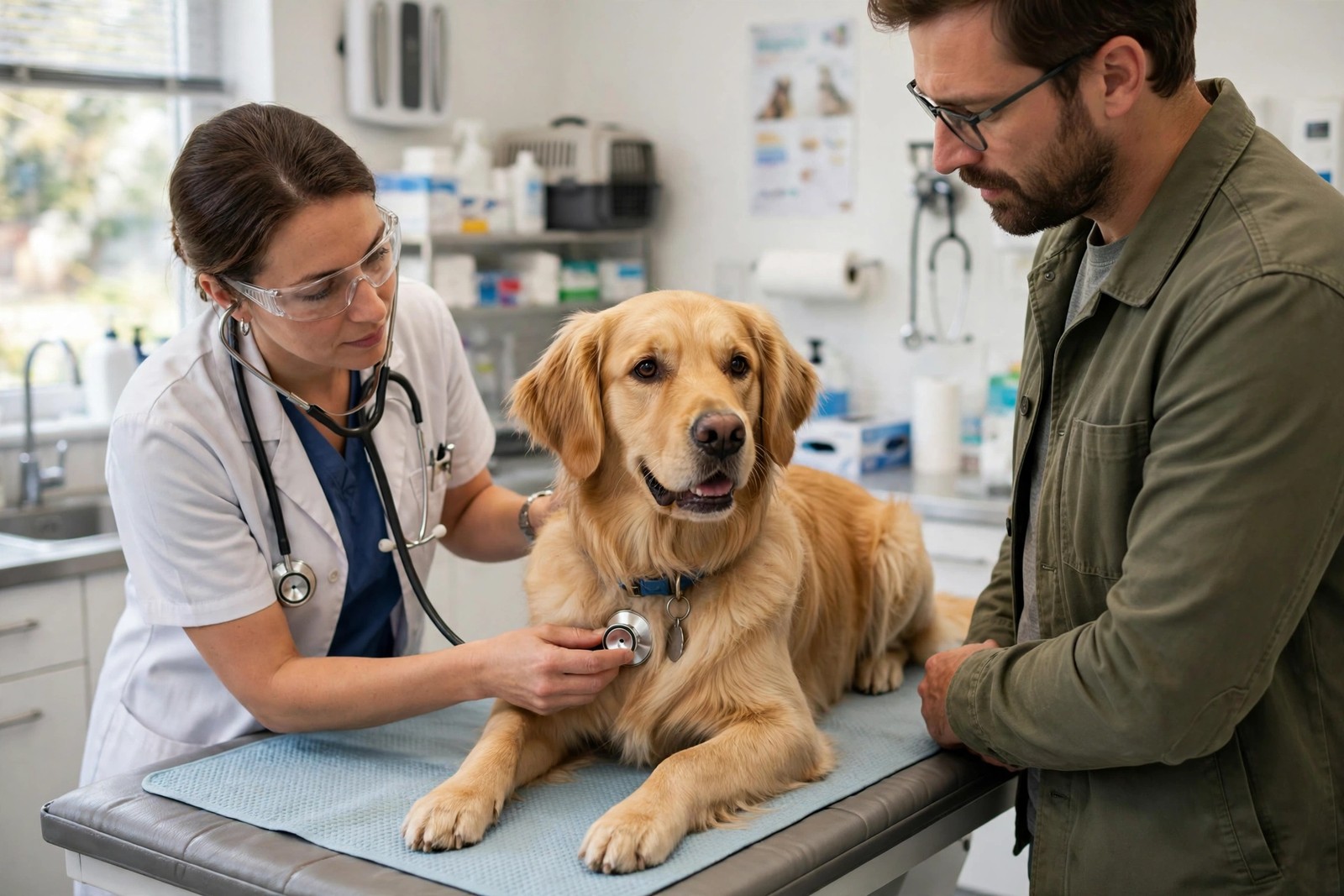
How often your dog needs the vet depends mostly on life stage. A healthy adult is normally seen once a year for a full checkup, usually timed with booster vaccinations; a puppy's first months involve a run of appointments for vaccinations, worming, and growth checks; and an older dog — from around seven in large breeds, somewhat later in small ones — is usually better served by twice-yearly visits, when earlier blood tests can pick up age-related change. Dogs with ongoing conditions, on long-term medication, or recovering from illness follow whatever schedule their own vet sets.
What a Checkup Actually Covers
A routine visit is more than a jab: nose-to-tail examination, heart and lungs listened to, teeth and gums graded, weight and body condition scored, coat and skin checked, vaccination and parasite control reviewed, and a chance to raise the small things — a new lump, a changed appetite, slower stairs. That yearly conversation is where feeding, exercise, and behaviour get recalibrated for age. Keeping your own notes between visits (weight, appetite, any symptoms with dates) makes the checkup far more valuable, and keeping vaccinations recorded in one place means boosters never quietly lapse.
Booking Between Checkups
The annual or twice-yearly rhythm is a baseline, not a reason to wait when something changes. Appetite or thirst shifts, unexplained weight change, a new lump, persistent coughing, limping, or a clear change in behaviour each merit their own appointment, booked when you notice them rather than saved up for the next routine visit. Your between-visit notes earn their keep here: when a cough started, how drinking has changed over a fortnight, or a short video of a limping episode gives the vet a running start that memory alone cannot.
Senior visits often add blood and urine tests, dental grading, and a closer look at joints and weight, because changes caught at that stage are usually easier to manage than the same changes found a year later. Preparation is light but worthwhile. Write down current food and amounts, any medication or supplements, and the questions you keep meaning to ask, since all three are easy to forget in the consult room. If your dog is nervous at the clinic, mention it when booking — a quieter appointment slot or a brief familiarisation visit can make the examination itself far easier on everyone. With KinsLe, the Pet Passport holds that history in a single packet your vet, boarder, or sitter can be handed whenever your dog changes hands.