
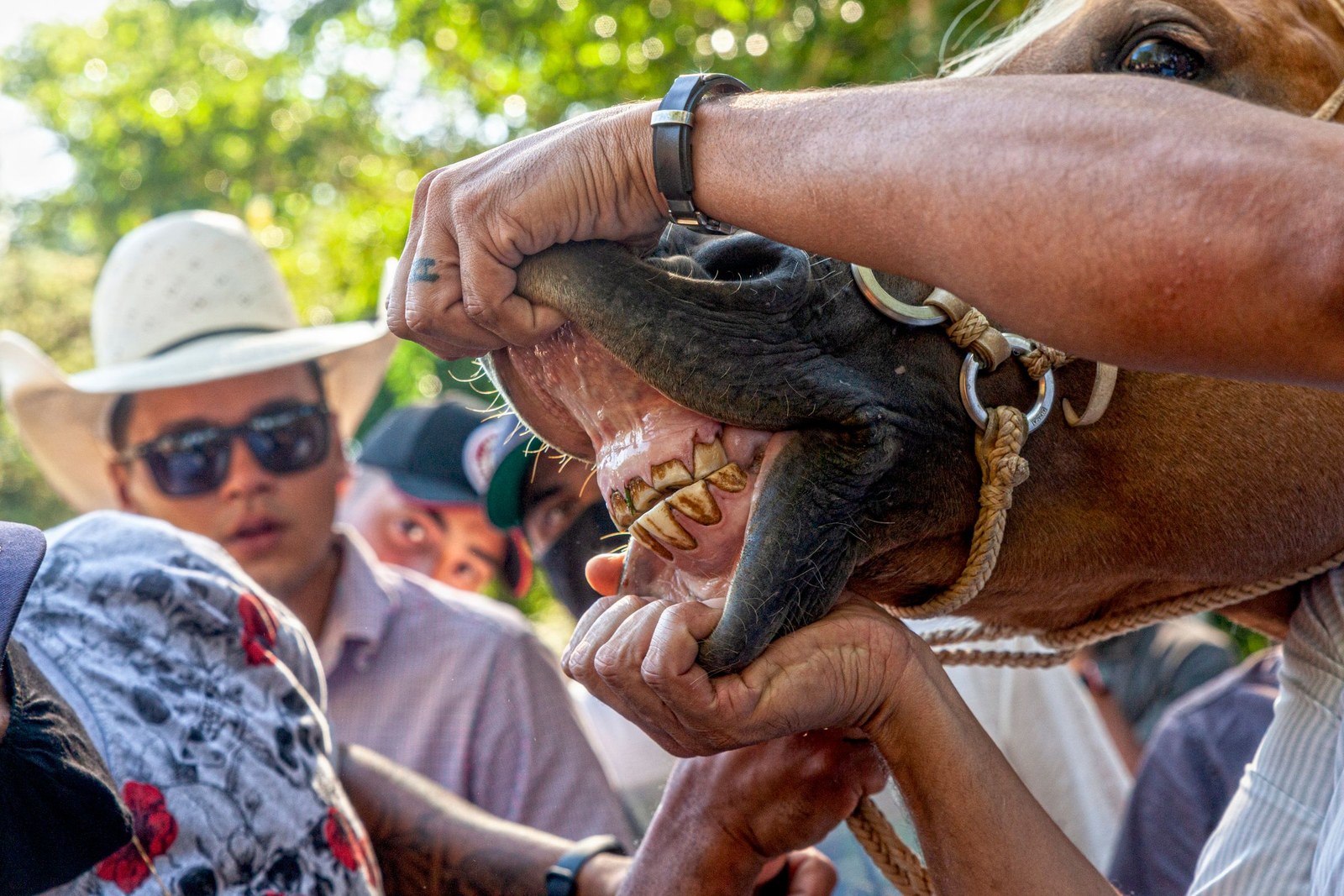
Most adult horses should have a dental examination about once a year. That annual check is the baseline for a healthy mouth, but it is not a hard rule for every horse — youngsters whose teeth are erupting and changing, and seniors whose teeth are wearing down or loosening, often need to be seen more often, sometimes every six months. When in doubt, let your veterinarian set the interval based on what they find in your horse's mouth.
Why Horses Need Regular Dental Care
Horses' teeth erupt continuously through most of their lives, and chewing wears them down unevenly. That wear can create sharp points along the edges of the molars, which can cut cheeks and tongues and make eating uncomfortable. Floating — the careful filing of those sharp points by a veterinarian or qualified equine dental professional — is the most common part of a routine visit.
Other issues an annual exam can catch early include:
- Hooks, ramps, or waves that interfere with normal chewing motion
- Loose, broken, or infected teeth, especially in older horses
- Retained baby teeth, called caps, in young horses
- Sores, ulcers, or lacerations inside the cheeks
- Signs of periodontal disease, which is common and often hidden in seniors
Catching these early is far kinder — and usually far less complicated — than waiting until a horse is visibly struggling.
Signs Your Horse Needs a Check Sooner
Between annual visits, watch how your horse eats and carries himself. Book an appointment sooner if you notice any of the following:
- Dropping partially chewed feed, often called quidding
- Tilting the head to one side while eating
- Taking unusually long to finish grain, or leaving hay behind
- Weight loss despite adequate feed
- Bad breath or a one-sided nasal discharge
- Head tossing, bit resistance, or a new reluctance to turn one way under saddle
- Undigested grain or long hay fibers appearing in the manure
Any one of these can have other causes, so treat them as a prompt for a proper examination rather than a diagnosis. A dental exam is also a sensible first step whenever a horse's condition changes without an obvious explanation.
What Happens at a Dental Appointment
A typical visit starts with a look at your horse's overall condition, age, and history. The veterinarian will then examine the mouth, often with a speculum that gently holds it open so the back teeth can be seen and felt safely. Sedation is commonly used so the horse stays relaxed and the exam can be thorough.
Ask your vet to talk you through what they found: which teeth needed floating, whether anything looks worn, loose, or sore, and when they want to see the horse again. Write those notes down before you leave the barn — the details are easy to forget a week later, and they matter when the next appointment comes around.
Keeping Dental Records Straight
Dental work is easy to lose track of because it happens quietly, once or twice a year, often alongside vaccinations or other routine care. Yet knowing when the last float was done, what was found, and what the vet recommended next is genuinely useful — for you, for a new vet, and for anyone who helps care for your horse.
That is exactly the kind of history KinsLe's Pet Passport is built to hold. The Pet Passport is your horse's records packet — vaccines, medications, allergies, and documents together in one place — so dental visit dates and notes sit alongside the rest of his health record instead of in a scattered barn notebook. When your horse travels to a show, a clinic, or a new boarding barn, that packet can be shared with the vets and caretakers who need it.
Good teeth quietly support everything else: comfortable eating, steady weight, and a horse who is happy in the bridle. Pet Passport on KinsLe turns that barn-notebook history into a packet a new boarding barn can work from, because float findings, loose-tooth notes, and the recommended recheck interval travel with your horse.