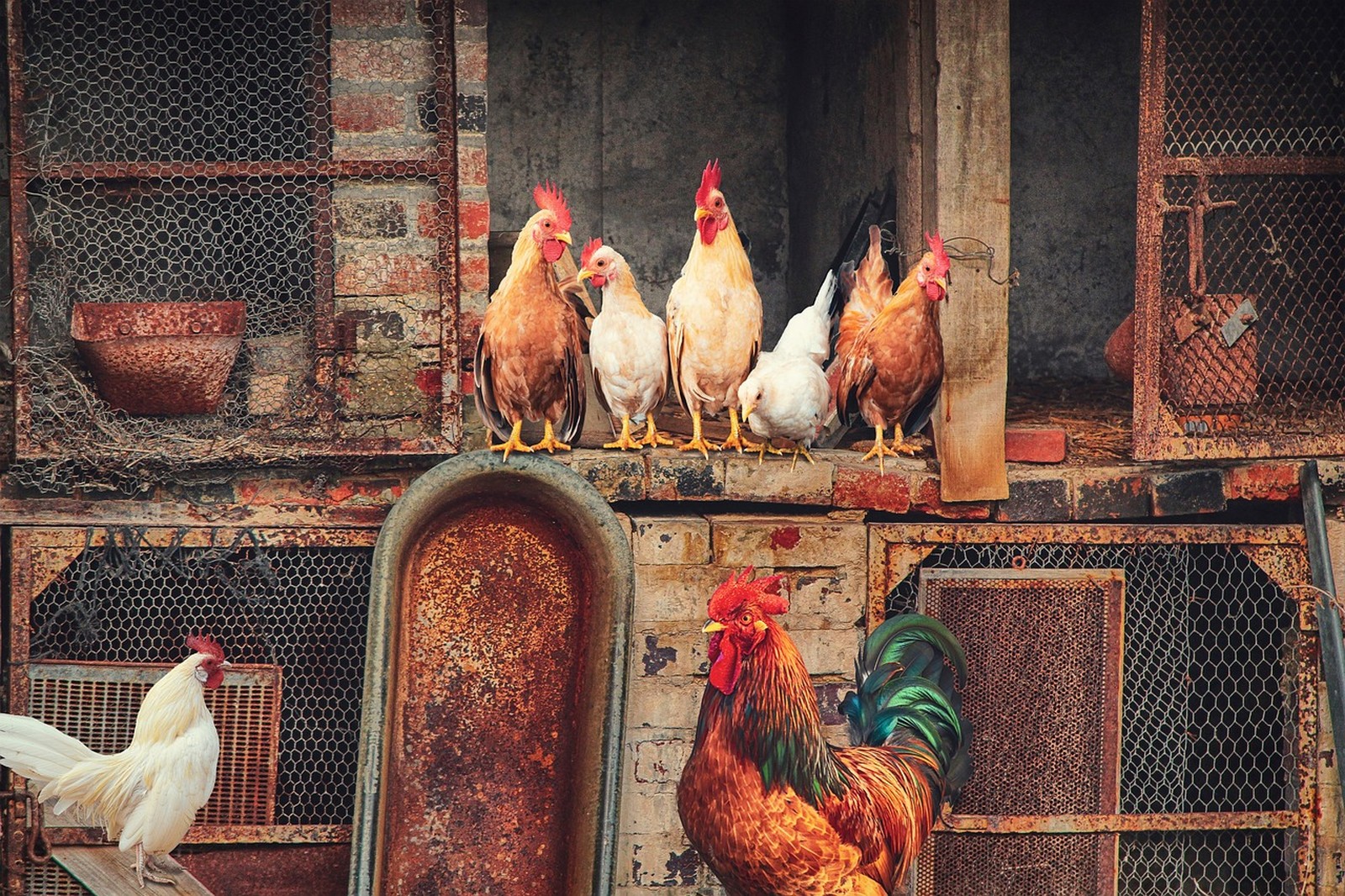
A chicken run stays healthy when the flock leaves before the land is exhausted, not after. Chickens scratch, peck, and fertilize the same patch every day, so a fixed run slowly loses its grass cover, compacts into bare earth, and then turns to mud that holds moisture and droppings at the surface. Rotation spreads that pressure across several plots, and rest gives each plot time to recover its cover. The system does not need many plots to work; it needs a move made on time and a rest that is actually respected instead of shortened the moment the grass looks green again.
Move Before the Ground Is Stripped
Watch the sward, not the calendar alone. While grass is still standing and the surface still springs back, the plot can carry the flock; once patches are eaten to the crown, scratched into dust, or churned into mud around feeders and the shelter, the move is overdue. Moving early leaves living roots in place, and living roots are what make regrowth fast and thick during rest. Shift high-traffic points before the main move if you can, since the ground under a feeder, a dust bathing hollow, and the shelter doorway wears far faster than the middle of the run. In wet weather, move sooner still, because poached mud recovers much more slowly than dry worn grass.
Rest Lets the Sward and the Ground Recover
A rested plot needs several weeks away from beaks and feet, commonly a month or more depending on the season, rainfall, and how hard the ground was used. Spring growth can repair a lightly worn plot relatively quickly; a plot rested heading into cold, dark weeks may need considerably longer before it can carry birds again. Judge readiness by cover and firmness rather than by hope: grass should be established enough to be grazed and scratched without tearing out in beaks full of roots. If the flock returns and strips the plot in days, the rest was too short or the next plot needs to be larger.
Why Rest Breaks the Worm Cycle
Rest is also parasite management. Worm eggs passed in droppings land on the ground the flock is using and can be picked up again as the birds peck and scratch, keeping the cycle going inside a fixed run. On rested ground with no flock adding fresh droppings, those eggs decline over time and the chain is interrupted, so a returning flock meets far less of what it left behind. Rotation cannot replace sensible flock health care, but clean ground is a real part of it.
Reseeding, Fencing, and the Sacrifice Patch
Use the rest period for repair. Reseed worn patches while no flock can scratch the seed out, firm it in, and keep off the reseeded corner longest if only part of the plot was damaged. Movable fencing, portable panels, or a movable shelter on skids or wheels makes the next plot easy to define without rebuilding permanent runs. Every rotation system also needs a wet-weather sacrifice area: a smaller, hard-wearing patch you accept will get muddy, used when the rested plots would be ruined by a flock crossing them in heavy rain. Scatter scratch grains over a rested plot just before moving back, and the returning flock will spread out and work the surface lightly instead of crowding the gate.
Putting the Rotation on a Shared Schedule
Care Teams turns the rotation into named duties with dates attached, so moving day does not depend on one person noticing the grass. One helper can own fence moving, another reseeding and patch checks, and another the rest calendar that records when each plot emptied, when it was reseeded, and the earliest date it should carry birds again. That written record prevents the most common rotation failure: a rested plot being reused early because nobody remembered how recently the flock left it. When rain turns one corner to mud, shift the flock to the sacrifice patch and log the move through the Care Teams assignments in KinsLe.