
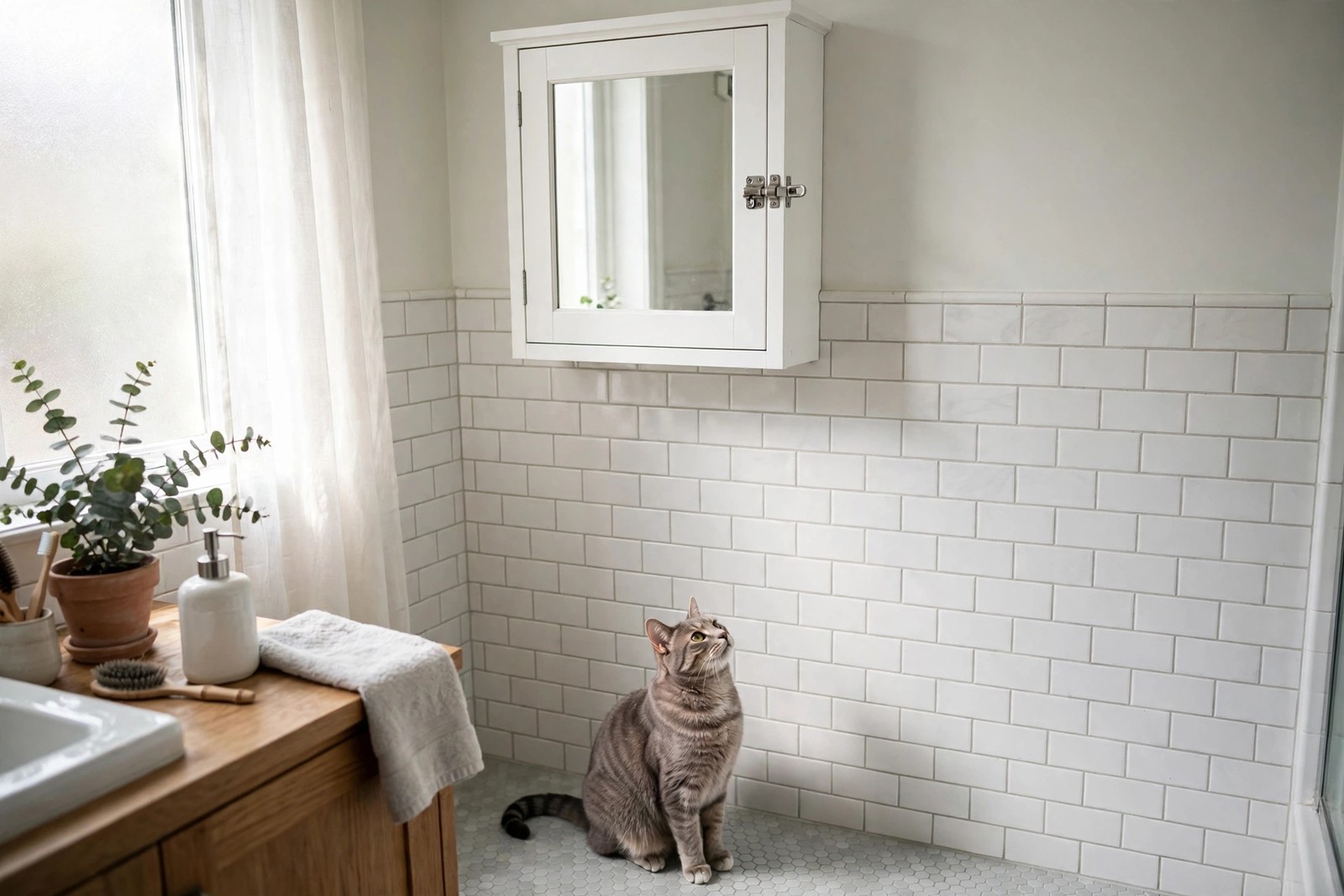
The safe place for every medicine in a cat home is behind a latched door, up high — yours and your cat's alike — because a bottle left on a counter, in a purse, or in a coat pocket is a bottle a curious cat can reach. Even a single common human pain reliever can be extremely dangerous for a cat, so secure storage plus treating any possible ingestion as an urgent call is the combination that keeps cats safe.
Why Human Medicine Is So Risky for Cats
Cats process many drugs very differently from people and dogs. They lack certain liver pathways that break down common medications, which means substances that seem mild for a person can build up and damage a cat's liver, kidneys, or red blood cells. Acetaminophen and ibuprofen are well-known examples of everyday human pain relievers that can cause severe harm to cats, and the danger can start with a single dropped tablet.
Prescription medicines bring their own risks — heart and blood-pressure tablets, antidepressants, and sleep aids are all small, smooth, and easy for a cat to bat off a nightstand and chew before you notice. Liquid medicines and gummies left open are also tempting. The rule is simple: if it is medicine, it belongs behind a closed, latched barrier, full stop.
Storage That Actually Works for Cat Homes
Use a high bathroom or kitchen cabinet with a childproof latch, or a hard-sided container with a locking lid kept inside that cabinet. Cats can open lightweight drawers and nose into soft bags, so a zippered pouch in a purse hung on a hook is not safe storage — purses should hang in a closed closet, and guests should be asked to keep their bags there too.
Keep medicines in their original labeled containers so you always know what you have and can describe it accurately in an emergency. Store your cat's own medicines in a separate, clearly marked spot from human medicines to avoid mix-ups at dosing time, and return everything to storage immediately after use rather than leaving the bottle out as a reminder. Set a phone reminder instead.
Check your storage monthly. Gather expired or unneeded medicines and use a pharmacy or community take-back option where available, rather than keeping a growing stockpile your cat could one day reach.
What To Do After a Possible Ingestion
If you find a chewed bottle, missing pills, or your cat drooling, vomiting, unsteady, unusually sleepy, or breathing oddly after access to medicine, treat it as an emergency. Call your veterinarian or an emergency animal clinic right away, and if you cannot reach them, contact an animal poison helpline. Bring the medicine container with you or have its name and strength ready to read out — that information shapes the response more than almost anything else.
Do not wait for clear symptoms, and do not give any home remedy or induce vomiting unless a veterinary professional tells you to. Time matters more than certainty; clinics would far rather assess a cat early and send it home well.
Keeping Your Cat's Own Records Straight With Pet Passport
Good storage includes knowing exactly what your cat is supposed to take. KinsLe's Pet Passport keeps your cat's medications, allergies, vaccines, and documents together in one records packet that you can share with vets and sitters. If the wrong pill is ever swallowed, that clear record of what your cat normally takes — and what it is allergic to — helps a veterinary team act fast and avoid treatments that conflict with your cat's existing care.
Latched cabinets and a tidy routine take minutes to set up and remove one of the most serious risks in a cat home. If a tablet ever goes missing, the medication list and allergy history inside the Pet Passport file on KinsLe give the emergency clinic its current prescriptions without guesswork from memory.