
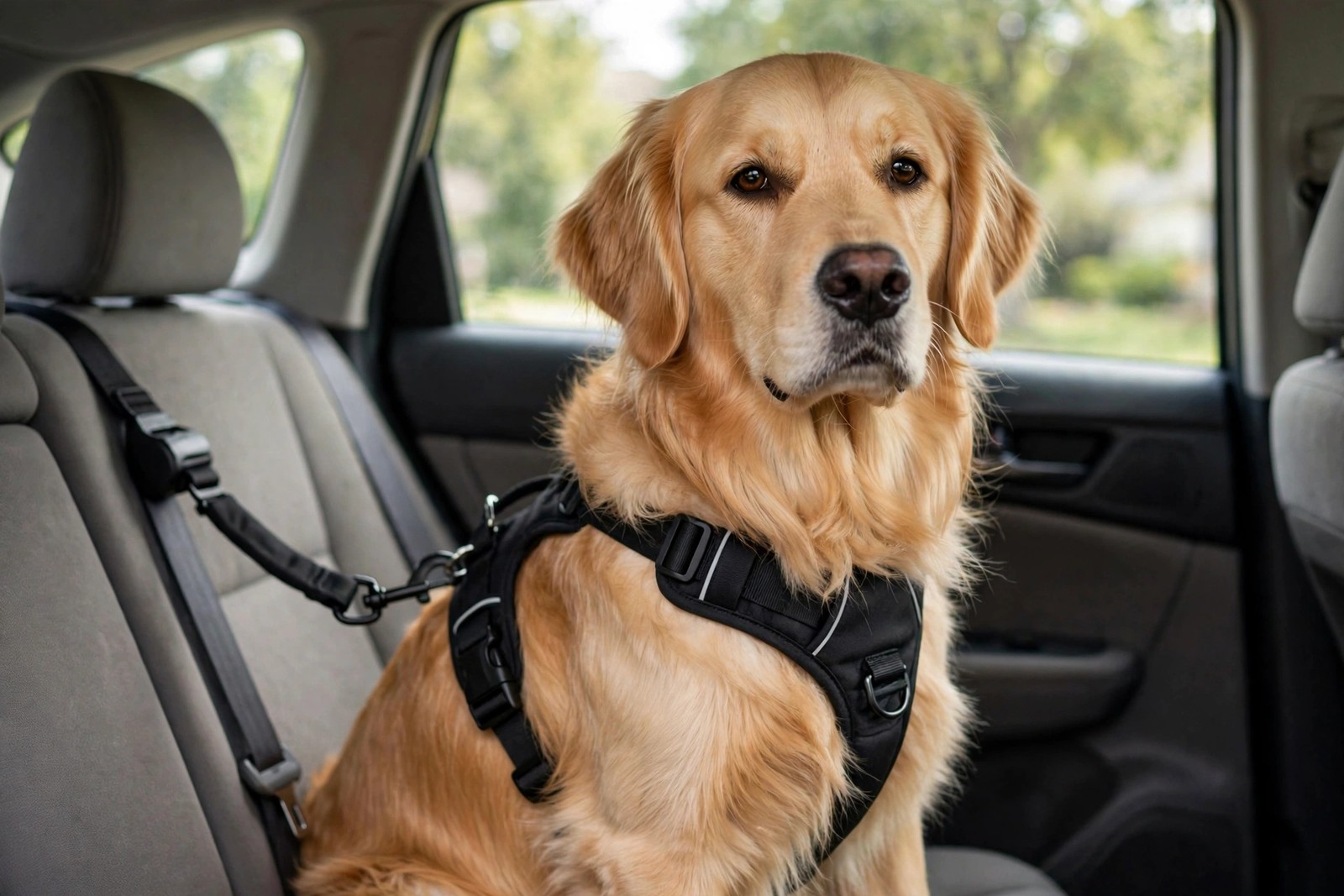
Your dog should ride secured — in a crash-tested harness clipped to a seat belt, in a crate that is strapped or wedged so it cannot slide, or behind a sturdy barrier in the cargo area. An unsecured dog is at risk in even a low-speed sudden stop, and a loose, excited dog climbing into the front seat is a distraction that can cause the crash you are trying to avoid.
What “Secured” Actually Protects Against
In a 30 mph impact, an unrestrained dog can be thrown with a force many times her body weight — into the windshield, into passengers, or out of the vehicle entirely. Dogs who survive a crash loose often bolt from the scene in panic and are lost or hit on the road. Restraint is not about a ticket; it is about keeping a frightened dog contained in the worst five minutes of your year together.
Look for harnesses and crates that have been independently crash-tested, with wide straps that distribute force across the chest rather than a thin collar — never clip a restraint to a regular collar, which can injure the neck. A harness should allow your dog to sit and lie down but not roam, surf between seats, or reach the driver.
Choosing the Right Setup for Your Dog
For most medium and large dogs, a crash-tested harness on the back seat is the practical sweet spot. The back seat also keeps your dog away from front airbags, which deploy with enough force to seriously injure a dog — small dogs should never ride on a front passenger's lap.
Crates suit dogs who already relax in one at home. Size it so your dog can stand, turn, and lie down, then anchor it: a crate sliding freely in an SUV cargo area protects far less than owners assume. Cargo barriers work for larger vehicles when combined with a harness, so the dog stays in the back even if the barrier flexes.
Introduce the gear on easy terms. Let your dog wear the harness around the house, practice clipping in for a treat and unclipping again, and take a few short, pleasant drives before the first long trip. A dog who only ever rides restrained to the vet will have opinions about the system.
Windows, Truck Beds, and Other Hard Nos
Heads stay inside. It looks joyful, but road debris, insects, and sudden swerves can cause eye and ear injuries, and dogs have fallen or jumped from moving windows. Open windows a couple of inches for air if needed, with your dog restrained so she cannot reach farther.
Never transport a dog loose in an open truck bed — sudden stops, heat from the metal surface, and the risk of jumping or being thrown make it unsafe and, in many places, illegal. The same goes for laps in the driver's seat, no matter how small the dog or how short the street.
On stops, leash before any door opens. Rest areas and gas stations are classic escape points: unfamiliar smells, traffic close by, and a door opened by a passenger who forgot the dog was loose.
ID That Travels With Your Dog
Restraint keeps your dog in the car; identification gets her back if anything still goes wrong. Alongside a collar tag and microchip, KinsLe's Pet Pass serves as your dog's verified ID card on the road, tied to her profile with its unique QR ID. At a rest-stop separation, the Pet Pass card on KinsLe can be presented as her identification, linking anyone who finds her straight to her current profile.