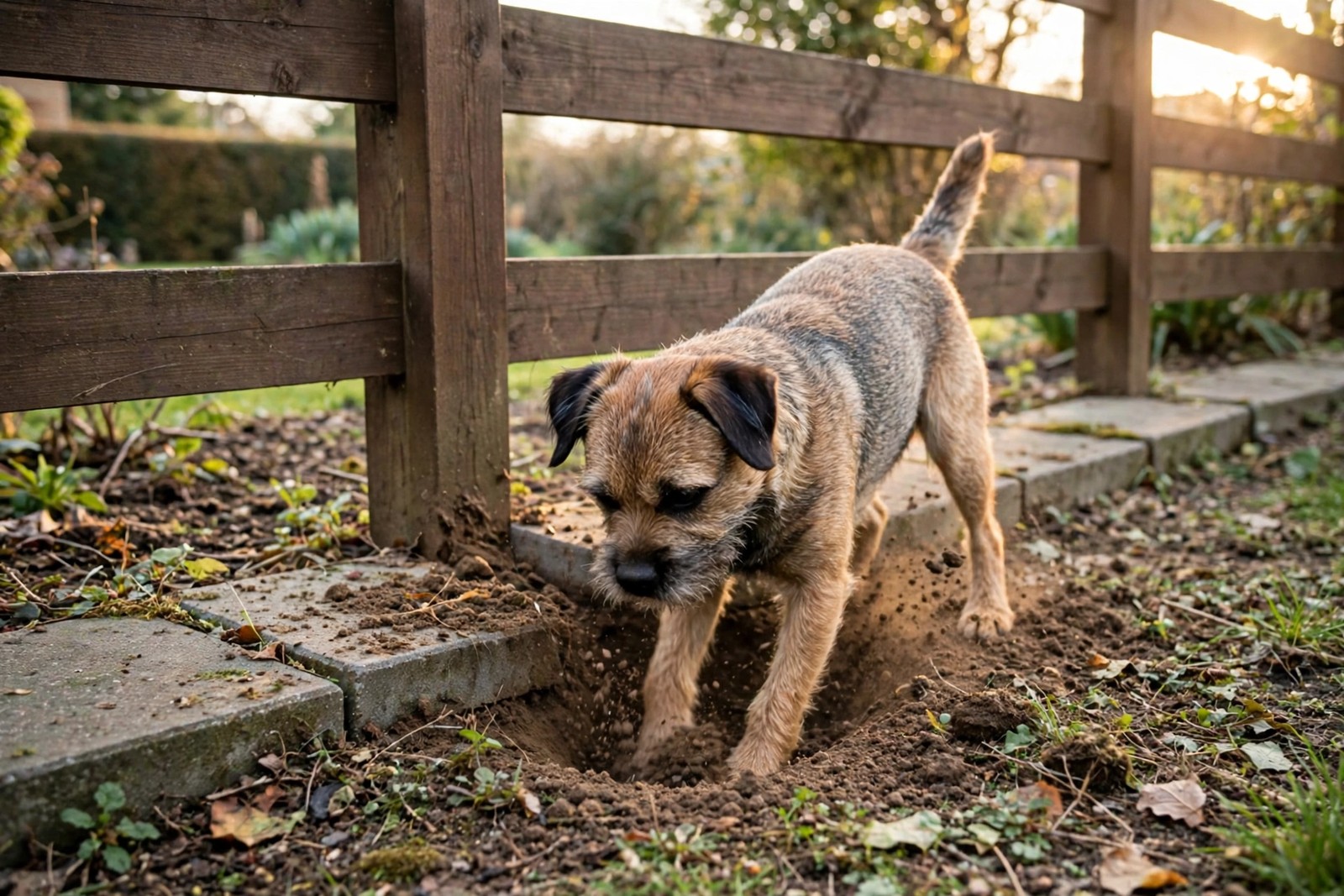
Take both drives at full strength when you picture a Border Terrier in your yard. This is a working terrier in a small frame, bred to run with hounds over rough ground and then to follow quarry into earths and drains. The chase instinct and the digging instinct are the same instinct seen from two directions: get to the animal that moved, over, under, or through whatever is in the way.
The chase, and why recall is not a fence
A Border Terrier at rest is a companionable, biddable dog. A Border Terrier that has just seen a squirrel, a cat, or a rabbit is a dog whose hearing has narrowed to a single channel. Breed character means this is typical rather than naughty, and it can arrive in a dog that recalls beautifully in the park. The practical conclusion is blunt: recall is never the fence. Training is still worth doing, because a dog that turns back at the first call in low-distraction settings is safer everywhere, but no amount of training converts an open gate or a low fence section into a safe boundary for a terrier mid-chase. Physical security carries the load, and training is the backup layer, never the structure itself.
Height helps where the fence is solid and offers no footholds, but a determined terrier also climbs better than most owners expect, using chain-link diamonds and fence corners as a ladder. Solid panels deny both the view of passing animals and the grip, which is why they outperform see-through fencing for this breed even at the same height.
The dig, and the base of the fence
Digging starts at the fence line, where scents collect and where another animal's run passes on the far side. A standard fence sitting on soft soil can be undermined in a single unsupervised afternoon. The defenses that work are built at ground level: a dig guard of buried mesh or a row of paving slabs laid flat along the inside of the fence line, so the dog's digging meets a barrier and the effort stops paying. Where the ground allows, extending the barrier down into the soil along the line closes the gap under panels and gates. The gate deserves its own attention, because gates sag, clearances grow underneath them, and a latch that needs lifting and jiggling will one day be left unlatched. Fit a gate that latches positively and closes fully, and treat any growing gap beneath it as a repair, not a quirk.
An outlet lowers the pressure without removing the drive. A designated digging spot, a sand-filled corner where buried toys appear, gives the behavior a legal address. Tire the dog with real exercise and scent games as well; a tired terrier digs less recreationally, though no walk cancels the urge when something exciting is on the other side of the fence.
Supervision, stated honestly
Until a fence has been tested by weeks of use, a Border Terrier should not be loose in the yard alone, and even a proven fence earns spot checks rather than blind trust. On KinsLe, the Care Teams plan for the yard spells out that everyone responds the same way: the gate is pulled to and latched on every pass, a dog found digging is called away and leashed without a scolding that teaches concealment, and fresh scrape marks get written down the same day. One named person walks the fence line each week looking for dig starts and soft soil, and another named person owns the gate hardware check each month, with each observation recorded where the whole household can read it.
That plan also covers visitors and children, who are the most common source of a gate left ajar. The rule is written where a guest can be shown it, not carried in one person's head. KinsLe keeps those checks from drifting because Care Teams records each completed fence inspection with the name of the person who walked the line.