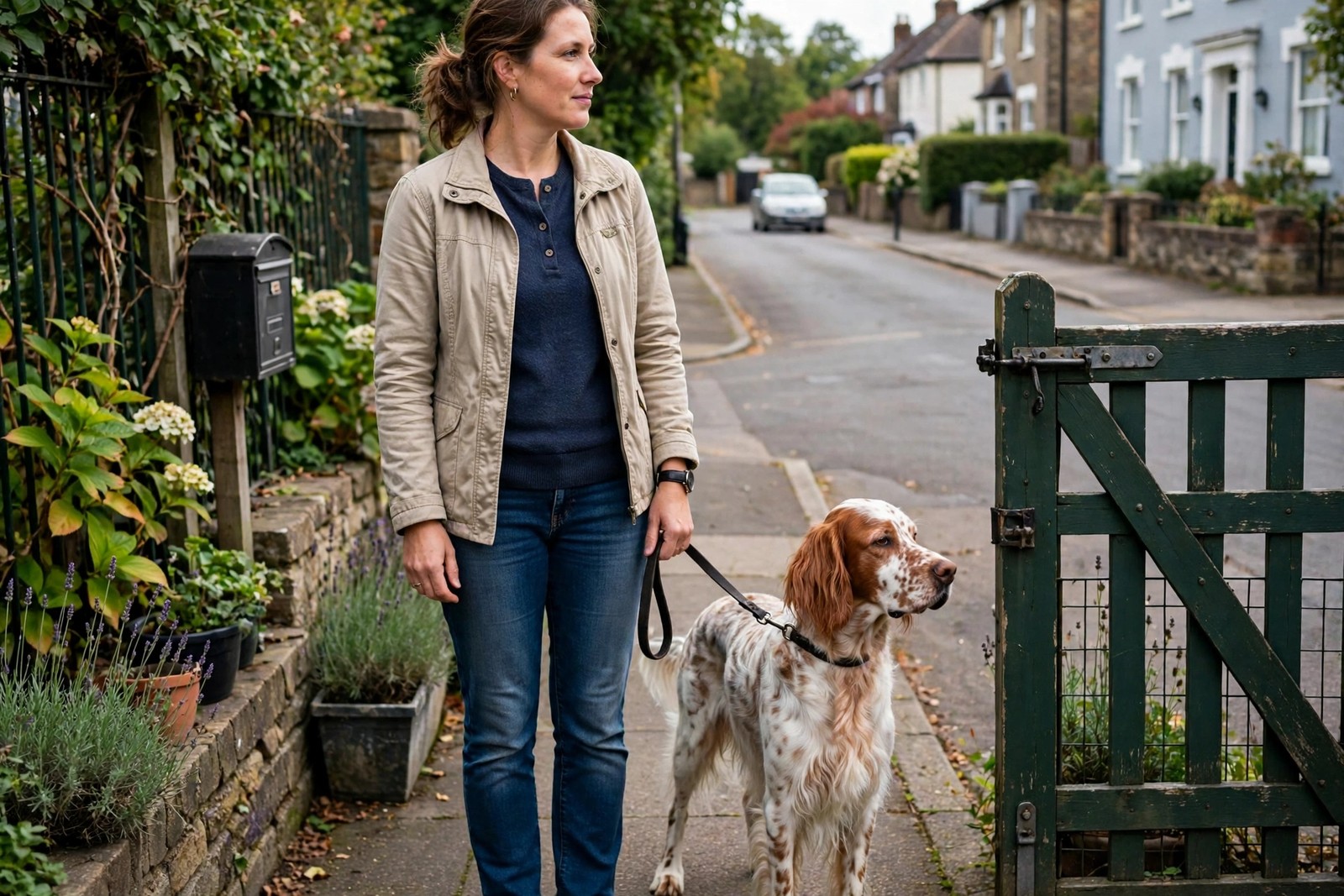
English Setters sit in the middle of the barking scale. A typical adult alerts to the doorbell, a delivery at the gate, or a stranger pausing at the fence, then settles once the event is over. Many also make softer conversational sounds: a grumble when they settle into a bed, a whine of anticipation before a walk, or a brief sing-along during excited play. That baseline suits a quiet neighbourhood, provided the dog is exercised, has company, and learns early that not every passing event needs a commentary.
What you will actually hear, room by room
At the front of the house, expect alert barking. Setters were bred to work closely with people and to notice movement, so a dog stationed at a front window with a view of the pavement has a job all day, and it will do that job loudly. In living areas, noise is usually social rather than territorial: greeting arrivals, joining household excitement, and protesting briefly if a game ends too soon. In the garden, fence-line barking at neighbouring dogs or passers-by is the pattern to watch, because it can become a rehearsed habit if the dog is left outside alone to practise it.
What turns moderate into persistent
Three drivers come up again and again behind problem barking in this breed. The first is under-exercise: a Setter that has not had its 1½ to 2 hours of daily exercise, split into two outings of 45 to 60 minutes, has energy left for patrolling and announcing. The second is loneliness. This is a companionable breed that follows people from room to room, and a dog left alone for long stretches may bark from frustration or anxiety rather than from anything happening outside. The third is reward by accident: shouting back, rushing to the window, or letting the dog out mid-bark all teach that barking makes interesting things happen.
Training that protects the peace
Teach a quiet pattern before you need it. When your Setter notices a trigger, let them look, praise a glance back at you, and reward that check-in with food from your hand, placed in their mouth rather than scattered on the floor. Practise at low intensity first, with a household member knocking softly, before you expect the same response to a real delivery. Keep the front window less rewarding by closing blinds during busy pavement hours, and give the dog a chew or a sniffing game in a back room instead. If barking happens when you are out, leave the dog tired from a morning outing, with safe chews and no window post to guard.
Exercise, company, and the daily shape that works
The quiet Setter day has a clear shape: a 45 to 60 minute morning outing with off-lead running where it is safe and legal, a calm midday with company or a visiting walker, and a second 45 to 60 minute evening outing that ends with sniffing rather than excitement. Gundog-style games suit the breed well: short retrieves, hidden toys in grass, and scent trails in the garden all use the brain that otherwise scans for things to announce. Puppies and adolescents will be noisier and need shorter, more frequent outings, while older dogs usually mellow and bark less often.
The honest verdict for a quiet street
An English Setter is a sensible choice for a quiet neighbourhood if your household can supply daily exercise, daytime company, and consistent early training, and if your garden does not back onto a busy footpath the dog can patrol. It is a poor choice if the dog would be alone all day, under-walked, or left in a front garden to entertain itself. Meet adult Setters from the lines you are considering, ask how the parents behave at home, and listen in a real house rather than judging from a kennel visit. Splitting the morning and evening outings, midday visits, and quiet-time cover between household members through KinsLe's Care Teams keeps the routine that keeps this breed quiet actually happening on busy days.