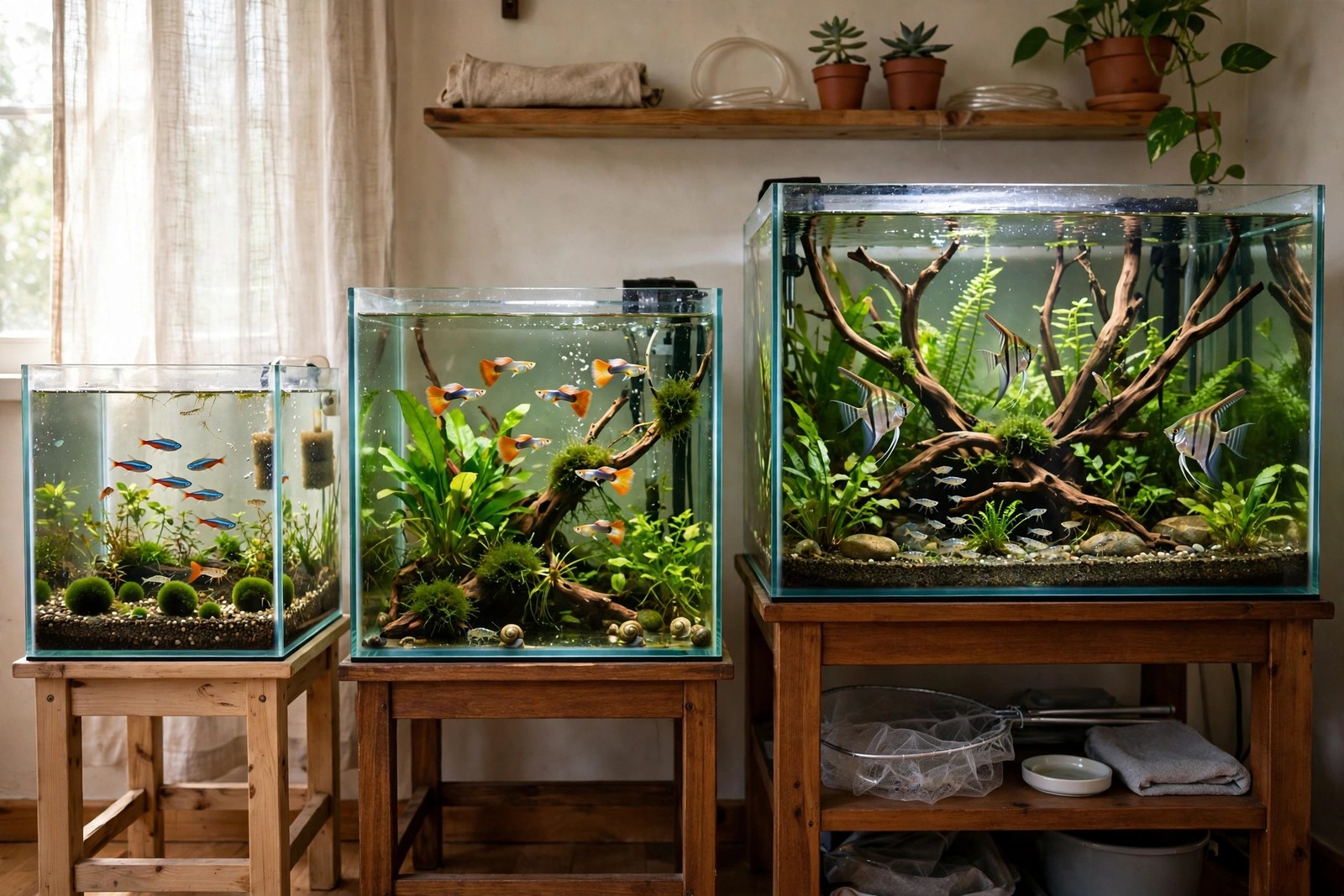
Give every tank its own log and label everything with the tank's name. The moment you go multi-tank, memory stops being a strategy — three setups blur together fast, and you'll mix up which tank got dosed, which filter was cleaned, and which water test belonged where. A simple per-tank system takes minutes a week and saves real confusion.
Name your tanks and label the gear
Start by naming each tank something unmistakable — "55-gallon community," "betta cube," "shrimp nano" — and use those names everywhere: on test log headers, food containers, nets, buckets, and siphons. A strip of masking tape and a marker is all it takes. Dedicated or clearly labeled tools matter because cross-contamination between tanks is how problems travel; at minimum, never share a net or siphon between tanks without cleaning it, and label the buckets so water from the quarantine setup never lands in the display tank.
What each tank's log should hold
Keep one running log per tank — a page, a section in a binder, or a digital note — and record the same things every time: livestock changes (arrivals, losses, rehomings), water test dates with actual readings, treatments or medications used, feedings that deviated from routine, and equipment changes or cleanings. The format can be dead simple: date, entry, done. What matters is that every tank gets the same fields, so a quick scan tells you at a glance which tank is overdue for what.
When one tank needs attention and the others don't — say the betta cube's filter clogged while the community tank hummed along — its log shows the full recent history instantly, instead of you trying to reconstruct three timelines from memory.
Make the weekly update a ritual
Pick one day and spend ten minutes on all three: test, water change, quick equipment glance, log entry. Batching it keeps the small tanks from becoming the forgotten ones — the nano setup that "looks fine" is usually the one drifting toward trouble. A quick photo of each tank during the weekly check is a bonus; scrolled back over months, photos reveal slow changes in plant growth, algae, and fish condition that daily eyes miss.
Across all your tanks, each fish's most important documents — medications, vet visits, quarantine notes — deserve to live with that fish, not in the tank log. In KinsLe, a fish's Pet Passport keeps its medications and important documents together in one records packet you can share with a vet or sitter, so the right information follows the right animal no matter how many tanks you run. For the fish themselves, the Pet Passport archive on KinsLe separates each animal's quarantine notes, medication history, and vet paperwork from the three tank logs, so a treatment given to one fish is never read as treatment for all.