
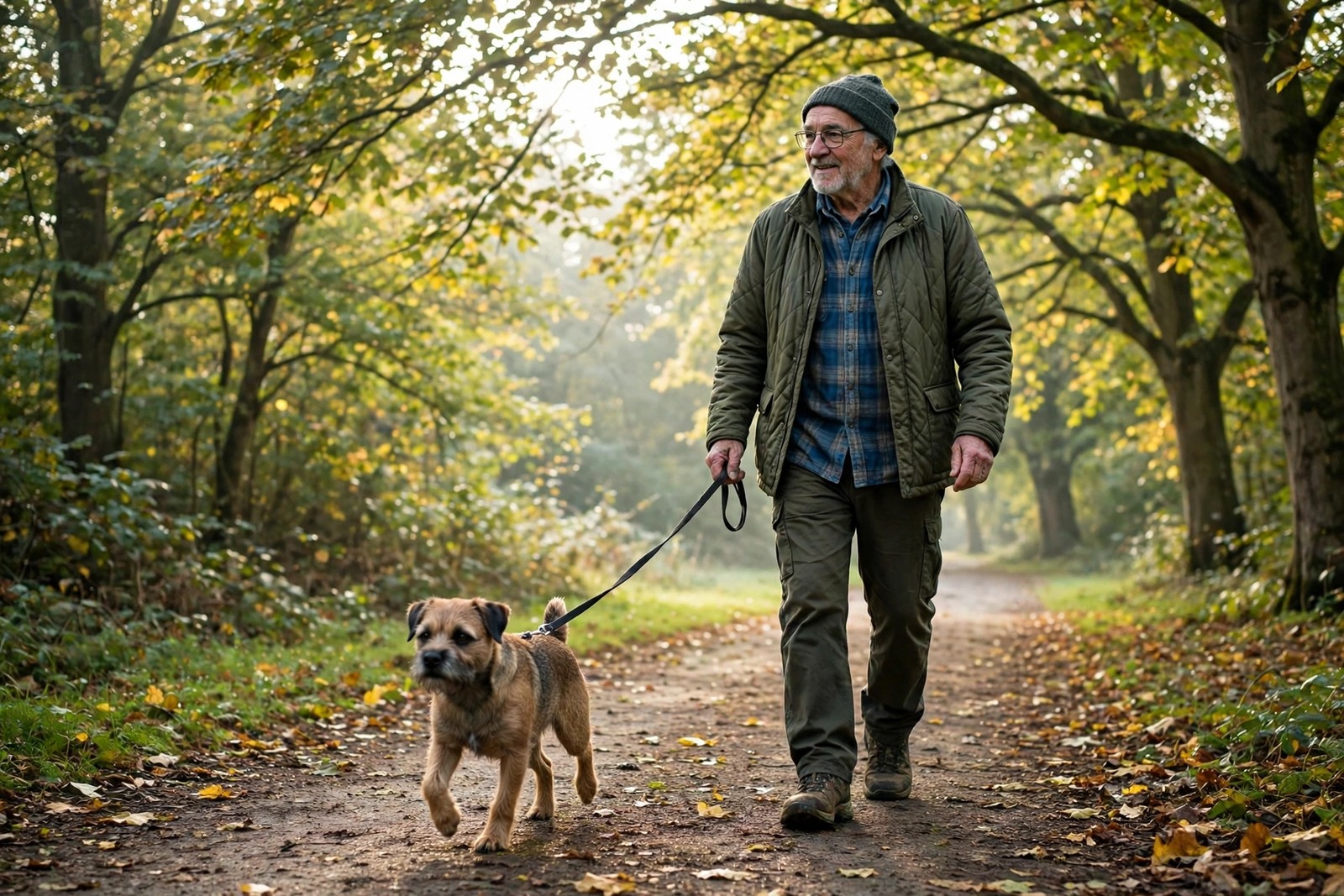
For an active older owner who wants company on real walks without the weight and force of a large breed, the Border Terrier deserves a serious look. The breed was shaped for long days following horses and working across rough country, and that working past still shows in a dog who is compact without being delicate. The match works best when the owner genuinely wants the walking itself, because this is not an ornamental lap dog who happens to go outside.
A Small Dog Built for Real Walking
Most healthy adults weigh about 12 to 15 pounds, a size one person can lift into a car, carry briefly if a paw is hurt, and control on a leash without being pulled off balance. Small, though, does not mean fragile. The frame is narrow and athletic, the legs are built for covering ground, and the breed is generally hardy rather than dainty. A healthy adult can usually manage a real daily walk of about an hour, and many enjoy a longer outing on a good day, provided heat, age, and health are respected.
That stamina is what makes the breed appealing to an owner whose day already includes walking: the dog becomes a reason the walk happens in all weather, not a limit on it. Puppies need a slower build-up while bones grow, and seniors slow down in time, but the adult years typically offer a companion who is ready when you are.
Coat, Prey Drive, and Terrier Independence
The wiry double coat sheds weather and dirt well, and it asks for a clear choice rather than no care at all. Hand-stripping a few times a year keeps the harsh texture and rich color, while clipping is simpler and gradually softens the coat; either route needs regular combing and a tidy-up of the beard and legs. Decide which you will honestly maintain before choosing the breed, because a neglected wiry coat mats and hides burrs and ticks after country walks.
Terrier instincts come with the package. A Border Terrier usually has a genuine prey drive, so squirrels, rabbits, and neighborhood cats can erase an otherwise reliable recall in a second. A leash near traffic and in squirrel-rich parks is not a lack of trust; it is the sensible default for this breed. The same independence that made the breed useful underground means training works best with short, cheerful sessions and clear rules, rather than drilling. Most are friendly and steady with people, yet an individual dog still deserves to be met and judged as an individual.
Why the Fit Suits an Active Older Owner
The combination is the point: manageable size without fragility, a hardy constitution, and a cheerful outlook that suits an owner who is out every day. There is no large-dog bathing battle, no heavy lifting at the vet, and food and equipment costs stay in the small-dog range. Many Border Terriers live commonly about 12 to 15 years, so the commitment is a long one, and an honest plan for the dog's later years matters as much as the walking years. A dog who may still be striding out at twelve deserves an owner who has thought past the first energetic seasons.
Consider the cautions plainly. Daily walking is a requirement, not a bonus, and an under-walked terrier will invent entertainment indoors. Digging, barking at passersby, and determined opinions about household rules are all within normal breed character.
Staying Identifiable on Every Walk
Because a prey-driven dog can lunge, twist, and slip a collar in the second a squirrel breaks cover, identification deserves planning before the first walk. Alongside a microchip, the Verified QR ID Pet Profiles record on KinsLe gives anyone who finds the dog a direct way to see who to contact, without relying on a tiny engraved tag staying legible. Keep the contact details current in the Verified QR ID Pet Profiles file on KinsLe, and a slipped leash becomes a call home instead of a lost dog.