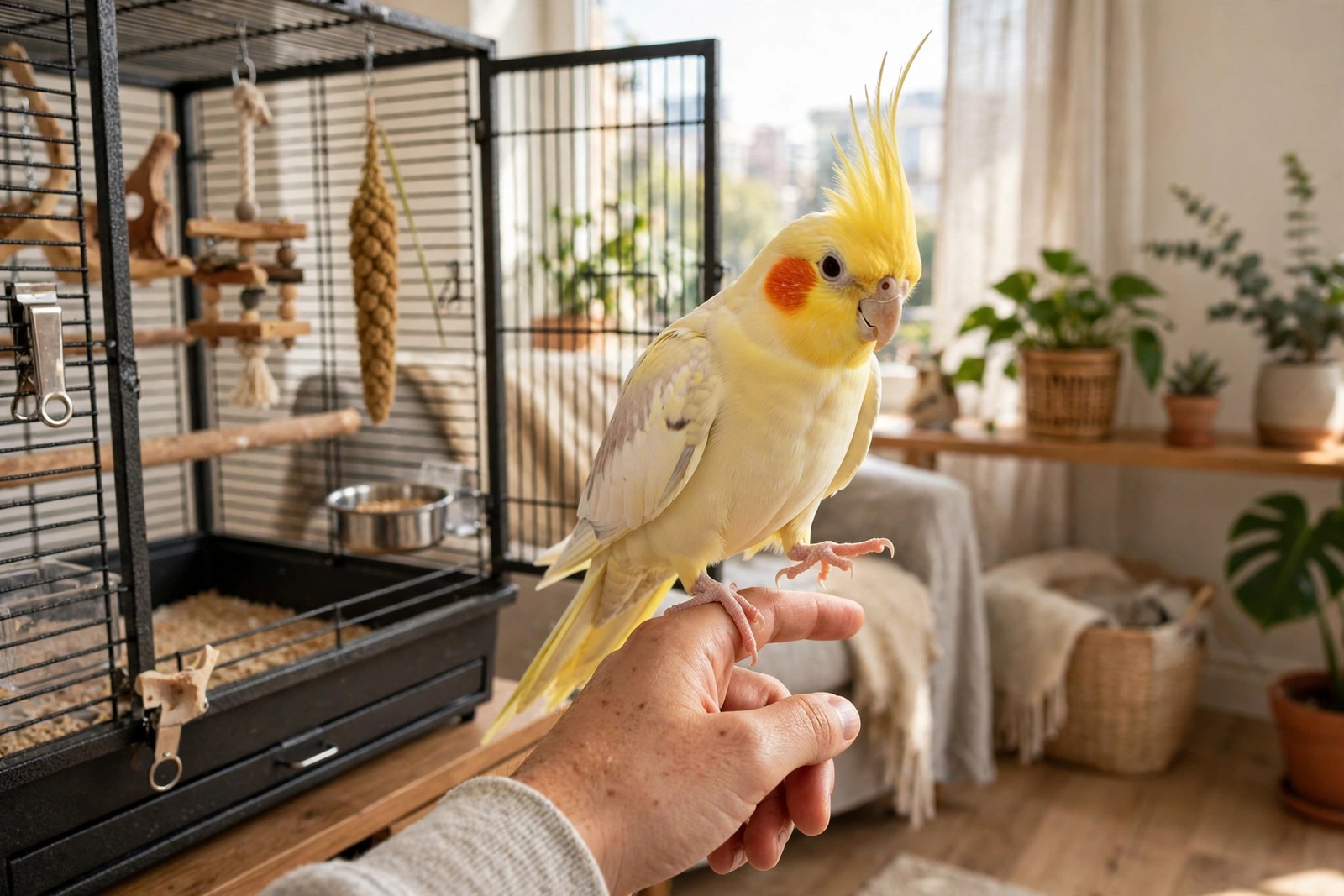
Yes — for most people, a cockatiel is an excellent first bird, and it has held that reputation for decades for concrete reasons rather than fashion. It is big enough to handle confidently at around a foot long including the tail, small enough to house in an apartment, gentle by parrot standards, and genuinely social without the intensity of the larger parrots. The honest answer includes the commitments, though, because 'good first bird' never means 'effortless bird'.
Why cockatiels suit beginners
Temperament is the headline. Cockatiels are mild, flock-oriented birds who bond closely with their people; a hand-raised youngster typically learns to step up within days and seeks out shoulders, laps, and company. Their beaks are small, so even a frightened nip rarely breaks skin — a reassuring difference from larger parrots while a new owner is learning to read body language. Noise is moderate: males whistle tunes and chatter, females are generally quieter, and both produce contact calls rather than the sustained screaming of bigger species, so cockatiels fit flats and noise-sensitive households better than most parrots.
Care is equally forgiving. A cockatiel needs a roomy cage with varied perches and toys, a quality seed or pelleted diet supplemented with vegetables, fresh water daily, and a weekly cage clean — demanding by hamster standards, modest by parrot ones.
The commitments to weigh first
Lifespan is the biggest one. A well-kept cockatiel commonly lives 15 to 20 years and can reach its mid-twenties, so a bird bought for a child may still be thriving when that child leaves home. Feather dust is the second: cockatiels produce fine powder-down that coats nearby surfaces and can aggravate asthma and dust allergies, so sensitive households should spend time around the species before committing. They also need daily company and out-of-cage time — a few hours, not minutes — and they startle at night more than most pet birds, so a calm sleeping spot and a small night light prevent injurious night frights. Like all birds, they are dangerously sensitive to fumes from overheated nonstick cookware and scented sprays, which means changing some kitchen habits permanently.
Budget honestly too: cage, toys, and food are the visible costs, but an avian vet fund matters, because birds hide illness and specialist care is not priced like a cat's booster.
Getting the first weeks right
Choose a weaned, bright-eyed youngster from a source who can tell you its hatch history and current diet, and change nothing about that diet abruptly at home. Expect a quiet first few days, talk more than you handle, and let the bird set the pace of first outings. Many first-time owners find the learning curve enjoyable precisely because a cockatiel rewards patience so visibly.
Once your bird is home, putting feeding, cage cleaning, play sessions, and bedtime cover into KinsLe's Care Teams, each assigned and timestamped, helps every member of a beginner household learn the routine and keep it consistent.