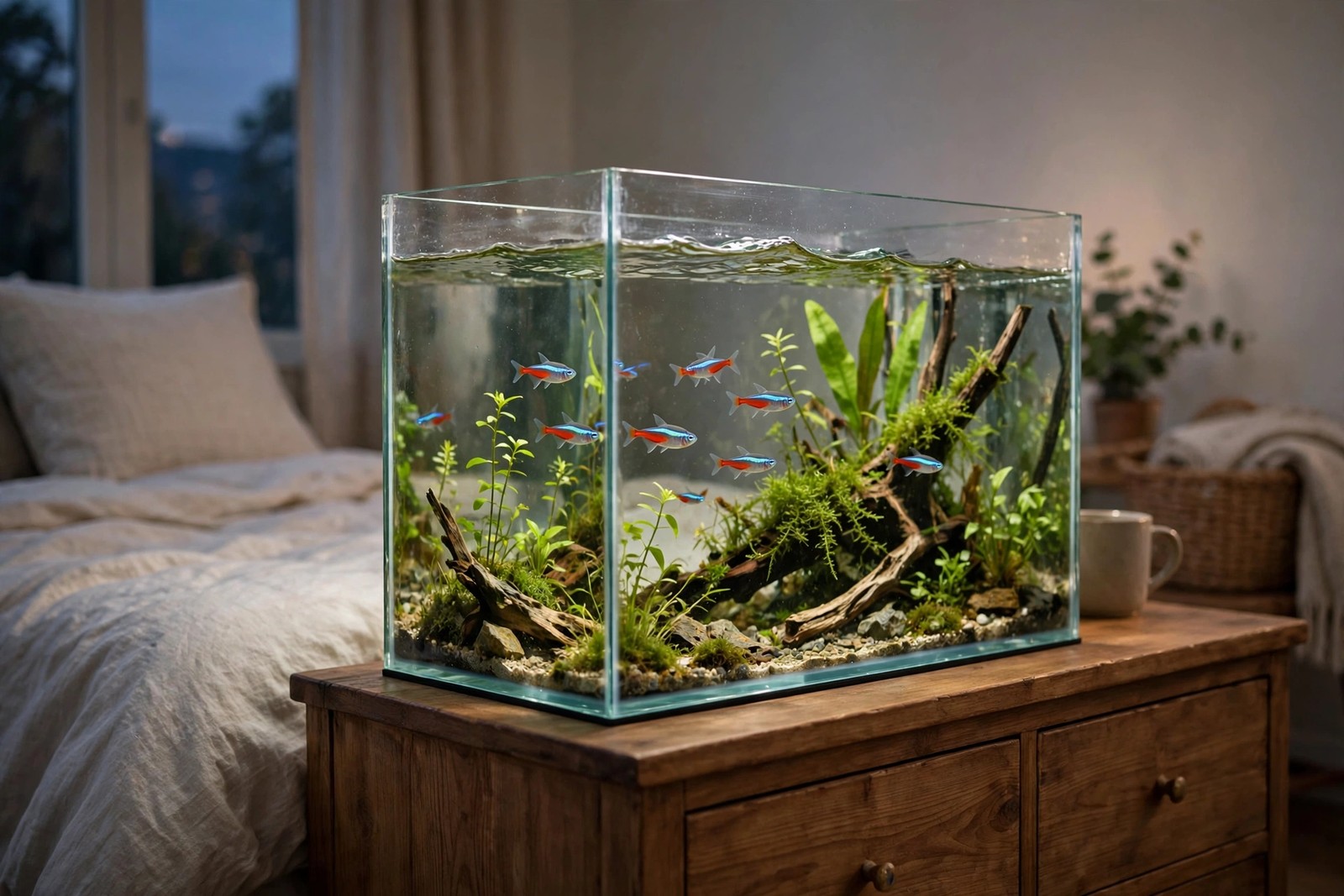
A fish tank is rarely too noisy for a bedroom, but the honest answer depends on the equipment, because tanks do not make one generic hum: they make specific noises, each with a specific cause, and most of them can be quieted in an evening. Light sleepers should still test the setup before committing, since a sound that one person sleeps through happily can keep another person counting drips until dawn.
Where Tank Noise Actually Comes From
The usual loudest source is the filter return. A hang-on filter that drops water back into the tank makes a waterfall, and the lower the water level falls between top-ups, the taller and louder that fall becomes. The second source is the air pump: it vibrates by design, and set directly on a wooden stand or shelf it turns the furniture into a sounding board, adding a buzz that carries through a quiet room. Third are rattles and resonances: a lid sitting slightly loose, a filter housing touching the glass, tubing pressed against a wall, or a stand that is not level, so one corner carries the vibration. Gurgling usually means air trapped in a filter or intake, and a grinding rumble means an impeller that needs cleaning or reseating.
Setting Up for Quiet
Choose the quiet configuration from the start. Internal filters and canister filters run submerged or sealed, so they avoid the waterfall entirely and are typically the quietest choices for a bedroom; if you use a hang-on filter, keep the tank topped up so the return slides in rather than falls. Put the air pump on a folded towel or foam mat, inside a cabinet if there is one, and hang or position it so its body touches nothing hard; short, soft airline runs rattle less than taut ones. Level the stand, seat the lid evenly, and leave a finger's width between equipment and walls. A sponge filter driven by a well-mounted pump is another low-volume option for a small, lightly stocked bedroom tank.
What Not to Do for Silence
Never switch the filter off at night to quiet the room. The filter holds the bacteria that process fish waste, and nightly shutdowns starve them of oxygen and flow, destabilize the water, and stress the fish, who also need the surface movement for oxygen. If a tank is too loud to sleep beside, fix the source or move the tank; do not put its life support on a timer. Lights are the opposite case: those should be on a timer giving the fish a proper dark night, and a tank in a bedroom simply means the lights-out hour should be one that also works for the human sleeping there.
Maintenance Is Noise Control
Bedroom tanks get louder slowly as maintenance slips: evaporation lowers the water level and lengthens the filter's waterfall, debris makes impellers chatter, and algae growth narrows intakes until they gurgle. A weekly top-up, a monthly impeller rinse in removed tank water, and a check that nothing has shifted against the glass keep the sound at its original murmur. In KinsLe, putting those small jobs on your tank's Care Teams duty list, with completions timestamped so a shared household can see they were done, keeps a quiet tank quiet instead of slowly drifting back to noisy.