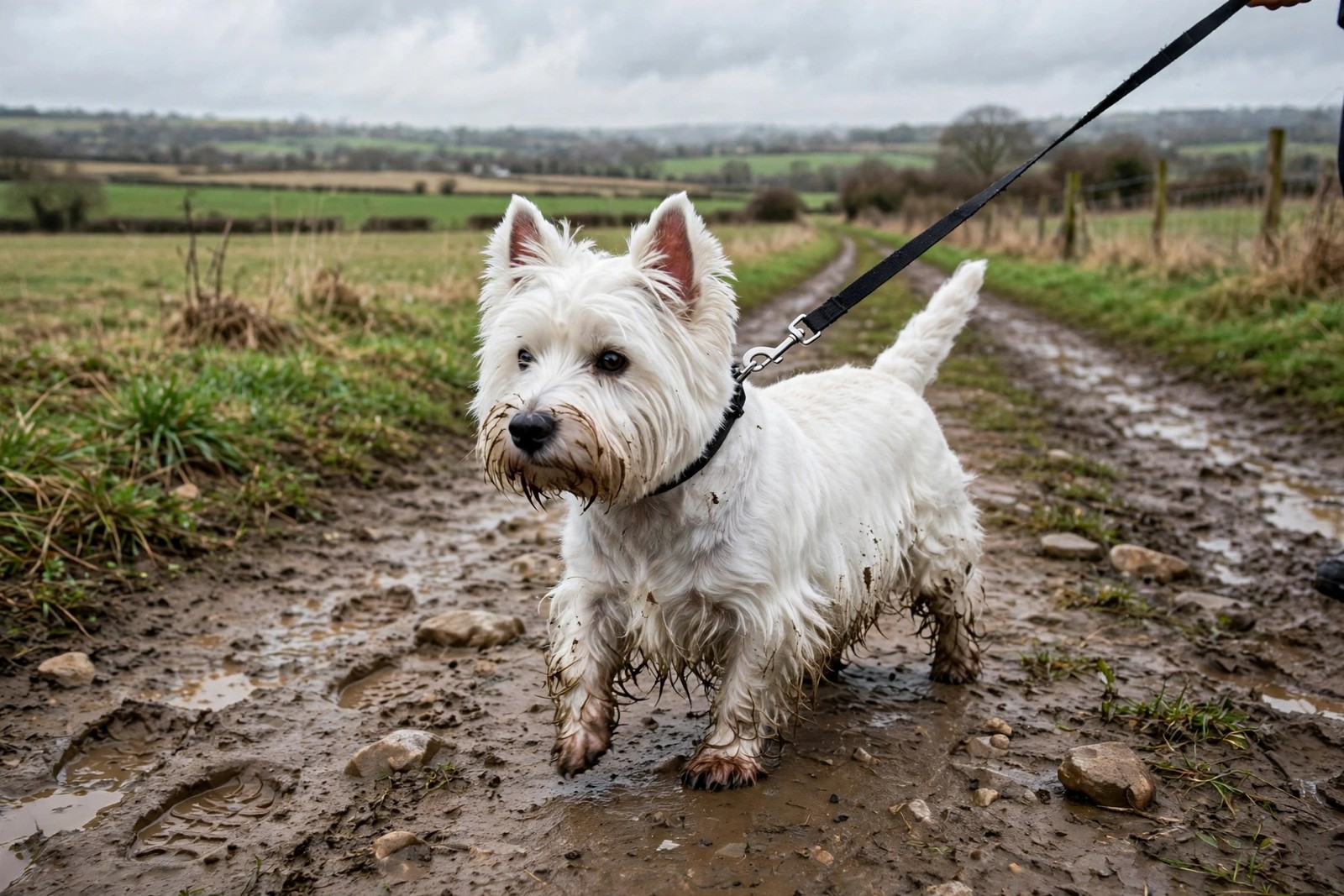
For a family picturing a small dog that can still do a proper countryside walk, the West Highland White Terrier is one of the honest candidates. It is sturdy for its size, typically about 15 to 20 pounds of compact, well-muscled dog on short legs, bred originally to work rough ground rather than to be carried through it. A healthy adult Westie is usually glad of about an hour of daily exercise, and many will happily take more across fields and tracks once fitness is built. What the breed will not do is make countryside walking simple, and the complications are as predictable as the strengths.
What an hour a day actually looks like
Build distance gradually with a young dog, and expect the walk to be terrier-paced: brisk movement broken by intense sniffing stops, detours toward promising cover, and sudden opinions about direction when a scent crosses the path. Short legs mean deep mud, long wet grass, and high stiles cost a Westie more than they cost a spaniel, so route choice matters and a dog that is slowing, sitting, or shaking itself repeatedly is reporting effort, not being stubborn. Water and rest breaks belong on longer outings, and an older dog's hour may split better into two shorter walks.
A leash around livestock, without exception
The countryside rule for this breed admits no flexibility: a leash goes on around livestock, before the sheep or cattle are close, and stays on until the field is well behind you. Westies carry genuine terrier prey drive, and livestock that turns and runs can switch a well-behaved dog into a chase in a single second, with consequences that are legal as well as dangerous. The same caution applies in open country generally until recall is proven under distraction, and for many Westies the honest answer is a long line in rabbit-rich ground for life. That is not a training failure to be ashamed of; it is the breed's original wiring, managed with equipment instead of optimism.
The white coat, and the skin beneath it
A white double coat on a countryside dog is a commitment to visible mud. Expect legs and belly to need rinsing after wet walks, a towel kept in the car, and occasional full baths when the dog has found something memorable to roll in. Dry the dog thoroughly afterward, especially in cold or windy weather, since a small dog low to wet ground gets cold faster than its sturdy attitude suggests.
Skin needs watching after wet and muddy walks in particular, because this breed is prone to sensitive skin and repeated damp, gritty outings can leave the belly, armpits, and feet irritated. Check those areas as you towel down, and take persistent redness, scratching, or odor to a veterinarian as a possibility to investigate rather than bathing harder at home. A coat check at the door becomes the family's routine finish to every walk, catching burrs, ticks picked up in long grass, and sore paws before they turn into bigger problems.
The safety net for a slipped leash
Country walking with a scent-driven dog should assume that one day a leash will slip, a gate will surprise everyone, or a rabbit will win an argument. Alongside a secure collar and harness fit, the dog's identification is the layer that brings it home. The collar tag genuinely matters here: on KinsLe, the Verified QR ID Pet Profiles tag for the dog links anyone who finds it straight to the dog's profile by a scan, so a farmer or fellow walker who catches a muddy, excited terrier on a track can reach the owner without guesswork about which house it came from. Keep the profile's contact details current as part of walk preparation, just as you check the leash clip. Before the first big walk, set up the dog's tag in KinsLe so that Verified QR ID Pet Profiles can speak for it if a slipped leash ever leaves it found by a stranger.