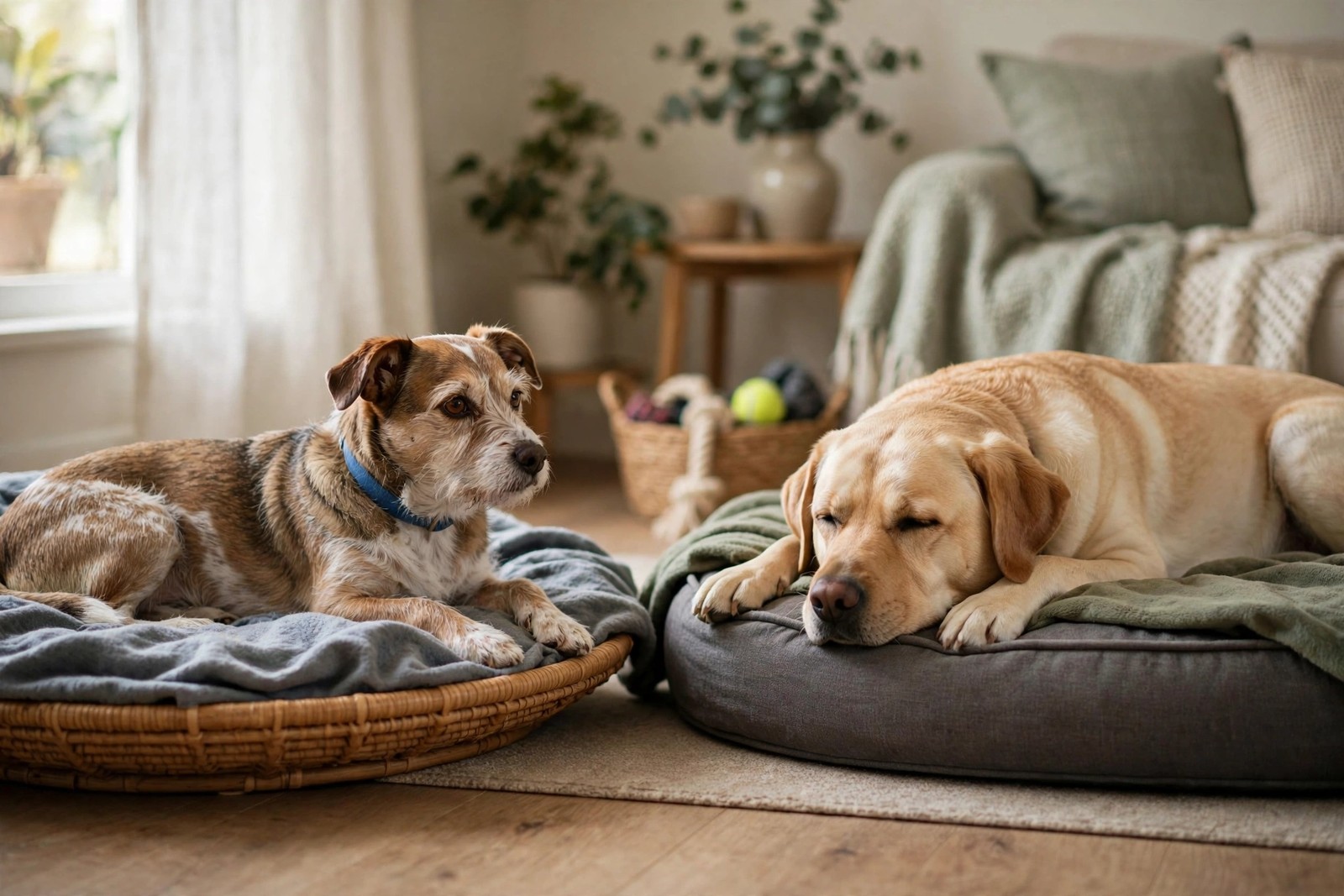
Fostering can be one of the most rewarding ways to help a rescue, and having a resident dog is often a plus rather than an obstacle, because a settled dog teaches a newcomer the household's language faster than any human can. But the resident dog did not volunteer, so the decision should be made partly from their side of the gate: their temperament, their tolerance for sharing space and attention, and their age and health all shape whether fostering is kind to everyone in the house.
The Effect on Your Resident Dog
A sociable resident dog often gains a playmate and a project, and many become visibly brighter during a good foster placement. The risks are quieter ones: resource guarding over food, toys, beds, or you; stress in a dog who prefers being an only dog; and picked-up habits, since a foster who counter-surfs or barks at windows can tutor your dog in both. Watch your resident dog's eating, sleeping, and willingness to engage in the first fortnight, and agree as a household in advance that if your own dog is genuinely unhappy, the rescue will be told early. A reputable rescue would rather move a foster quickly than lose both the placement and the fosterer.
What the Rescue Provides, and What You Provide
Most rescues cover the foster dog's food, basic equipment, and veterinary costs, and provide a coordinator to call, which makes fostering far cheaper than adopting. What you provide is time and structure: feeding, walks, house training for dogs who arrive without it, transport to vet appointments and adoption meetings, and honest reports about the dog's behavior that shape its adoption profile. Ask before you commit what backup exists if the placement fails or you go on holiday, what the average placement length is, and who makes decisions in a medical emergency. Fosters commonly last a few weeks to a few months, and a dog with medical or behavioral needs may stay longer, so go in expecting the longer end.
Setting Up Two Dogs Under One Roof
Give the foster dog its own resting space, bowls, and bedding, and feed the dogs separately from day one; food is where most new-dog friction starts. Introduce the dogs on neutral ground with a parallel walk before anyone shares a room, keep early time together supervised and short, and let the foster decompress for the first days, because many arrive stressed, exhausted, and not yet themselves. Keep your resident dog's core routine unchanged: same walk, same place on the sofa, same training time. Routine is the resident dog's security, and protecting it is what allows generosity toward the guest.
The Goodbye, and the Dog Who Stays
Attachment is not a risk to eliminate; it is the cost of doing fostering well, and it lands on the whole household when adoption day comes. What helps is remembering the arithmetic: a dog fostered and handed over frees you to foster the next one, and most fosterers stay in touch with adopters and receive the photos that prove the system works. Some fosters do stay forever, which rescues cheerfully call a foster fail, and that is a fine outcome too, provided it is a decision rather than a drift. Either way, the dog leaves your care carrying everything you learned about it, and in KinsLe, Transferrable Profiles pass that hard-won knowledge — its routines, preferences, and records — straight to the adopter, so the dog's next chapter starts from understanding instead of guesswork.