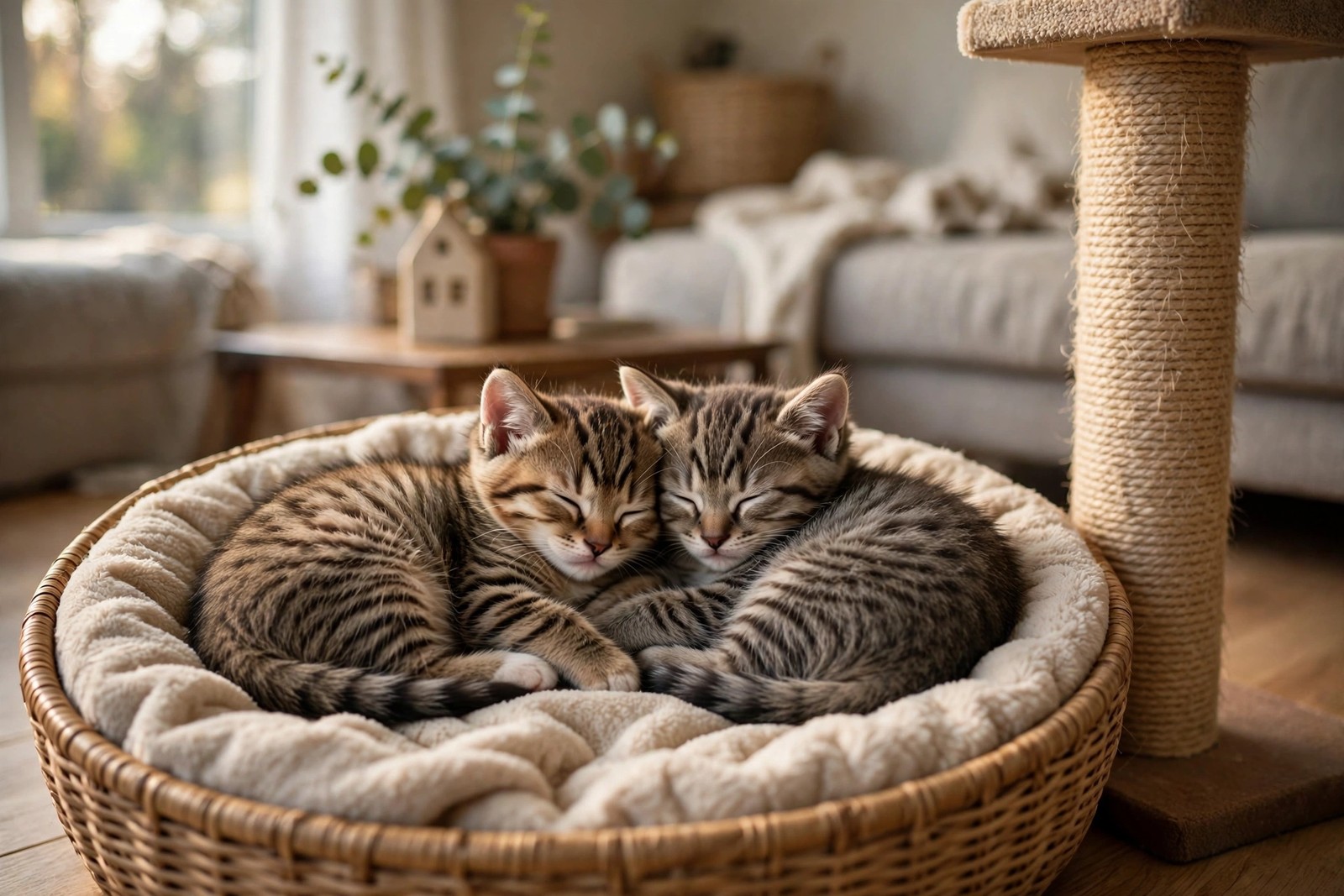
For most households, adopting two kittens together is the easier and kinder option — for the kittens and, after the first busy weeks, for you. Kittens are intensely social and playful, and a second kitten absorbs energy that a single kitten aims at ankles, curtains, and your hands at three in the morning. Pairs also tend to settle into a new home faster: there is a familiar companion in the carrier, at the food bowl, and in the first scary night, so eating, litter use, and exploring usually start sooner and with less hiding.
What a Companion Actually Gives a Kitten
Play is a kitten's job, and another kitten is the only playmate who wants the same games at the same intensity for hours a day. Wrestling and chasing build coordination and muscle, and kittens teach each other limits no human teaches as well: a playmate who squeals and walks away ends a bite that went too hard, so pair-raised kittens often grow into adults with softer mouths and claws around people. Companionship matters most in working households. A lone kitten left alone all day is far more likely to develop attention-seeking, over-grooming, or destructive habits than a kitten with a friend to nap against.
Littermates and already-bonded pairs are the simplest choice because the relationship is built. Two unrelated kittens of a similar age from the same shelter also usually bond quickly, since young kittens accept new companions readily. Adopting one kitten now and a second months later can still work, but it needs a gradual introduction rather than instant friendship.
The Honest Costs
Everything doubles. Budget for two sets of vaccinations, neutering for both, two microchips, double food and litter, and vet bills that can arrive for both in the same month. Insurance or a savings cushion matters more with two. Space needs are modest — kittens share vertical space, beds, and toys happily — but plan on at least two litter trays, ideally one per cat plus a spare, placed in different spots so neither kitten can guard a tray. Think about the long commitment too: you are taking on two cats who may live fifteen to twenty years, including their senior care.
Very occasionally, two littermates adopted together develop friction as they mature socially, usually around one to three years old. Separate resources, neutering on schedule, and giving each cat places to be alone solve most of it; true littermate conflict that needs rehoming is uncommon, and the play and settling benefits far outweigh the risk for most pairs.
Settling Two Kittens at Home
Start both kittens in one kitten-proofed room with trays, water, scratching posts, and hiding boxes, and let them conquer the home room by room together. Feed them side by side but from separate bowls so each eats at its own pace, and handle both individually every day — carrying, grooming, and short solo play sessions — so each kitten bonds with people as well as with each other. Book a vet check for both in the first week, confirm vaccination and worming records from the shelter, and keep their paperwork together from day one.
When you adopt, the records should travel with the kittens rather than start again from memory, and KinsLe's Transferrable Profiles lets the shelter hand over each kitten's profile with its history, vaccinations, and routines attached, giving both kittens a complete record from their first day home.