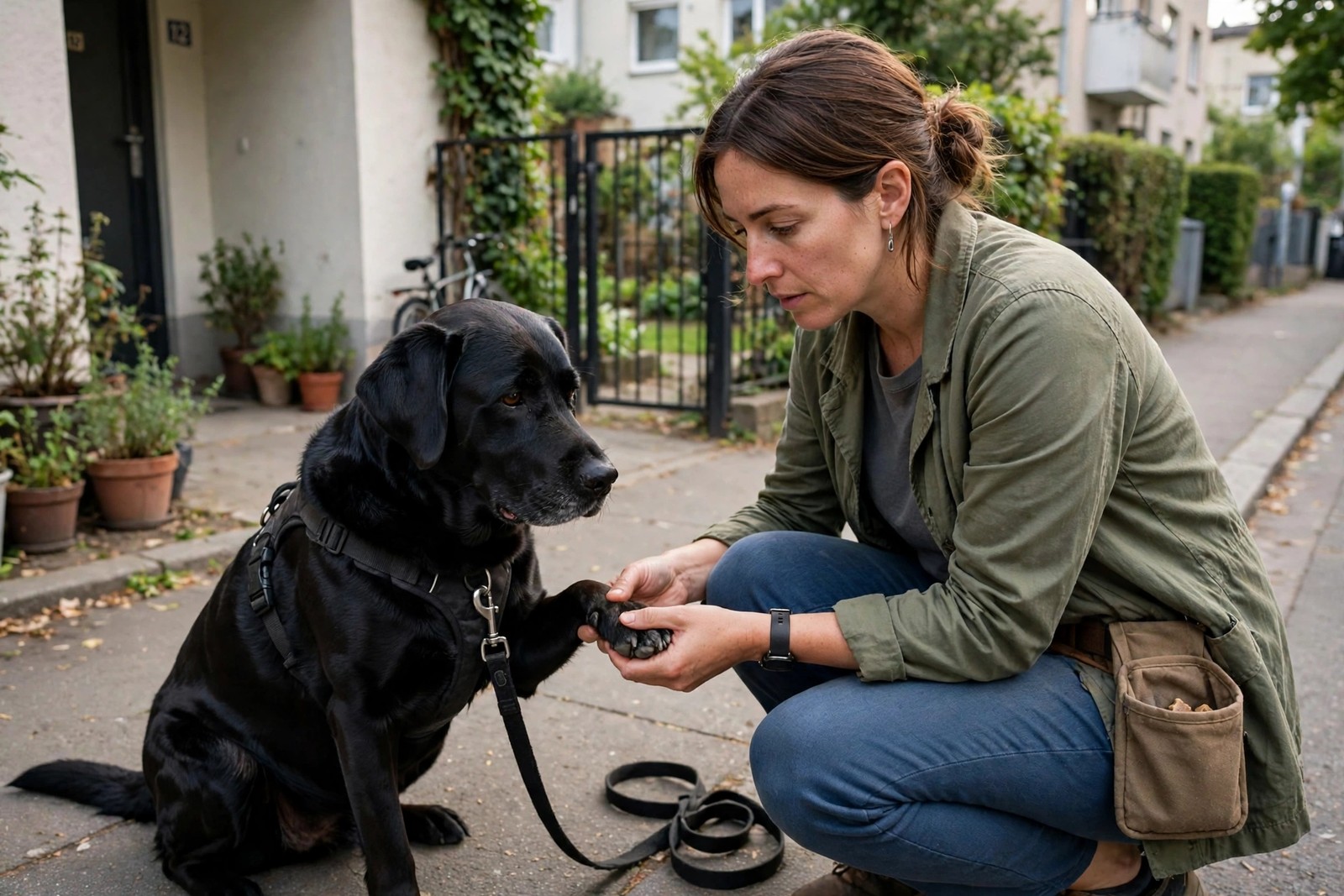
Floor area is the least interesting measure of a dog's life. What shapes a large dog's days is time outdoors, company, rest, and routine: a calm adult giant walked well several times daily, living with someone home a lot, can thrive in compact rooms while a dog in a spacious house, left alone for twelve hours, fares far worse.
The Practical Checks That Decide It
Work through the flat itself first. Stairs and lifts matter more than square metres: a big dog who manages three flights happily at three years old may need carrying at thirteen, and few owners can carry forty kilos. Check what your tenancy or building rules actually say about dogs of this size, and plan bad-weather toileting honestly — the nearby garden helps enormously, but midnight trips in rain are part of the deal. Inside, measure for the furniture of large-dog life: a bed the dog can stretch fully on, water bowls that will not flood a small kitchen, and turning room in the hallway for a dog who cannot reverse elegantly.
Energy Matters More Than Size
Match the individual dog's energy before worrying about their weight. A placid, mature dog — many giant breeds are famously horizontal indoors — settles into flat life readily, conserving all enthusiasm for walks. A young, high-drive large breed is a different proposition entirely: under-exercised adolescents of any size dismantle small homes efficiently, and their boredom has less space to dissipate in. An adult rescue whose temperament is already visible is often the safest route to a large flat dog, because you are choosing the dog in front of you rather than the puppy they might become.
Making the Small Space Work Daily
A dog door is rarely an option in a rented flat, so the garden routine has to be planned rather than improvised. Structure carries the arrangement: a long morning walk with sniffing and play, a midday outing, and a proper evening exercise session leave long, contented rest periods between, which is what flat living actually consists of for the dog. Feed and settle routines in consistent spots, teach a reliable settle on a mat for visitors and deliveries, and keep corridors and exits uncluttered so a big dog is never trapped or startled in a tight corner. Should your adopted dog ever need a different home, the Transferrable Profiles feature on KinsLe passes the profile across with records and routines preserved, giving the next owner the settling details that worked.