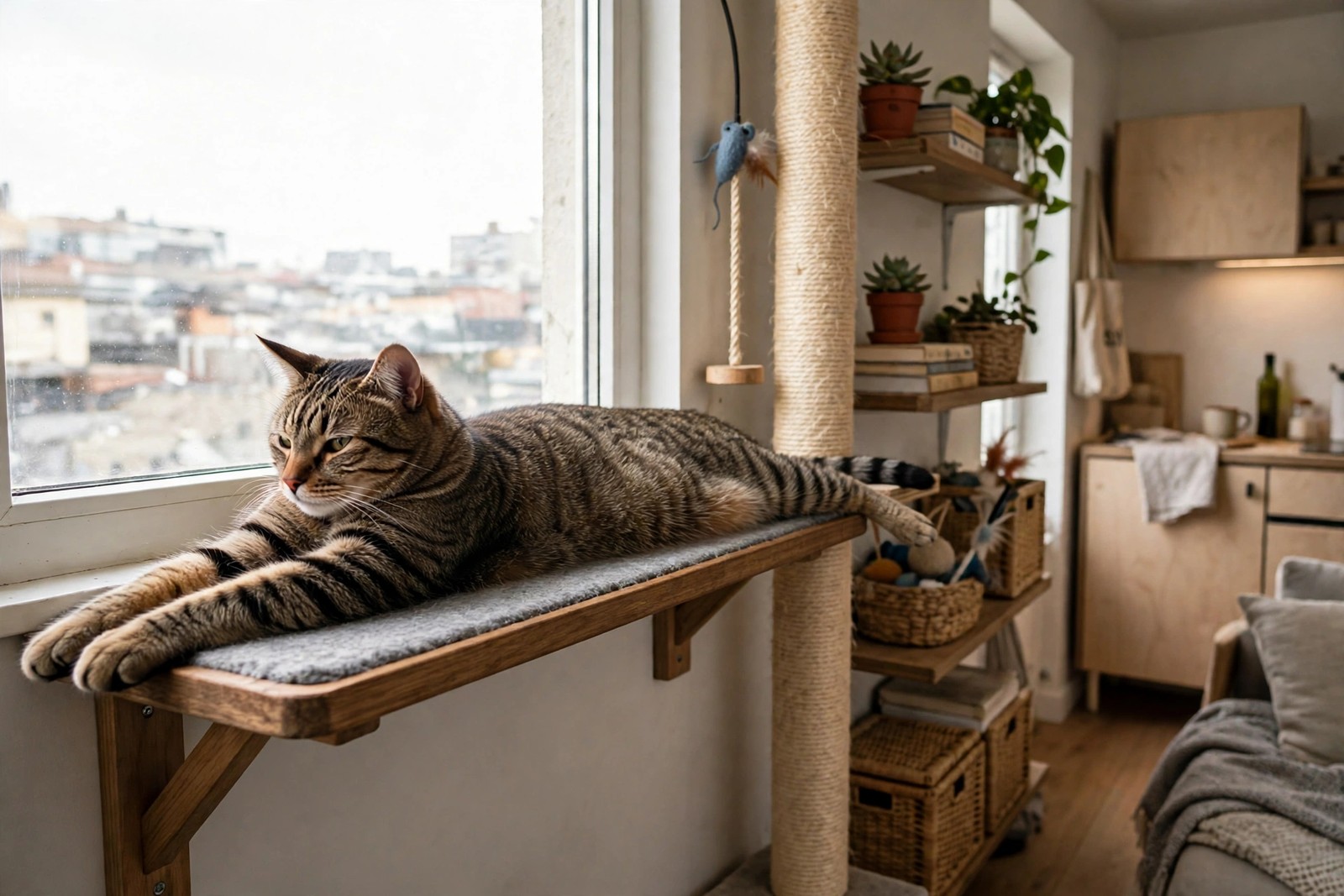
One room can still be a fair and happy home for one cat, since cats measure territory in layers, not just floor area. A room with shelves, a tall scratching post, the top of a wardrobe, and a window perch offers a cat several distinct territories stacked in the space you already have. What makes a studio unfair is not its size but a flat, empty layout: one floor, nothing to climb, nowhere to hide, and a litter tray squeezed beside the food bowls. Fix the layout and most cats — especially calm adults — do genuinely well.
Building Vertical Territory
Give your cat a route around the room that barely touches the floor: a sturdy tall scratcher beside a bookcase, a shelf stepped up to a wardrobe top, and a perch or bed at the window for watching the street. Vertical space also gives a cat escape height, which matters in a studio because there is no spare room to retreat to when visitors come or the vacuum cleaner runs. Add one hiding option at ground level too, such as a box or covered bed under the bed frame, so your cat can choose low and hidden or high and watching. Rotate a few toys weekly and keep one cardboard box in play; novelty matters more than square metres.
Separating Litter, Food, and Sleep in One Room
Cats strongly prefer distance between toilet and food, so use the studio's corners deliberately: litter tray at one end, ideally in or beside the bathroom if the door stays open, food and water at the opposite end, and water away from the food bowl itself. A covered tray and prompt twice-daily scooping keep a small home pleasant, and a washable mat under the tray contains tracked litter. Your bed becomes shared territory whether you plan it or not, so give your cat its own bed nearby; many studio cats alternate between the two quite happily.
The Right Cat, and Daily Input From You
Temperament and age decide fairness more than the floor plan. A settled adult, a senior, or a shy cat who wants one quiet territory often thrives in a studio. A kitten or a restless young cat can also manage, but the play burden falls on you: two interactive play sessions a day with a wand toy, plus puzzle feeding for at least one meal, replaces the exploration a bigger home would provide. Watch for the studio stress signals — over-grooming, night-time racing that never settles, litter tray avoidance, or appetite changes — and treat them as a sign the enrichment, not the flat, needs upgrading first.
If your studio has a balcony, secure it with proper netting before your cat uses it, keep toxic houseplants out of reach on the shelves you have just given away, and store cleaning chemicals in closed cupboards, since a studio cat can reach everywhere you can.
For a cat whose whole territory is one room, Family Sharing in KinsLe means the owner can let selected relatives see its profile.