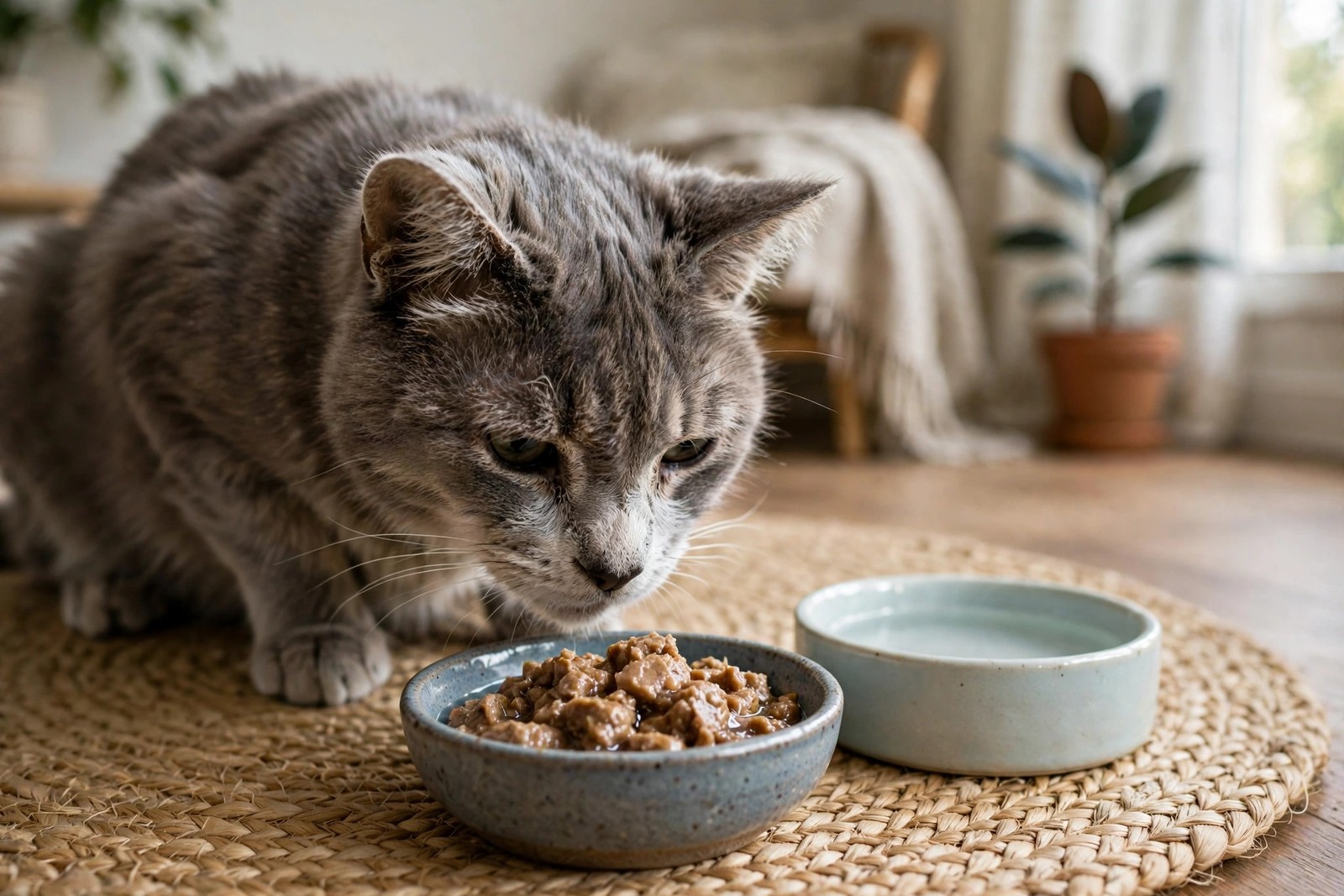
Treat a clear drop in appetite in a senior cat as a reason for a vet check, not as something to accept as old age. An older cat may graze more slowly, prefer smaller meals more often, and show less urgency around food than it did at five, because it moves less and its senses of smell and taste dull a little. That gentle change in style is different from leaving food, walking away from a favourite meal, or eating noticeably less day after day. Appetite is one of the most useful early signals a cat gives you, and in a senior it is often the first sign of a problem that can still be helped.
Causes a vet will want to rule out
Dental pain is high on the list and easy to miss, because many cats with sore teeth or inflamed gums keep eating just enough to hide it. Signs include dropping kibble, chewing on one side, drooling, pawing at the mouth, bad breath, and preferring soft food the cat previously ignored. Beyond the mouth, reduced appetite in older cats commonly prompts a vet to check kidney function and thyroid levels, along with weight, hydration, and blood pressure, because kidney disease and an overactive thyroid are both frequent in senior cats and both affect appetite and weight, in opposite directions in the thyroid's case: a cat that eats well yet loses weight raises a different question from one that will not eat at all. Only an examination, and often blood tests, can separate these possibilities, so describe the change accurately rather than guessing a cause at home.
Red flags that mean promptly, not eventually
Book promptly, and say clearly that a senior cat is not eating, if your cat eats nothing for a day, eats far less for more than a day or two, loses visible weight, or shows any of these alongside the appetite change: vomiting or diarrhoea, drinking and urinating much more than usual, hiding away, weakness, laboured breathing, a mouth smell strong enough to notice across the bowl, or crying at the litter tray. A cat that stops eating entirely can become seriously unwell quickly, and overweight cats that stop eating face a particular risk to the liver, so complete refusal of food in a senior is a same-day phone call, not a note for next week.
Helping at home while you arrange the check
Keep the routine kind and measurable. Feed the food your cat knows, in smaller portions offered more often, served at room temperature or warmed very slightly to release its smell, in a quiet place where the cat is not competing or being disturbed. Place bowls where stiff joints can reach them without jumping, and keep water beside the food and in a second spot as well. Do not start leftover medicines, human painkillers, or appetite remedies from another pet: some human medicines are dangerous to cats, and masking appetite removes the signal the vet needs. If the vet asks how much the cat has eaten, an honest daily note for three or four days, plus a current weight if you can weigh the cat safely at home, is far more useful than an impression.
Weigh a senior cat monthly and write the figure down, because a slow loss hidden under a winter coat is easy to miss by eye and impossible to argue with on a record. KinsLe's Pet Passport brings those weights together with your cat's vet visits, test results, and vaccination records in one packet you can hand to the vet, so the appointment starts from the trend rather than from memory.