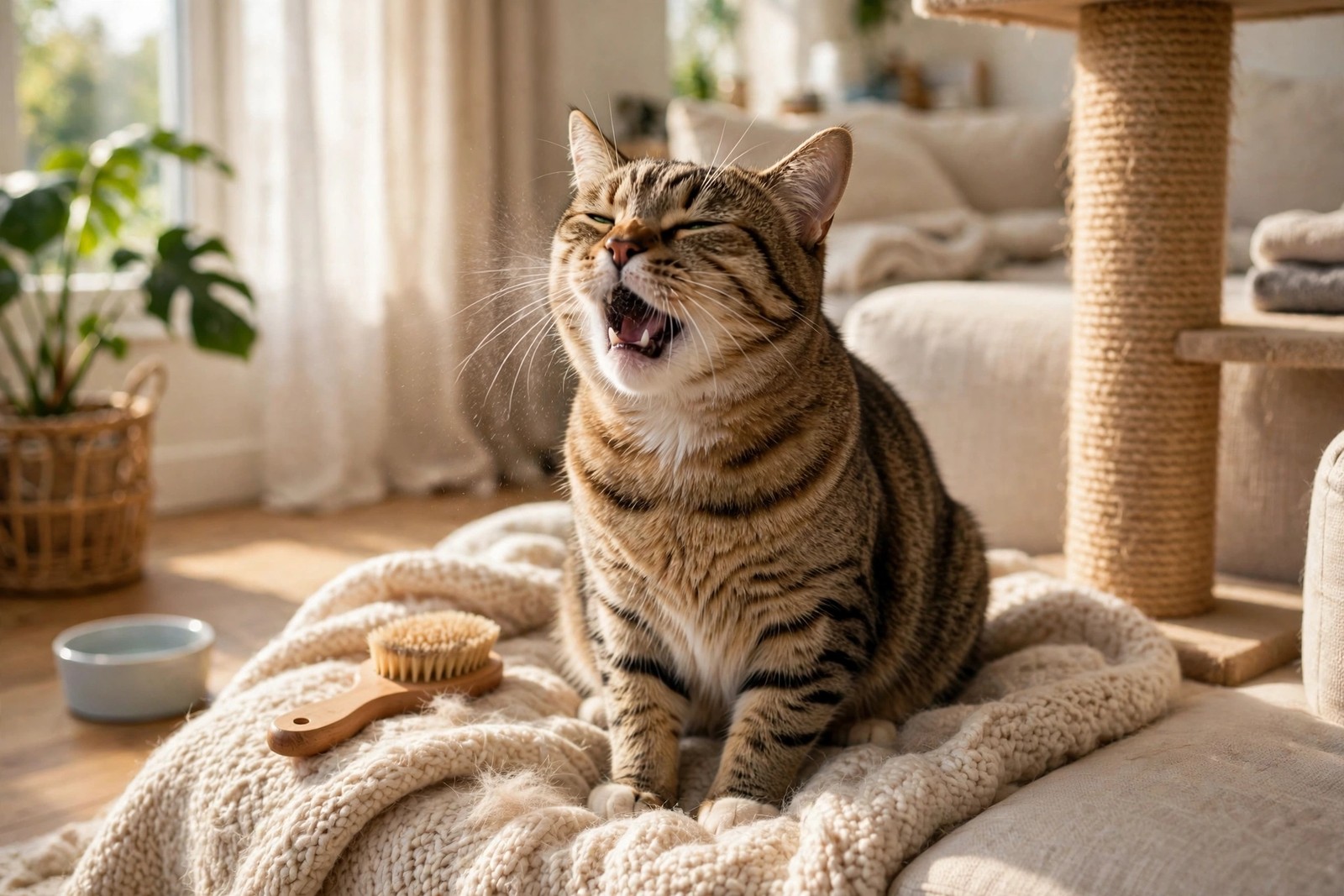
A single sneeze, or a short bout after litter dust, cleaning spray, or a change of air freshener, is a cat clearing her nose — the same reflex you have. What matters is what follows: a cat who then eats, plays, and breathes normally, with clear eyes and no discharge, is telling you it was an irritant, not an illness. Cat flu viruses are the common infectious cause when sneezing becomes a pattern — especially in kittens, multi-cat homes, and cats who came from shelters or catteries.
When Sneezing Stops Being 'Just a Sneeze'
Book the vet if sneezing persists beyond a few days, keeps recurring in bouts, or arrives with discharge from the nose or eyes (especially if it turns yellow-green or affects one side only), reduced appetite, lethargy, mouth ulcers, or noisy breathing. Cats rely on smell to eat, so a blocked, sneezy cat who goes off food needs attention promptly, and kittens can go downhill quickly. One-sided discharge or sneezing blood should always be checked — causes range from a grass seed stuck in the nose to dental disease and, rarely, growths. Note whether anything changed at home (new litter, renovation dust) to tell your vet; it helps separate irritant from infection.
Working With Your Vet
For sneezing, log the pattern rather than the single event: how many bouts a day, whether discharge appeared and what colour it turned, which nostril it came from, and what changed at home in the same week. A short phone video of a sneezing fit is worth more to a veterinarian than a description of one, because the sound, effort, and recovery are all visible. Diagnosis stays the vet's job; your dated log is what separates an irritant week from an infection taking hold.
In a multi-cat home, note which cat sneezed, not just that sneezing happened: cat flu moving through a household usually shows in one cat first, then the next a few days later, and that sequence helps a vet judge whether you are dealing with one irritant or an infection passing between cats. A new arrival, a recent cattery stay, or a show visit in the fortnight before the sneezing started belongs in the log for the same reason — it tells the vet how likely an infectious cause is before any swab is taken.
Contact your vet the same day for sneezing with breathing difficulty, open-mouth breathing, a kitten who stops eating, or blood from the nose. For a bright cat with a mild clear discharge, a routine appointment within a few days is reasonable — and keep them away from other cats meanwhile, as cat flu spreads readily.
Filed in KinsLe's Pet Passport, that sneeze log travels alongside vaccination dates and past visits — one packet for the vet appointment, the boarding stay, or a handoff to a sitter.