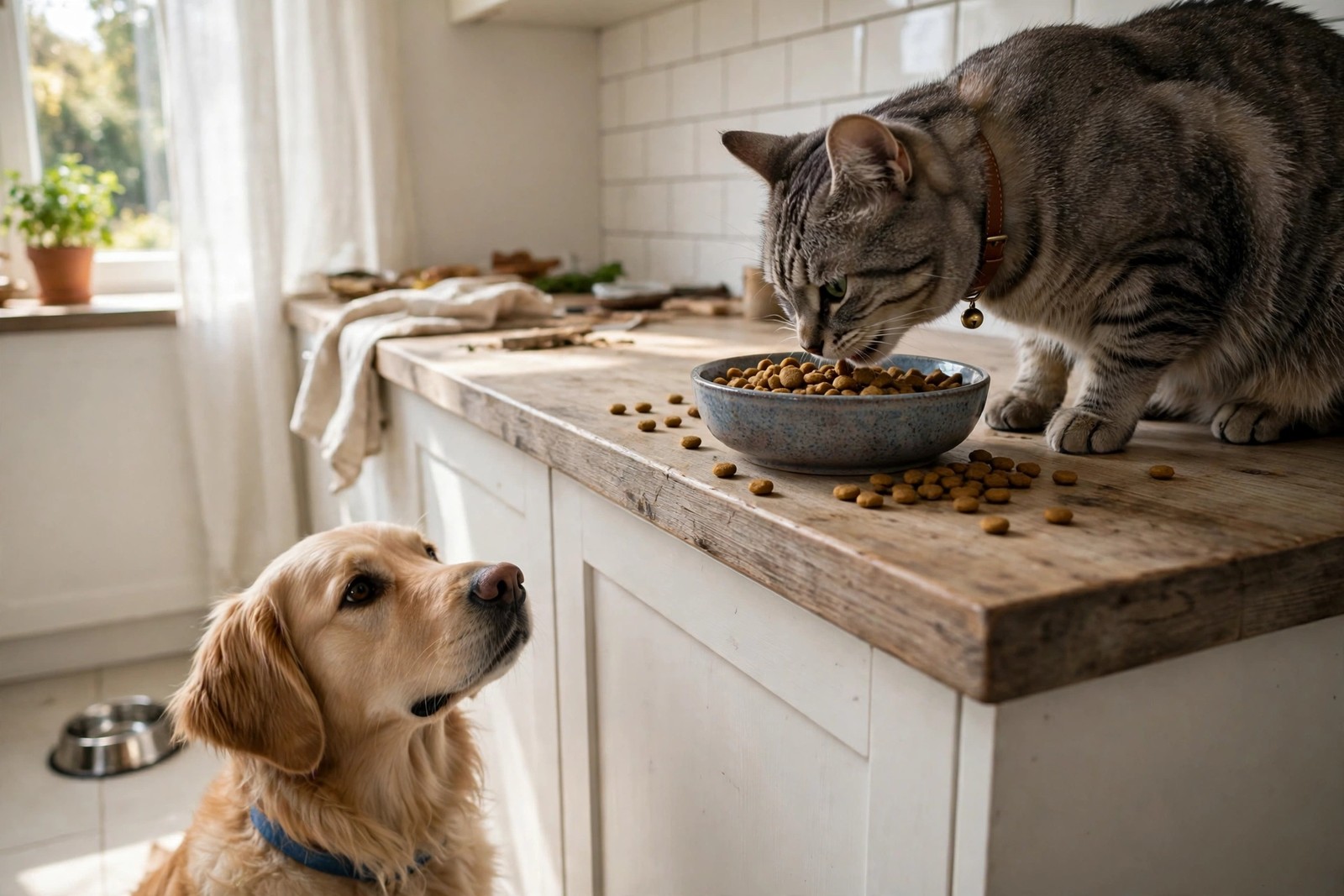
The distinction that matters is between a stolen mouthful and a standing arrangement. A healthy dog who raids the cat's bowl once will very likely be fine, perhaps with mild stomach upset. A dog who eats cat food regularly is on the wrong diet, and the effects build quietly: weight creeping up, digestion repeatedly disturbed, and the balanced nutrition in its own food displaced by something formulated for a different species entirely.
Why Cat Food Is Built Differently
Cats are obligate carnivores with a higher protein requirement than dogs, a need for certain nutrients in their food that dogs can make in their own bodies, and no real use for much carbohydrate. Cat food is therefore formulated far richer: substantially more protein and fat, and more concentrated energy in every mouthful, which is exactly why dogs find it irresistible and queue hopefully whenever the cat is fed. Dog food is balanced for an omnivore's longer digestive outlook, with the fiber, vitamin, and mineral profile a dog needs over a lifetime. Richness that suits a cat's metabolism simply overshoots a dog's, meal after meal.
What Regular Raiding Does
The most common outcome is weight gain, because the dog is adding high-energy food on top of its own meals, and owners rarely cut the dog's portions to compensate for a habit they may not even see happening. Digestive upset is the second outcome: a sudden load of fat and protein commonly produces loose stools, gas, or vomiting, and rich food eaten in quantity is a particular worry for dogs prone to pancreatitis, where a fatty binge can trigger a painful flare that needs veterinary care. There is also a behavioral cost: a dog rewarded daily by successful raids becomes a dedicated bowl thief, hovering at cat feeding times and stressing the cat, whose own eating may turn rushed and anxious.
Separating Two Species at Mealtimes
Solve access, not appetite. Feed the cat somewhere the dog physically cannot reach: a room behind a door fitted with a cat-sized opening or a latch the cat can pass and the dog cannot, a raised surface a healthy cat can jump to and the dog cannot, or behind a gate the cat slips through or over. Feed both animals at set times rather than leaving the cat's food down all day, pick up uneaten cat food after twenty minutes or so, and store the bag where the dog cannot help itself, since more than one dog has eaten itself sick from an open food sack. Feed the dog its own meal at the same moment, in its own place, so mealtime has a legitimate focus.
When to Call the Vet
A single raid followed by one loose stool in an otherwise bright dog usually just needs watching, water available, and a normal next meal. Call your veterinarian if vomiting or diarrhea persists beyond a day, if the dog seems in pain, hunched, or refuses food, if a large quantity was eaten, especially by a small dog, or if your dog has a history of pancreatitis, liver, or kidney problems, where diet changes carry more weight. Back at home, prevention works best as a shared household routine rather than one person's vigilance, and in KinsLe putting the cat's separated feeding on a Care Teams duty list, timestamped when done, means everyone feeds the animals in the right places even when the usual feeder is out.