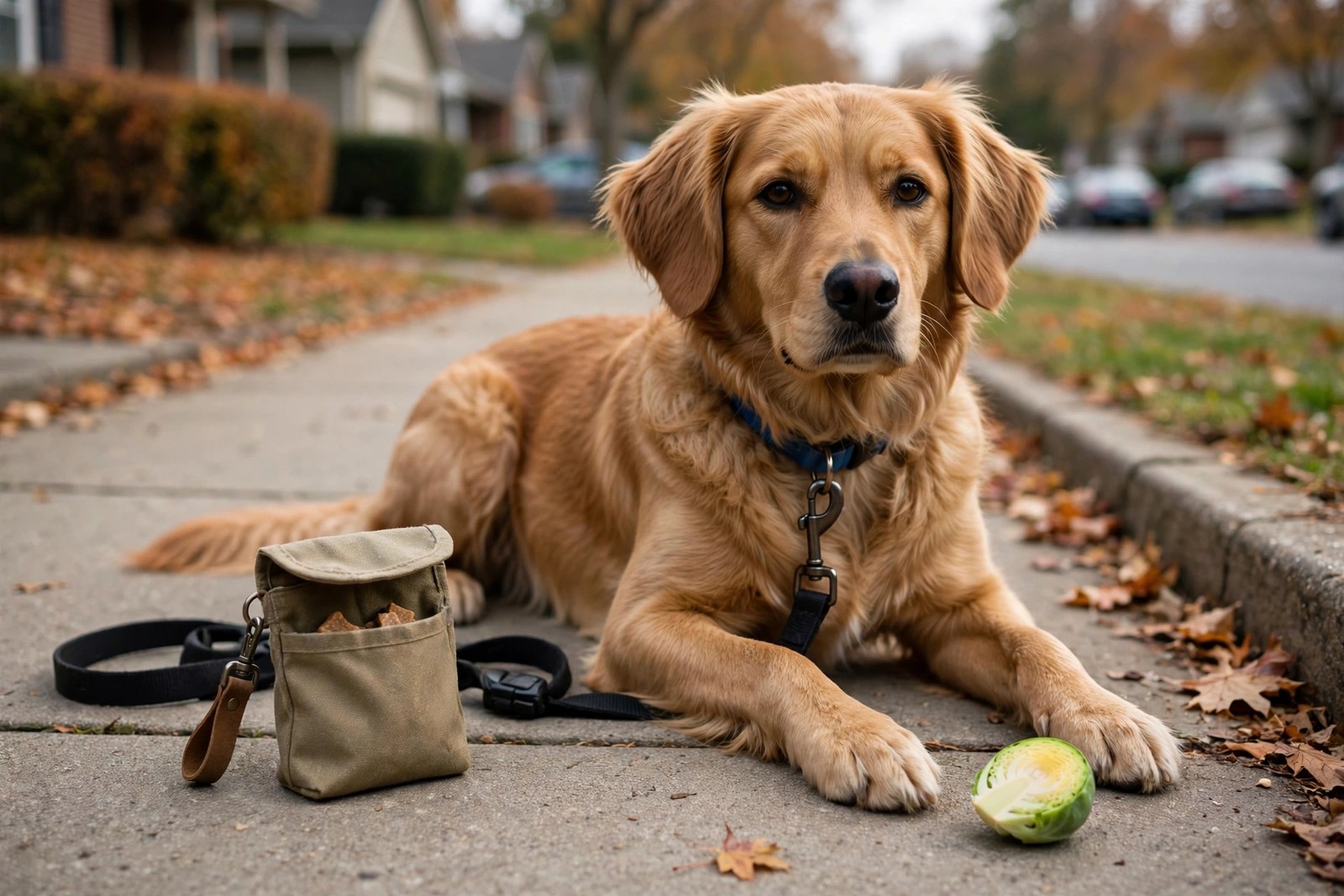
Yes, your dog can eat a Brussels sprout from the dinner table, and the halved sprout in this scenario starts from a good place. Cutting a sprout open removes the firm, round shape that makes whole sprouts awkward to chew and easy to gulp. What decides the answer is everything that touched the sprout before it rolled away. A plain sprout cooked in water or steamed until tender is a reasonable extra. A sprout glossy with butter, roasted in bacon fat, or pooled in gravy is dinner food for people, and it should stay that way.
Preparing a Sprout for a Dog
Wash the sprout, trim the dry stalk end, and peel away any yellowed outer leaves. Cook it plainly until a knife slides in without resistance. Raw sprouts are dense and hard on the stomach, and a tiny raw piece is harder for a dog to handle than the same piece cooked soft. Cut the cooked sprout in half for a larger dog and in quarters for a small dog. Let it cool until it is comfortable to touch. Serve the pieces in the bowl or one at a time by hand, never tossed for a dog to catch and swallow whole.
Small Counts on Purpose
One sprout is the right portion for a small dog. A medium or larger dog can have up to two sprouts. That modest count is not stinginess. Sprouts belong to a vegetable family known for producing gas, and the effect builds quickly once a dog moves past a couple of pieces. Keep sprouts occasional rather than daily, and count them as part of the day's extras. If several relatives at a long dinner each offer a piece, your dog can collect a large serving without any single person noticing. Agree the count before the meal begins.
When the Table Version Does Not Qualify
Holiday cooking hides ingredients well. Sprouts may be halved and roasted with onion, glazed with sweet syrups, or finished in pan drippings that carry garlic. Each of those versions leaves the plain category behind. A dropped sprout that you can identify as plain is one thing. A sprout of unknown coating from a shared serving dish is a poor gamble, and a polite retrieval is the better move. Take the piece away calmly, offer a regular treat in exchange, and nobody at the table needs a lecture.
Reading the Aftermath
A dog who enjoyed one or two plain sprouts may simply be windy that evening. Clear discomfort, repeated attempts to vomit, drooling, or a swollen and tight belly need prompt veterinary attention, especially in deep-chested dogs, because those signs point beyond simple gas. Loose stools the next morning usually mean the portion was too generous for that dog. Note what happened, halve the amount next time, or retire sprouts for a dog whose stomach objects twice in a row.
One Rule for Every Pair of Hands
Festive meals bring helpers, guests, and children who all feed differently. A short written rule prevents the slow creep from one sprout to six. State the food, the preparation, and the count in a single line that a guest can follow without background knowledge. Households that keep that line where carers can see it make better decisions in noisy kitchens. KinsLe Care Teams supports that habit by holding the feeding note beside each pet's assigned duties, so the sprout limit is visible to the person on duty rather than buried in memory.