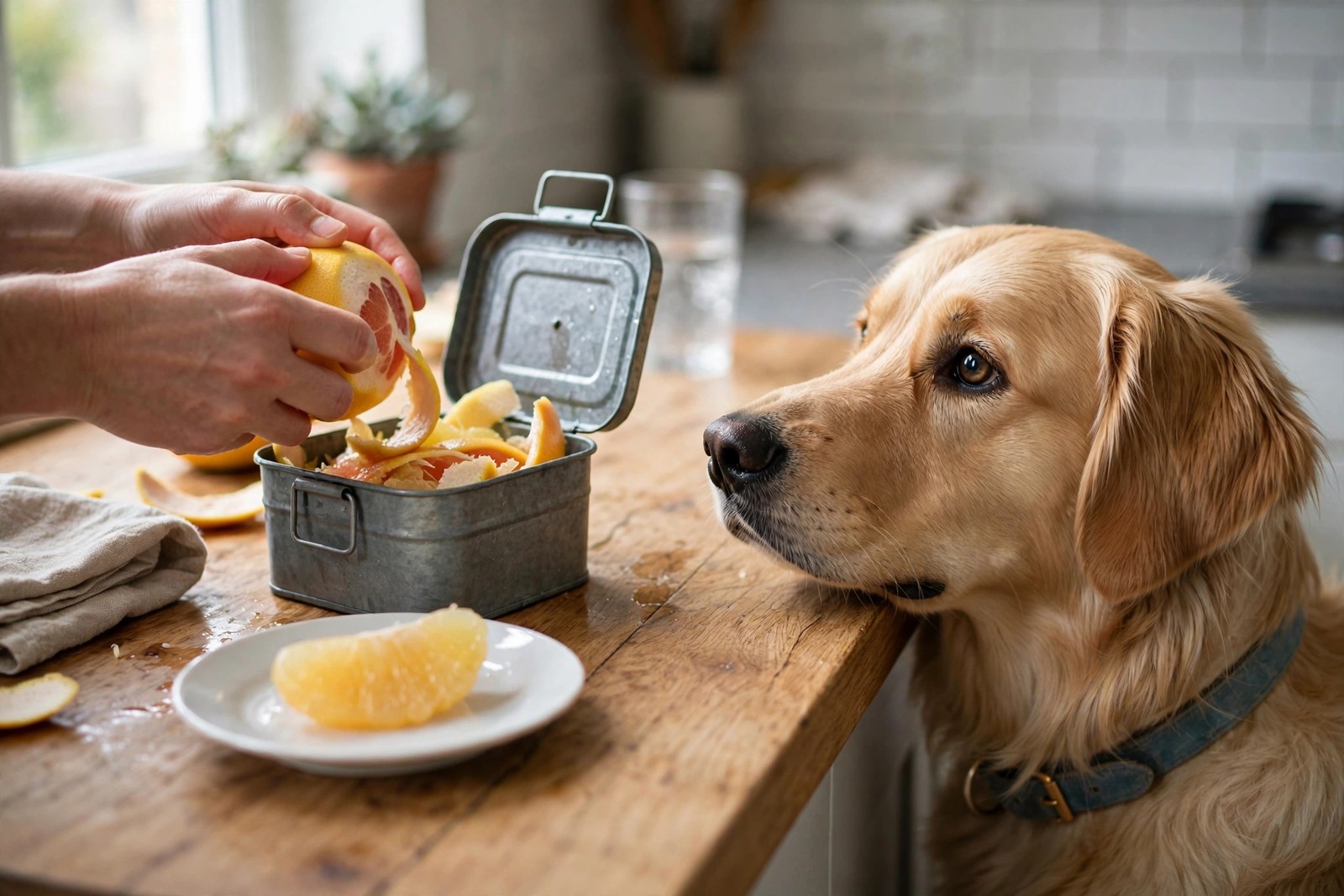
Start with the dropped segment, because that is how most dogs meet grapefruit. The flesh itself is not poisonous to dogs, so one segment snatched off the kitchen tiles is, for most healthy dogs, a non-event: retrieve whatever is left, especially any peel, and carry on with breakfast. What the flesh does have is a lot of acid and a strong bitter edge, so the realistic outcome is a dog who pulls a face, drools, leaves the rest — or, if it ate enthusiastically, has a loose stool or a mild stomach upset later in the day.
The Parts That Are a Genuine Problem
The peel, the thick white pith, and the seeds are the parts to keep away from dogs. Peel is tough, hard to digest, and a choking or blockage risk in chunks, quite apart from being the most bitter and concentrated part of the fruit. So the kitchen rule is about access rather than panic: compost peelings straight away, keep the fruit bowl out of counter-surfing reach, and treat a dog who has eaten a large amount of peel — especially a small dog — as a reason to phone your vet for advice, particularly if vomiting, repeated diarrhoea, or straining follows. Dogs on regular medication, and dogs with sensitive stomachs or kidney or liver problems, are another reason to check with your vet before grapefruit becomes any kind of habit, since grapefruit is well known for interacting with medicines in people and caution costs nothing.
Ordinary grapes, it is worth adding, are a completely different and serious matter for dogs — grapefruit is not a grape, and the similar names cause real confusion at breakfast tables.
If You Deliberately Share: Preparation and Portion
Prepare it fully or do not offer it at all. Peel the segment completely, strip away the bitter white membrane as best you can, pick out every seed, and offer the clean flesh in small pieces rather than a whole segment a dog might bolt. Portion-wise, one or two segments is plenty for a medium or large dog, and half a segment is a fair taste for a small dog — offered occasionally as a novelty, counting towards the day's treats, never as a daily breakfast ritual. Introduce any new fruit in a small amount first and watch the next day's stools before offering more.
Plenty of dogs will refuse it outright, and that verdict should be respected: grapefruit offers a dog nothing it needs that its normal food does not already provide, so there is no nutritional reason to persuade a reluctant dog. If yours loves a sour segment, keep it as the rare, prepared treat described here, and if sickness after eating it is more than mild or lasts beyond a day, your vet is the right next step.
Noting the household rule — flesh occasionally, peel never, fruit bowl out of reach — in KinsLe's Care Teams means family, guests, and dog-sitters all feed by the same grapefruit decision instead of improvising at the breakfast table.