
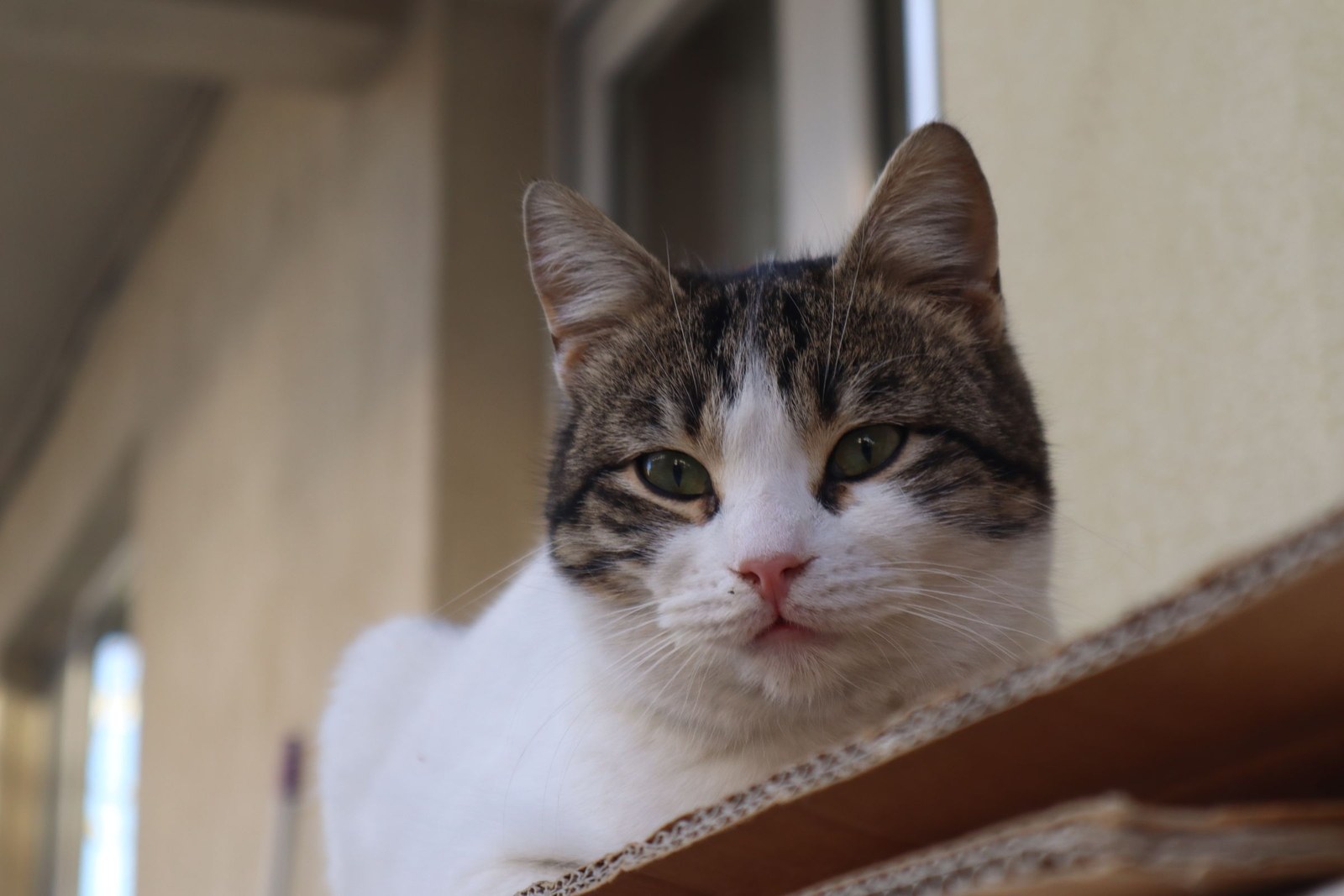
The balcony question comes down to enclosure: unless every open side is sealed with netting or screening a cat cannot defeat, the answer is no — and even a sealed balcony still needs you watching. Cats squeeze through surprisingly small rail gaps, launch themselves after insects and birds, and can fall from heights with serious consequences, so an open or partly railed balcony is not safe, and a harness alone is not protection on one.
Why Balconies Are Riskier Than They Look
From the ground, a balcony feels contained. From a cat's perspective, it is a hunting platform at height. A fluttering moth, a pigeon landing on the rail, or a sudden loud noise below can trigger a leap or a startled scramble before you can react. Railings designed for people often have gaps a slim cat — especially a kitten — can wriggle through, and cats climbing a rail to get a better view have no concept of the drop on the other side.
Veterinarians have a name for falls from buildings for a reason: injuries from so-called high-rise falls are a familiar emergency, and survival does not mean walking away unhurt. Broken jaws, limbs, and internal injuries are common outcomes, and even a short fall onto concrete can injure a cat badly. Prevention is entirely in your hands, which makes this one of the clearest safety topics in cat care.
What 'Fully Enclosed' Really Means
A safe balcony setup encloses the entire open side, floor to ceiling or floor to the balcony above, with material a cat cannot defeat:
- Strong, purpose-made cat netting or fine metal screening, firmly fixed on all edges with no loose corners to push under.
- No gaps at the sides, under the door, or around pipes and railings — if a cat's head fits, assume the body may follow.
- A door or access point that latches securely and is checked every time you go in or out.
- Stable furniture placement: nothing climbable positioned where a leap could carry her over or through a weak point.
Inspect the enclosure regularly for weather wear, chewed spots, and loosened fixings, and repair damage before the next outing, not after. If you rent, check your lease and building rules before installing anything, and consider a freestanding enclosed catio-style frame on the balcony as an alternative that does not alter the building.
Start with short, supervised sessions. Watch how your cat uses the space — does she test the netting, fixate on birds, or relax and sunbathe? A cat who throws herself at barriers is telling you the setup or the idea needs rethinking.
Safer Ways to Give Her Outdoor Air
If full enclosure is not possible, your cat does not have to miss out. A secure window enclosure, an indoor window perch with the window screened, or a small catio on a patio gives fresh air and outdoor sights without height risk. Some cats enjoy harness walks at ground level with patient training, but that belongs in a garden or park — never as a substitute for enclosure on an open balcony, where a startled cat can tangle, slip a harness, or go over the edge.
Never leave a cat unattended on any balcony, enclosed or not. Heat builds quickly in sun-exposed spaces, so provide shade and water and bring her in well before the space gets hot.
A Safety Net If the Worst Happens
Even careful owners plan for accidents, escapes during moves, and doors left ajar by visitors. KinsLe's Lost Pet Alert System is free in every profile: if your cat ever goes missing, the alert shows on the map, and a finder can message you directly — a fast, local safety net when minutes matter. Keeping your cat's profile and contact details current means that network can actually reach you.
A properly enclosed, supervised balcony can be a cat's favourite room in the house; an open one is a risk not worth taking. Should she ever slip out anyway, her Lost Pet Alert System on KinsLe lets whoever finds her message you directly from her profile.