No. Tap water is treated to be safe for people, and that treatment is exactly what makes it unsafe for fish straight from the tap. Suppliers add chlorine, or the more stable compound chloramine, to kill bacteria in the supply, and those chemicals burn fish gills, damage skin and eyes, and kill the beneficial bacteria living in your filter that convert fish waste into far less harmful compounds. A fish added to freshly drawn untreated water may gasp at the surface, clamp its fins, flash against objects, or lose colour within hours, and an established tank can suffer a slower disaster when a large untreated water change wipes out part of its bacterial colony and waste levels climb over the following days.
Chlorine and chloramine are not the same problem
Chlorine is a gas dissolved in water, and much of it will escape if water is left standing in an open bucket for a day or so, which is where the old advice about ageing water came from. Chloramine is chlorine bonded to ammonia, made deliberately stable so it survives the journey through the pipes, and standing does not reliably break it down. Many suppliers use chloramine, some switch between the two seasonally, and you generally cannot tell which you have by smell or taste. A dechlorinator, also sold as a water conditioner, neutralises both chlorine and chloramine, and the better answer for any fishkeeper is to treat every bucket rather than guess which chemical arrived that week. Your supplier publishes which disinfectant it uses, and checking once is worthwhile, but treating as standard practice removes the gamble entirely.
How to prepare water for a water change
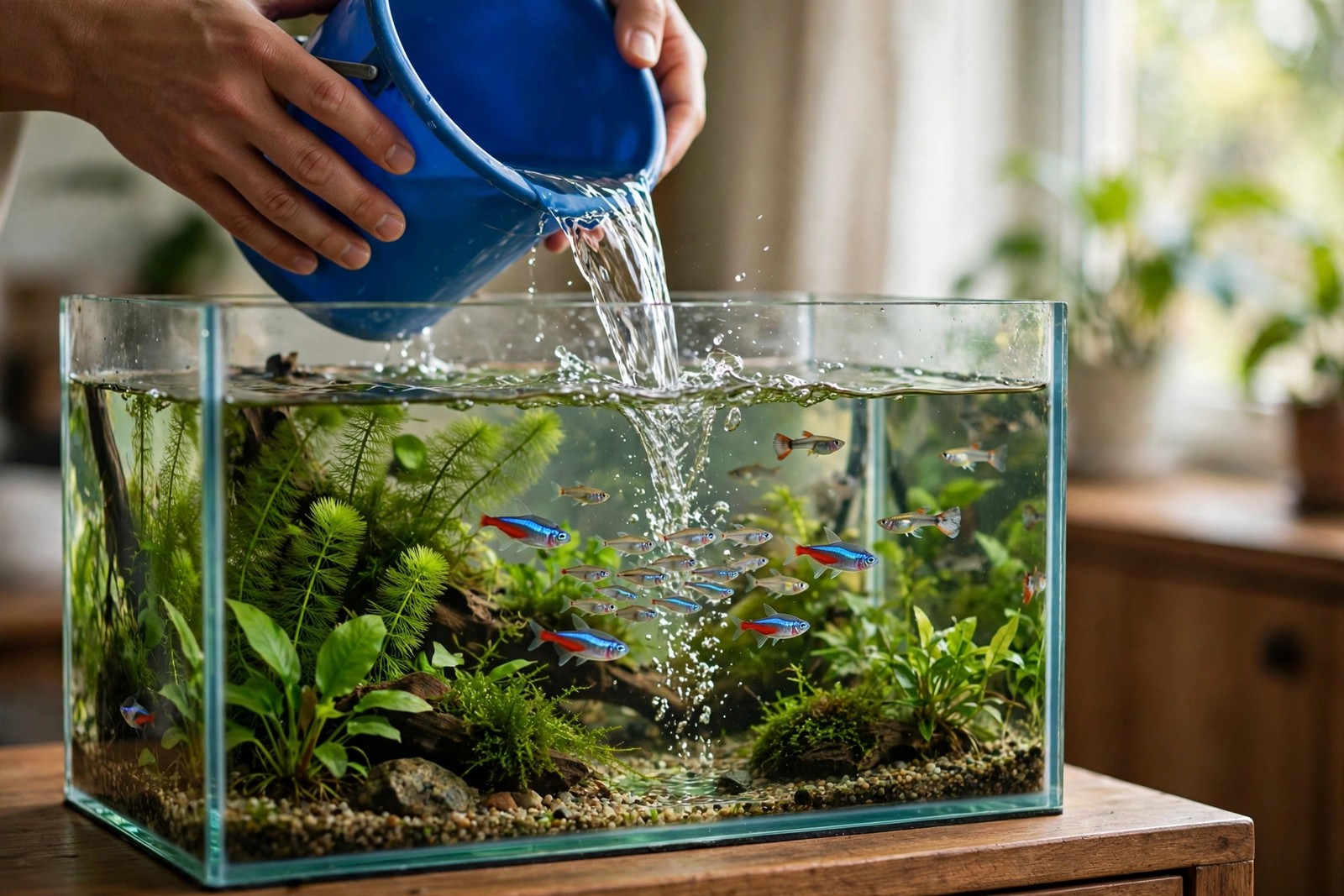
Draw the replacement water, add the dechlorinator at the amount the product directs for that volume, and stir it in before the water goes near the tank. Match the temperature closely to the tank water by hand, blending hot and cold from the tap or letting the bucket stand in the room, because a sudden temperature swing shocks fish even when the water is chemically safe. Then add the new water gradually rather than tipping the whole bucket in at once, especially in small tanks where a few litres change conditions fast.
For a brand-new aquarium, treat the full volume as you fill it, then cycle the tank properly before adding fish, because dechlorinator makes water chemically safe, not biologically mature. A filter needs time to grow the bacteria that handle waste, and adding a full stock of fish to treated but uncycled water leads to ammonia exposure that no water conditioner can excuse. Test kits for ammonia, nitrite, nitrate, and pH earn their place here: test the tank regularly while it settles, and test your tap water once so you know its pH and hardness, which decide which species will genuinely thrive in it.
Mistakes that undo good treatment
Never top up or refill from the hose or tap directly into the tank without treating the new water, and never rinse filter media under the tap, because the chlorine in that running water kills the very bacteria the media houses. Rinse sponges and media in a bucket of water taken out of the tank instead. Avoid changing a very large share of the water in one go unless an emergency, such as a pollutant spill, forces it; smaller, regular partial changes with properly treated, temperature-matched water keep conditions stable, and stability is what fish actually need. If fish behave oddly straight after a water change, suspect an untreated or mismatched batch first, test the water, and act the same day rather than waiting.
So treat every batch, match the temperature, add it gradually, and protect the filter bacteria at every step. KinsLe Care Teams fits a shared tank well because the water-change steps, including the dechlorinator step for each new batch, can be assigned to whoever is maintaining the aquarium that week, with the finished change marked and timestamped.