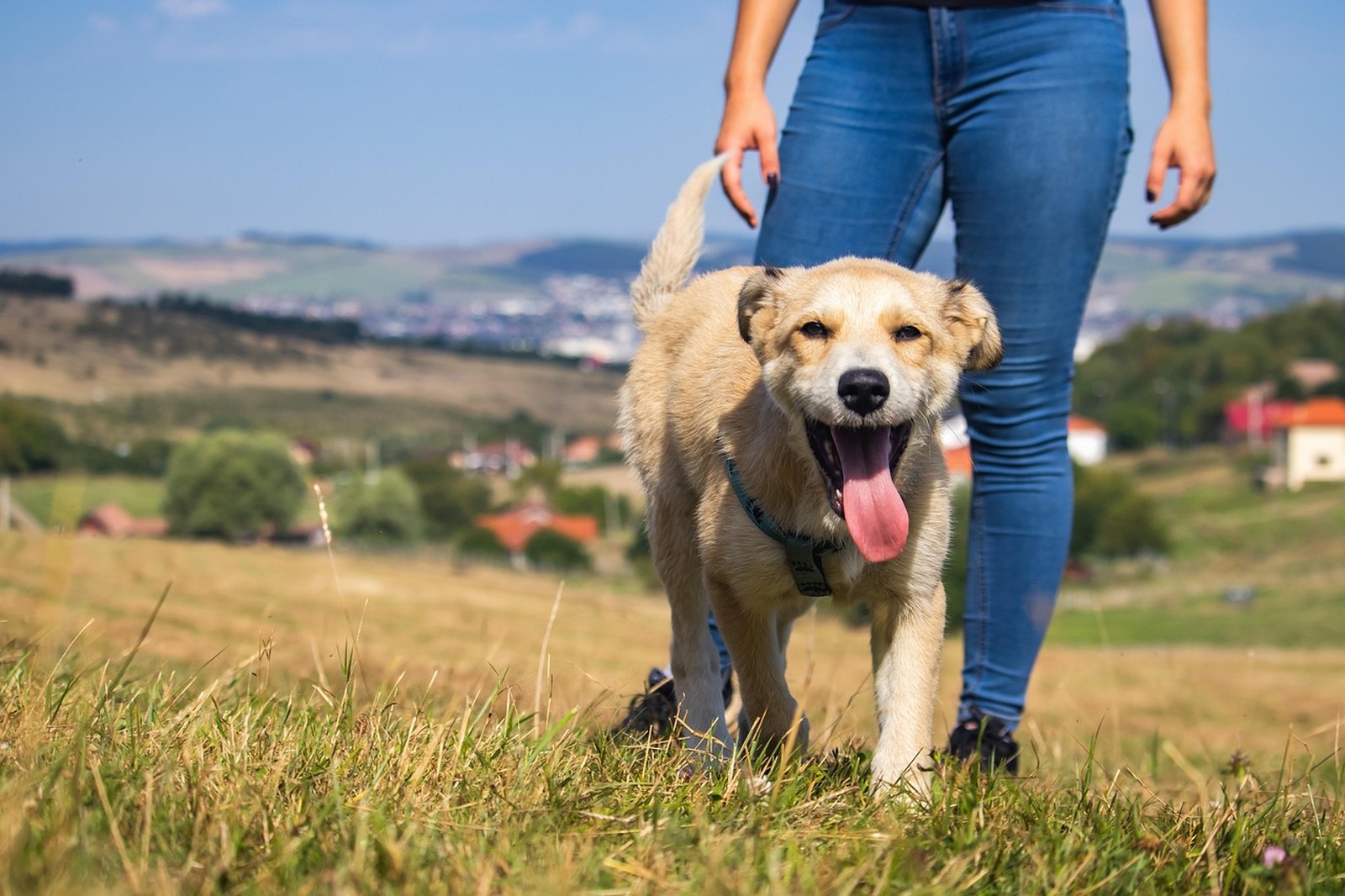
Walking is not just allowed for a dog with arthritis — it is one of the main tools for managing it. Movement nourishes cartilage, keeps the muscles that support sore joints strong, and helps control the weight that loads those joints. The dog who is rested completely soon loses muscle, stiffens further, and finds even short walks harder. The pattern that works is little and often: two to four shorter, steady walks a day on soft, even ground will do far more good than one long weekend hike, which typically earns a stiff, sore dog the following day.
Shaping the Right Walk
Start every outing with a few minutes of slow lead walking as a warm-up before any trot or play, and keep the pace at whatever your dog chooses rather than urging them to keep up with you. Grass, woodland paths, and firm sand are kinder underfoot than pavement, and on bad days avoid steep slopes, stairs, slippery floors, and rough ground where a stumble twists a sore joint. Consistency matters more than distance: the same total minutes spread evenly across the week beats feast-or-famine exercise, because arthritic joints respond badly to sudden unaccustomed effort.
Judge each walk by the recovery, not the outing itself. Mild stiffness that eases within an hour or so is expected. Limping during the walk, lagging behind, sitting down, or being noticeably sorer or quieter that evening means the last walk was too long or too hard — shorten the next one and build back gradually. On a flare day, swap the walk for a gentle garden wander and sniffing games, which give mental work without joint load.
The Rest of the Management Plan
Exercise works alongside, never instead of, the rest of arthritis care. Weight control is the highest-impact step most owners control: every extra kilo loads hips, elbows, and knees, so keep your dog lean enough to feel ribs easily under a thin fat cover, and weigh them monthly. Pain relief prescribed by your vet is what makes comfortable exercise possible, so give it as directed and review it at regular checks rather than stopping because your dog seems brighter — that brightness is often the medication working.
Many arthritic dogs do brilliantly with hydrotherapy or underwater treadmill sessions, which build muscle while water supports the joints, and a physiotherapist can prescribe exercises aimed at your dog's specific weak points. Ask your vet whether either suits your dog. At home, add ramps for the car and any steps, non-slip mats on hard floors, raised food bowls if the neck or shoulders are affected, and a supportive bed in a warm, draught-free spot.
Tracking What Works
Arthritis changes slowly, and a simple record beats memory: note walk length, surface, how your dog moved, and how they were that evening, alongside monthly weights and any change in stiffness first thing in the morning. Patterns appear within a few weeks — which walk length is the sweet spot, which surface causes trouble — and those notes turn vet reviews into precise adjustments rather than guesswork.
Keeping that record where everyone can use it matters when family or a walker shares the exercise, and KinsLe's Pet Passport holds your dog's walk limits, weight history, and vet plan in one portable packet, so every walk follows the plan your vet agreed.