
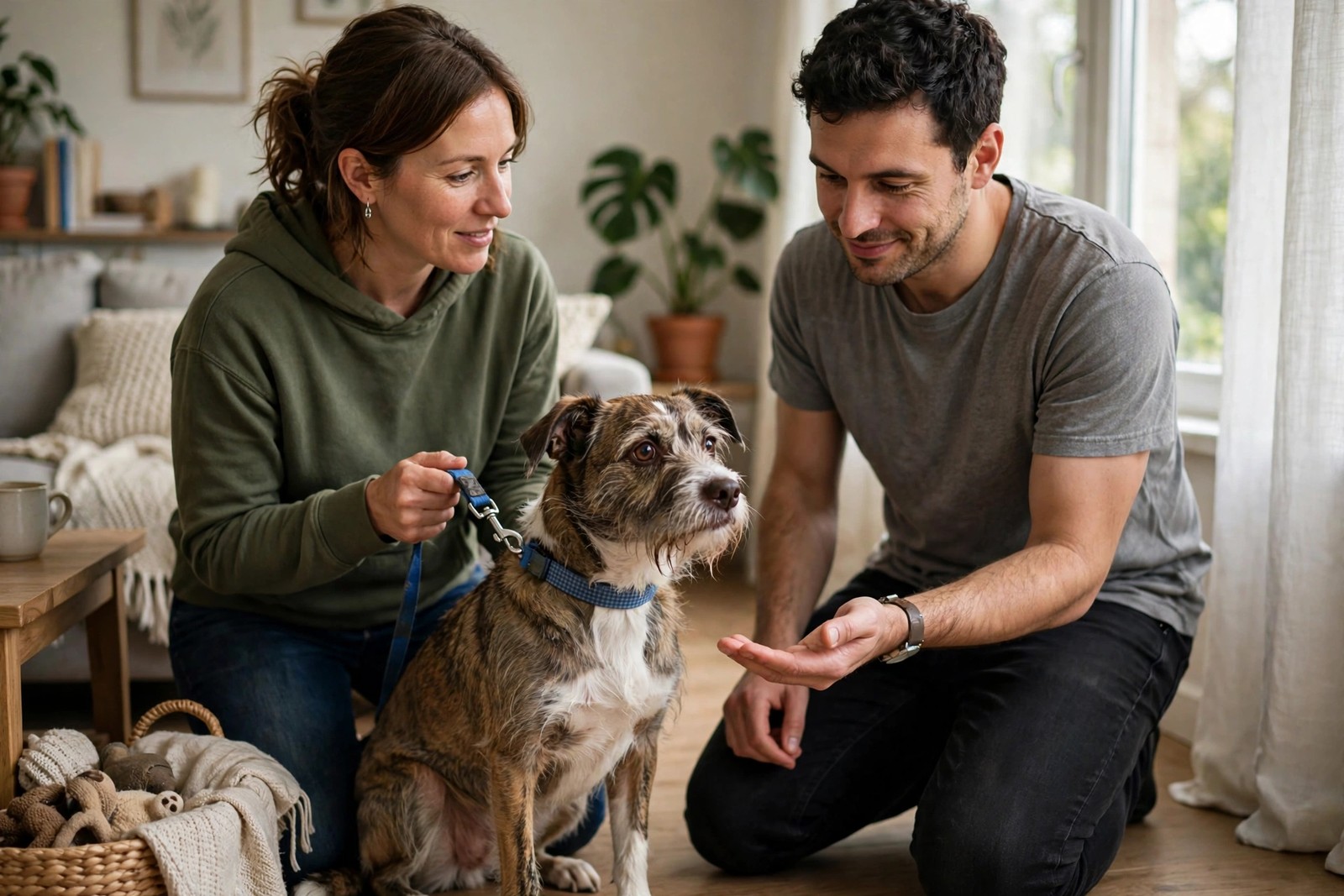
For a first-time sitter, prepare in layers: a relaxed meet-and-greet at home, a short practice visit before any long trip, and a written handoff that covers food, walks, quirks, and emergencies. That gradual start lets your dog learn the new person is safe while you are still nearby, and it lets the sitter learn the house routine without the pressure of an airport deadline.
Start With a Meet-and-Greet at Home
Invite the sitter to your home first, not to a park or their house. Your dog reads a new person very differently on their own turf — a confident Labrador may bounce up for fuss, while a shy rescue or an older terrier may want to sniff from a distance and retreat. Watch for loose body language, soft eyes, and a dog who chooses to come back for more attention. If your dog is nervous, do not force cuddles. Let the sitter toss treats on the floor, take them for a short walk together with you, and sit calmly while you chat.
Use that visit to show, not just tell: where the lead hangs, which door you use, how the food is measured, and which sofa is (or is not) allowed. A five-minute demonstration of a cue like "wait" at the door prevents a week of confusion.
Do a Short Practice Stay
Before a week away, book one afternoon or a single overnight. It is the single best predictor of how a longer stay will go. Your dog learns that the sitter arrives, you leave, good things happen, and you come back. The sitter learns the real details no form captures — that your dog barks at the mail slot at 10 a.m., needs a toilet break right after dinner, or will only settle if the hallway light stays on.
After the practice visit, ask specific questions: Did they eat? How did bedtime go? Anything that surprised you? Adjust the written notes based on the answers rather than assuming your first draft was perfect.
Write the Handoff Like Someone Else Has to Use It at 2 a.m.
A good handoff fits on one or two pages and covers:
- Feeding: exact amount, times, where food and treats are stored, and any foods that are off limits
- Walks and toilet breaks: usual times, route or garden routine, harness versus collar, and reactivity triggers
- Health: medications and how they are given, allergies, your vet and an emergency vet, and what to do if your dog is sick or injured
- Home and safety: alarm code if needed, spare key plan, emergency contacts, and who can authorize care if you cannot be reached
- Comforts: favorite toy, blanket with your scent, bedtime routine, and what calms them if there is thunder or fireworks
Leave a worn T-shirt that smells of you, keep departures low-key, and do not introduce a brand-new food, collar, or routine on the same day you leave.
Make the First Handoff Easier With Care Pass
Even the best paper notes get lost, photographed badly, or left on the kitchen counter. KinsLe's Care Pass helps with that first handoff by giving your sitter temporary, scoped access to your dog's care details through a link — the recipient needs no account and no app. You share only what that sitter needs for that stay, and the details stay tied to your dog's profile instead of scattered across texts and sticky notes. Pair it with your written emergency contacts and vet details, and both you and the sitter start the stay calmer. Your dog's first pet profile is free to create, so you can set the handoff up well before travel day. Give that sitter a Care Pass on KinsLe that runs from drop-off until pickup and covers only the feeding amounts, walking routine, and emergency instructions for this stay.