
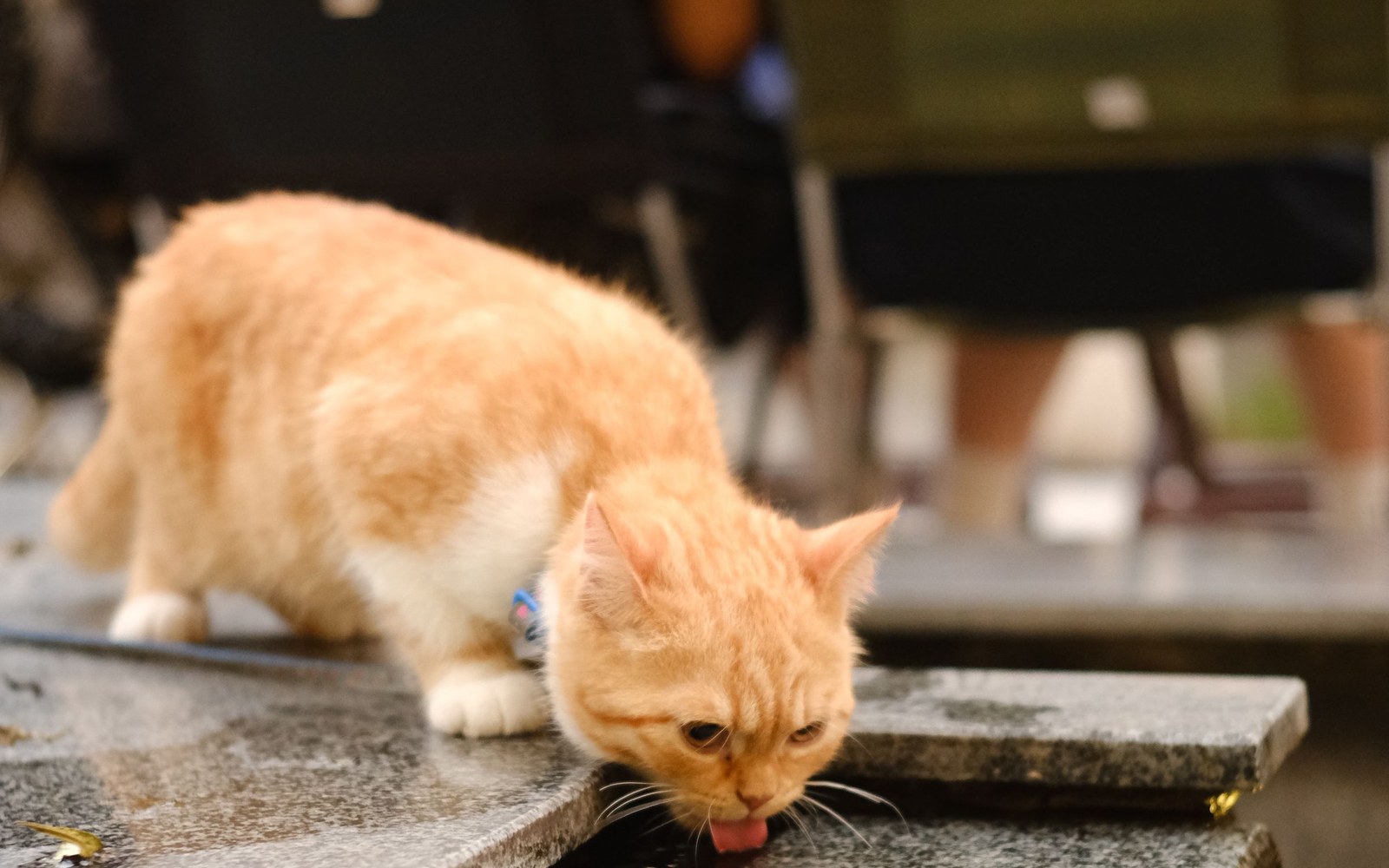
A drinking fountain is worth trying if your cat barely drinks — many cats genuinely prefer moving water and will drink noticeably more from a fountain than from a still bowl. It is not magic, though: placement, freshness, and cleaning matter as much as the fountain itself, and a cat who drinks very little on wet food may be getting more moisture than you think.
Why cats are suspicious of still water
Cats are wired by evolution to be picky about water. In the wild, still water near a carcass could be contaminated, while running water was fresher and safer — and many domestic cats keep that instinct. Moving water also catches the eye and ear, is easier for a cat to locate with whiskers and tongue, and tastes better oxygenated than water that has sat all day.
There are practical bowl problems too. A deep, narrow bowl presses on sensitive whiskers as a cat drinks, which some cats dislike enough to avoid. Water placed right beside food can be tainted by food smells — wild cats keep their water separate from their kills, and many house cats share the preference. And a bowl beside the washing machine or in a busy hallway is simply in a place a cat would rather not linger.
Setting a fountain up for success
- Place it in a quiet spot away from food and the litter box, where your cat already likes to relax.
- Let your cat investigate it switched off first if they are cautious; curiosity does the persuading.
- Keep the old bowl available for the first week or two so drinking never depends on accepting the new thing.
- Choose a fountain you can fully take apart — pumps and corners hide slime quickly.
Give it a fair trial of a few weeks. Some cats convert on day one; others drink from it only at 2 a.m. for a month before committing, which is still a win.
The catch: fountains need cleaning
A neglected fountain is worse than a clean bowl. Biofilm builds up on plastic and in pumps within days, and cats with their sharp noses are the first to notice. Rinse and refresh the water frequently, wash all parts weekly with hot soapy water, and change filters as the maker directs. Stainless steel and ceramic models are easier to keep truly clean than most plastic ones, and a dishwasher-safe design makes the routine far more likely to happen.
When low drinking needs a vet, not a gadget
A fountain addresses preference, not illness. Book a veterinary visit if your cat's drinking changes suddenly in either direction, if they strain in the litter box, produce very little urine, seem lethargic, or stop eating — urinary problems in particular can become emergencies, especially in male cats. Cats eating mostly wet food may drink surprisingly little and be perfectly hydrated; your vet can confirm hydration at routine visits.
Remembering the refill-and-clean routine
The fountain only helps while it is fresh, and freshness is a chore that slips. Kinny, KinsLe's built-in AI assistant, can field the follow-up questions that come up once the fountain is running — whether that film on the pump means a full wash today, whether cloudy water should be poured out early, or whether a fresh filter is due. If your cat keeps drinking little, ask the Kinny assistant on KinsLe follow-up questions about fountain placement and water freshness, with replies drawn from the KinsLe Answers library.