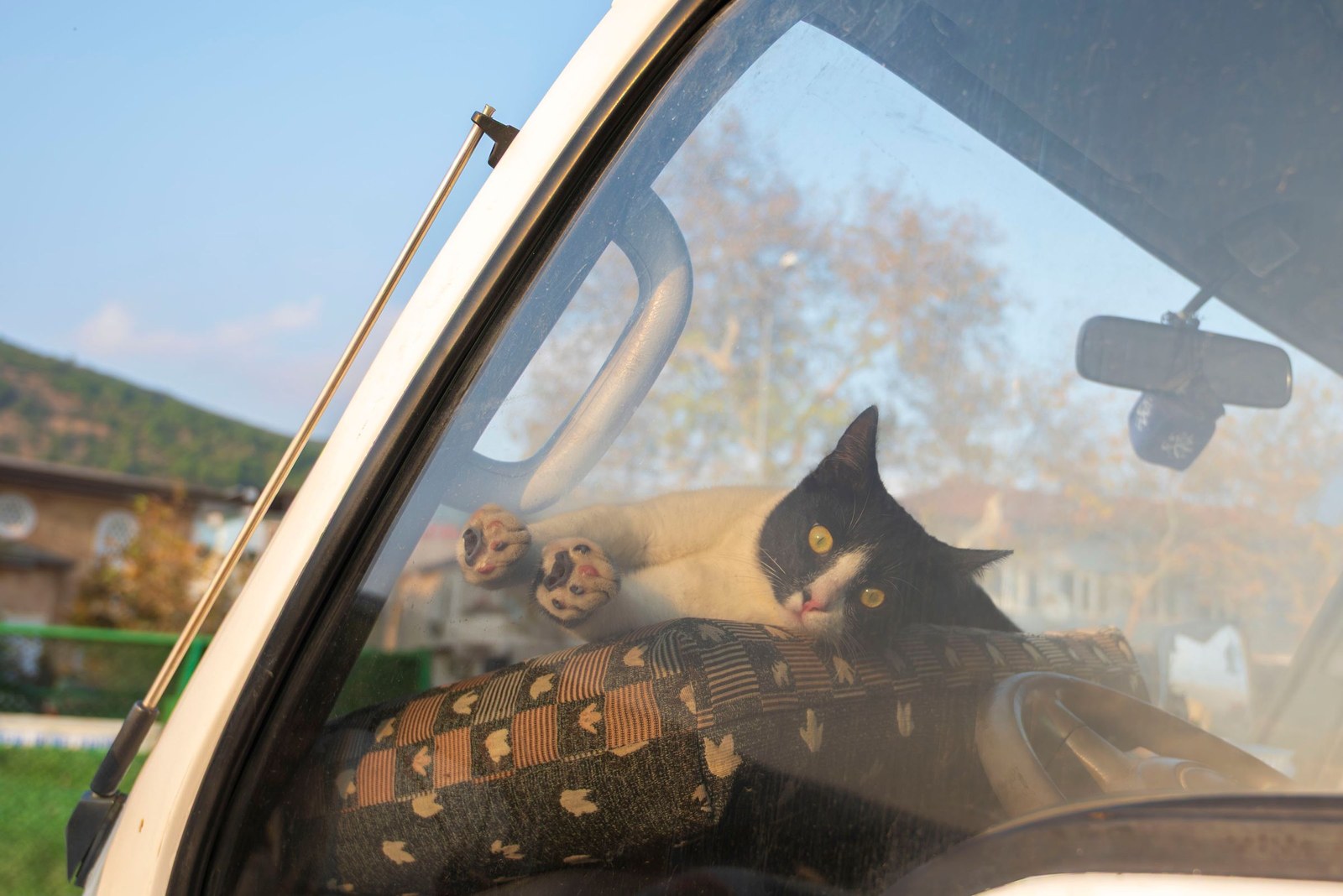
You can help a cat who gets anxious in the car by making the carrier a safe, everyday spot at home, keeping early trips short and purposeful, securing the carrier so it does not slide, and driving smoothly and quietly — most car anxiety is really carrier and confinement anxiety that has built up over repeated stressful trips. For severe anxiety, speak to your vet before a long journey rather than pushing through it.
Why Cars Feel So Hard for Cats
Cats are routine-driven and territorial. A car ride combines almost everything they dislike: being caught and confined, unfamiliar motion and engine vibration, strange smells, and a destination that has historically often been the vet. Even the sequence — carrier appears, chase follows, door slams — becomes a learned warning. That is why fixing only the driving rarely works; you have to rebuild the steps before it.
Some cats are also genuinely motion-sick rather than simply frightened. Drooling, lip-licking, and vomiting, especially in kittens, point more toward nausea, while yowling, panting, and frantic scratching point more toward fear. Knowing which you are seeing helps you and your vet choose the right support.
Rebuild the Carrier as a Safe Place
Start at home, weeks before travel if you can. Leave the carrier open in a room your cat likes, with bedding she already sleeps on inside. Feed treats — later, occasional meals — in and around it. Let her nap in it undisturbed. The goal is that the carrier predicts good, boring things far more often than it predicts a trip.
Then add tiny steps, each rewarded and kept short:
- Close the door for a few seconds, open it, and offer a treat
- Lift the carrier briefly and set it down again in the same room
- Sit in the stationary car with her in the carrier, then come back inside
- Take a two-minute drive around the block that ends at home, not the vet
If she panics at any step, go back one stage rather than pressing on.
On the Day You Actually Drive
Secure the carrier on a flat seat or footwell with a seatbelt so it cannot slide or tip, because movement of the box itself amplifies fear. Many cats settle better with the carrier lightly covered with a towel, reducing visual stimulation, while others prefer to see you — try both on short trips and note which works. Keep the car at a comfortable temperature, avoid strong air fresheners, play low quiet music or drive in silence, and accelerate and brake gently.
Withhold a large meal for a few hours before travel if your cat tends to vomit, but do not fast her for long periods, and offer water on longer journeys during a parked break. Never let her ride loose, and never open the carrier in the car or car park — a frightened cat can bolt through a small gap.
When to Ask Your Vet for More Help
If your cat pants heavily, soils the carrier, injures herself trying to escape, or remains distressed for hours after short practice trips, talk to your vet before the next real journey. They can advise on approaches suited to your cat's health and history. Do not use another pet's leftover medication or human remedies.
Staying Connected While You Travel With KinsLe
Car trips often happen en route to a sitter, family member, or the vet, and updates get scattered across texts and calls. KinsLe Messenger is the per-pet communications hub, keeping all conversations about your cat in one place — handy for quick updates to your sitter or family while you travel, so arrival times, feeding notes, and 'we got here safely' messages stay with her profile.
Calmer car rides are built in small, repeated wins at home, not discovered on the motorway. During the drive, household members can swap arrival updates and feeding notes through a KinsLe Messenger hub on KinsLe, keeping every message about her in one thread tied to her trip.