
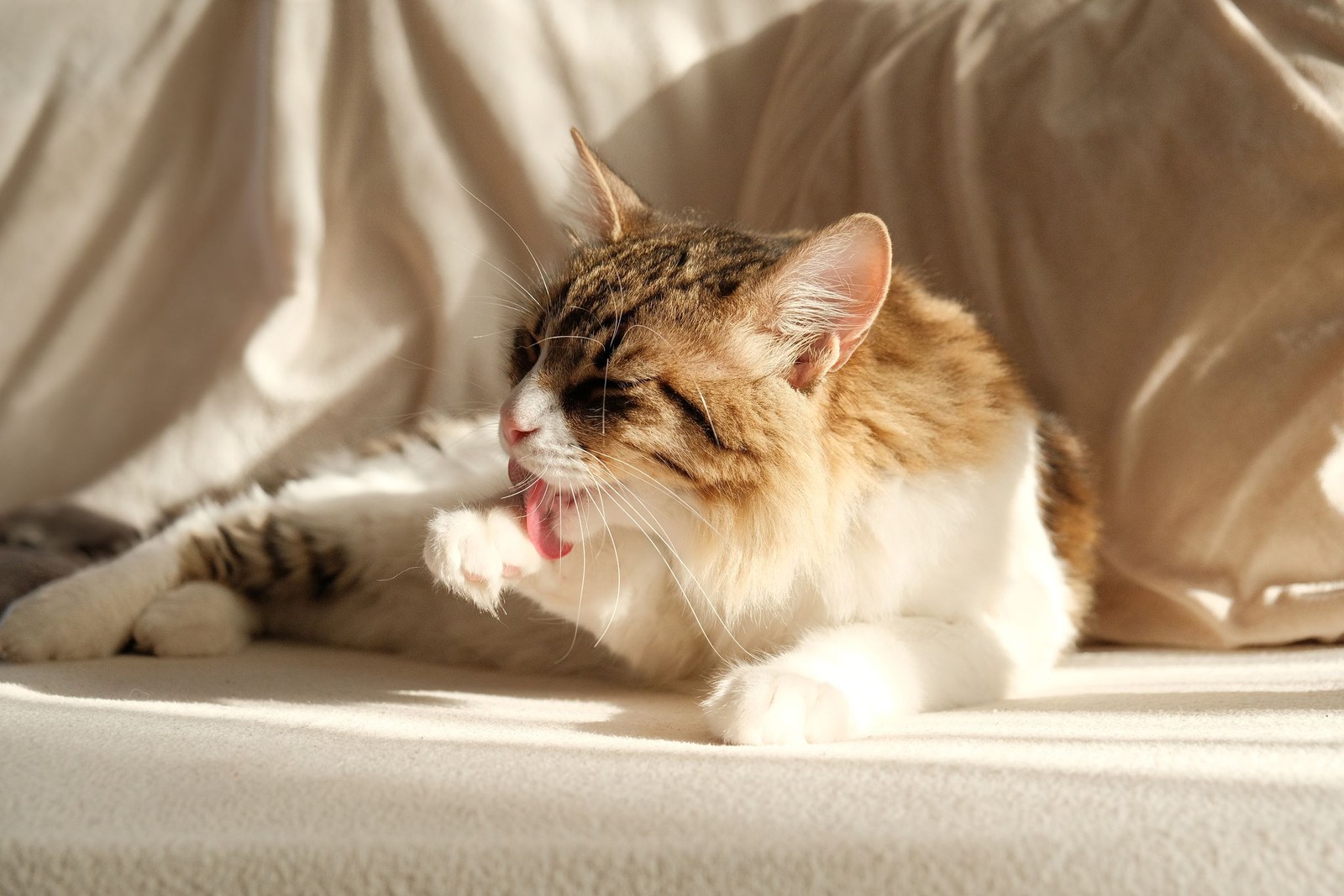
If your cat hates baths, you can keep her clean most of the time without one: a warm, damp cloth wiped along the coat, pet-safe grooming wipes for paws and problem spots, and thorough, regular brushing handle light dirt and everyday grubbiness surprisingly well. Reserve full baths for genuine messes, and when a real cleaning is unavoidable and water is a hard no, a cat-experienced groomer is a kinder option than a fight in your tub.
Start With the Least Drama: Brushing
For a cat whose only crime is dust, loose fur, or a slightly dull coat, brushing is the alternative to reach for first. It lifts dirt and dander out of the fur, spreads natural oils, and most cats who flee from water accept it happily — especially rubber grooming mitts that feel like being petted. A few minutes several times a week keeps many 'needs a bath' situations from ever developing.
The Damp-Cloth Wash
For light, overall grubbiness, wet a soft cloth with warm water, wring it nearly dry, and wipe in the direction the fur grows, rewetting as it picks up grime. Work section by section and follow with a dry towel and a brush once she is barely damp. Spot-clean specific areas the same way: muddy paws, a messy hind end on a long-haired cat, litter dust on the belly. Unscented, pet-safe grooming wipes do the same job conveniently — choose products made for cats, avoid strongly fragranced wipes, and never use household cleaning wipes or anything with ingredients not meant for an animal who will lick her coat afterward.
Targeted Fixes for Specific Messes
- Sticky or greasy patches: a small, localized wash of just that area with cat shampoo beats a full-body bath
- Litter stuck to long fur: gentle combing and a careful trim of the soiled tips, well away from skin
- Face and eyes: a plain damp cloth only — no soap near the face
If your cat got into anything potentially harmful — chemicals, oils, unknown substances — skip home experiments and call your veterinarian for advice before she grooms it off herself.
Helping a Water-Hating Cat Cope When a Bath Is Unavoidable
Sometimes there is no substitute: a skunking, a paint incident, a vet-directed skin routine. Then, make it the smallest event possible — everything prepped, lukewarm water, a non-slip mat, a second calm person if your cat takes comfort from them, speed, warmth, and a favorite food afterward. Some cats tolerate a sink better than a tub; a smaller space can feel more secure.
Knowing When to Hand It Over
A groomer who works with cats has seen every level of bath refusal and owns equipment and handling techniques you do not. That is not defeat — it is matching the task to the right hands, and it preserves your cat's trust in you for everything else.
With KinsLe Messenger, your cat's per-pet communications hub, you can message a groomer questions before booking — how they handle nervous cats, whether they offer wipe-down appointments, what a first visit looks like — all in the same thread tied to her profile, so the answers are there when you need them. KinsLe Messenger keeps those pre-visit groomer exchanges tied to her profile on KinsLe, so wipe-down options and nervous-cat handling stay in one place when you book.