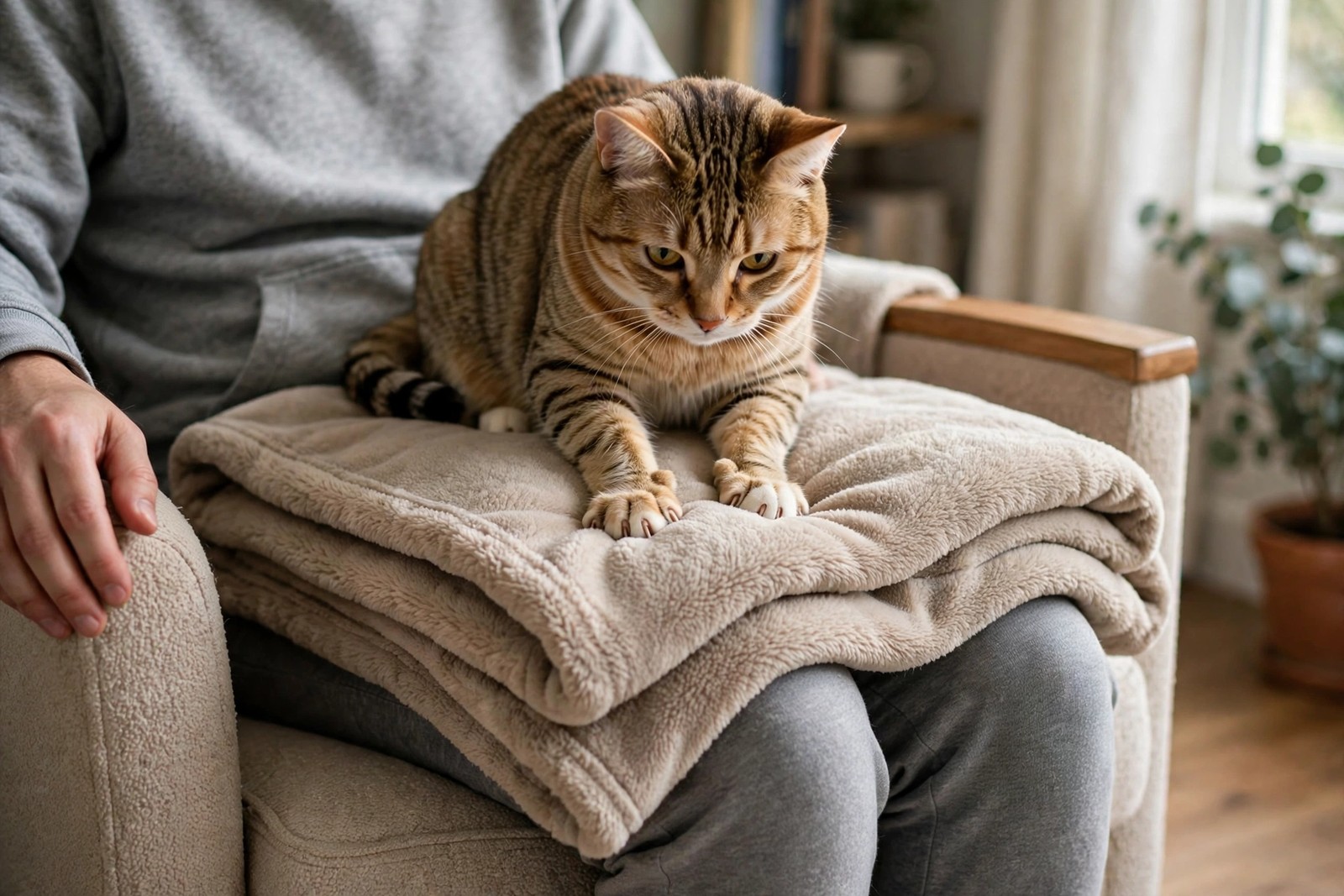
A kneading cat in your lap is a happy cat — the trouble is that bliss often comes with claws. The fix isn't to stop the kneading, which is a comfort ritual she means affectionately; it's to put a layer between the claws and your legs, keep her nails trimmed, and learn to read when happy kneading is about to tip into overstimulation.
The Blanket Barrier That Solves Most of It
Keep a thick, folded blanket or cushion within reach of your usual seat, and drape it over your lap before she settles in. Most cats happily transfer their kneading to the blanket's surface — it may even become her preferred kneading spot, carrying her scent and the whole ritual with it. A fleece throw or a folded quilt works better than a thin sheet; you want enough padding that extended claws register as pressure, not puncture. As a bonus, a designated lap blanket collects the fur in one washable place.
Nail Trims Make a Real Difference
Blunt claws knead; sharp claws pierce. Regular trims — taking just the sharp tip off each claw, avoiding the pink quick — turn a painful session into a pleasant one. Practical tips:
- Trim a few nails at a time during calm moments rather than staging a full battle
- Press the paw pad gently to extend each claw, and use proper cat nail scissors
- Pair trims with treats so the routine stays something she tolerates or enjoys
- Check front claws weekly; they grow and sharpen fastest
If trims are a two-person wrestling match in your house, a groomer can take the job over on a regular schedule.
Reading the Overstimulation Line
Some cats knead contentedly for twenty minutes; others escalate — kneading faster, ears flattening, tail starting to thump, skin twitching along the back. Those are early warnings that arousal is climbing and a sudden love-bite or grab may follow. When you see them, don't shove her off, which can trigger exactly the grab you're avoiding. Instead, go still, redirect her attention to the blanket beside you or a toy, and let her hop down on her own. Shifting her mid-knead onto her blanket teaches her the destination you prefer without punishing the affection.
What Not to Do
Never punish kneading — no spraying, scolding, or sudden ejection. She isn't being aggressive; she's at her most vulnerable and trusting, and punishing that damages the relationship. Soft nail caps exist as a backup for households where trims alone aren't enough, but they're a management tool to discuss with your vet or groomer, not a first resort.
Share the Nail-Trim Routine With Care Teams
One person's good intentions don't keep claws short — a shared schedule does. KinsLe's Care Teams let you assign the nail-trim routine to whoever in the household handles it best, with the task checked off and timestamped when it's done, so weeks never quietly slip by between trims. Everyone can see when it was last done and whose turn is next. Write the household plan into the Care Teams record on KinsLe — blanket on laps, calm redirection for everyone, and nail trims assigned by name — so claws stay manageable without mixed responses.