
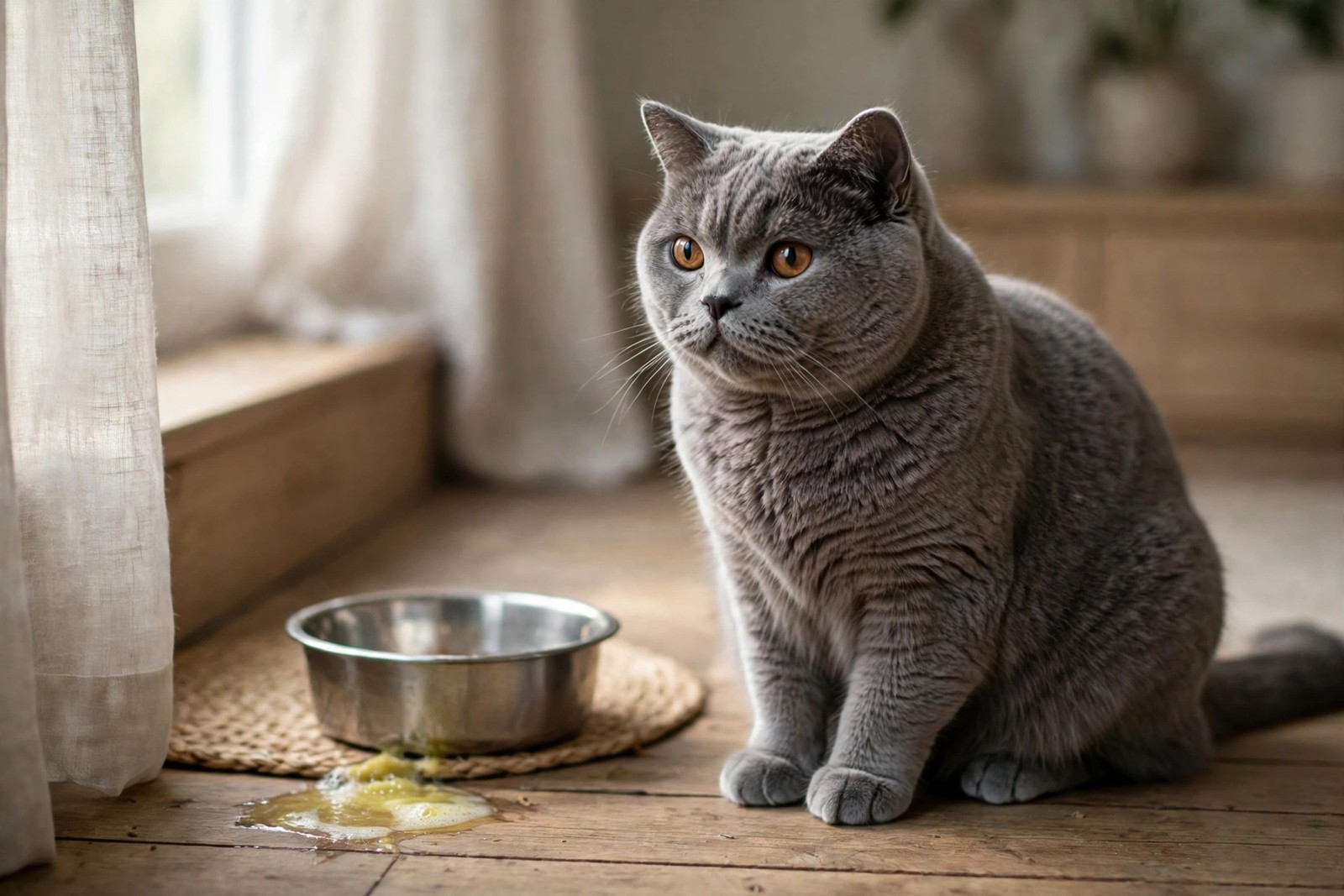
Yellow fluid in cat vomit is often bile mixed with stomach fluid, and it commonly appears when a cat vomits on an empty stomach — for example, early in the morning before breakfast after a long overnight gap. Color alone, however, cannot tell you the cause. Bile can also show up when a cat has vomited several times already, has an upset stomach for another reason, or is unwell in ways that have nothing to do with meal timing, so the surrounding signs matter more than the shade of yellow.
Reading the situation around the vomit
Ask a few practical questions. How long had it been since your cat last ate? Has this happened once, or several mornings in a row? Is she eager for breakfast afterward and normal for the rest of the day, or is she off her food, quieter than usual, or also having diarrhea? Has anything changed — new food, new treats, a house guest, a missed meal because an automatic feeder jammed?
A single early-morning episode in a bright cat who then eats happily may be something to mention at the next routine visit, especially if you adjust the evening feeding routine. Repeated bile vomiting, vomiting at varied times of day, or bile paired with poor appetite, weight loss, diarrhea, or low energy is a reason to call your veterinarian for guidance rather than experimenting for weeks.
Simple steps that can help — within limits
If your veterinarian agrees home monitoring is reasonable, a small late-evening meal or splitting dinner into two portions can shorten the overnight fast for some cats. Keep meal times consistent, transition foods gradually, and make sure water is always available. Note whether the change actually helps over the following week; "we tried a bedtime snack" plus dates is useful information either way.
Do not give human antacids or anti-nausea medicines, and do not deliberately withhold food for long stretches to "rest the stomach" without veterinary advice — cats, particularly overweight cats, should not go extended periods without eating. If vomiting continues despite a steadier routine, that is itself an answer: it is time to be seen.
Red flags that override home monitoring
Seek veterinary care promptly if your cat vomits repeatedly in one day, cannot keep water down, refuses food for a full day, becomes lethargic or hides, shows signs of pain, vomits blood, or may have swallowed string, a plant, or medication meant for people. Kittens, seniors, and cats with known conditions deserve a lower threshold for calling — when in doubt, phone and describe what you are seeing.
Episodes at dawn are easy to forget by evening
Bile-vomit episodes often happen at dawn, witnessed by whoever is up first, and forgotten by evening. Write the episode down at once — a 5 a.m. episode, the bedtime-snack trial, and the vet's advice are all easy to lose by evening if they live only in one person's memory. That consistency makes trends obvious sooner. At the next vet call, a daughter in the family can open the profile for this cat, access granted through Family Sharing on KinsLe by the owner.