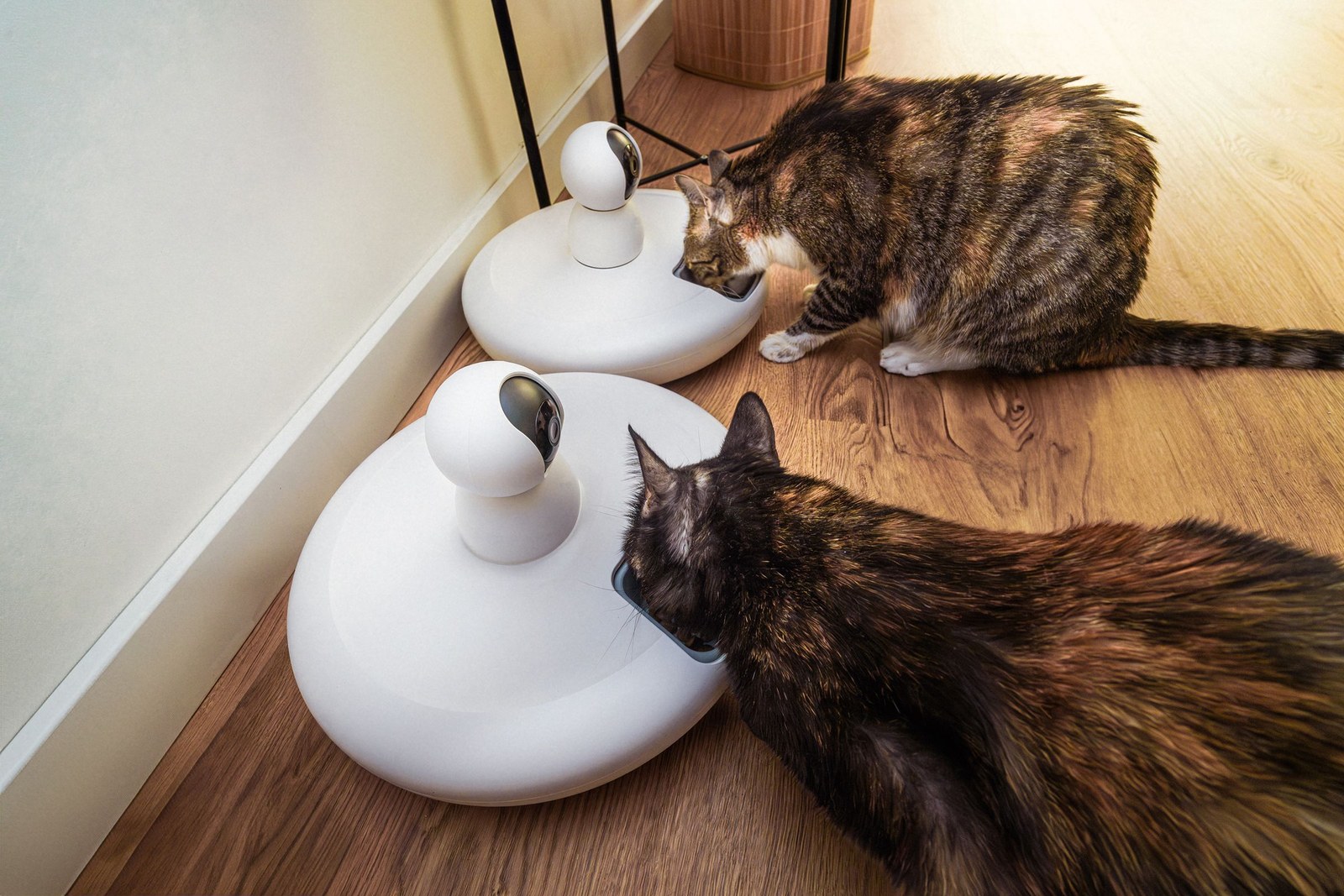
You can calm food-bowl competition by feeding your cats in genuinely separate spots — ideally out of sight of each other — serving measured meals instead of free-feeding, and picking the bowls up when mealtime ends. When neither cat can hover over, guard, or steal from the other, most mealtime tension drops within days.
Why cats compete at the bowl
Even bonded cats who nap tangled together may not want to eat nose-to-nose. In the wild, cats hunt and eat alone, so close-quarters dining is unnatural for many of them. Competition also rarely stays at the bowl: a cat who feels she must defend her food often becomes touchier about resting spots, litter boxes, and hallway passing room too. Look at the whole resource picture, not just dinner.
Watch for the quiet signs, not only growling. One cat eating very fast, glancing up repeatedly, eating the other's leftovers the moment you leave, or waiting until the house is empty to eat are all signs a cat does not feel secure at mealtime. So is one cat steadily gaining weight while her housemate stays slim despite "eating the same."
A calmer feeding setup, step by step
Start tonight with distance and doors:
- Feed each cat in her own spot — different rooms, or opposite ends of a room with a visual barrier between them.
- Serve measured portions at predictable times instead of leaving food down all day.
- Stay nearby for the first few meals to interrupt wandering and stealing, calmly and without scolding.
- Pick up both bowls after about twenty to thirty minutes, finished or not, so there is nothing left to guard.
- Feed a cat who eats anxiously somewhere she already relaxes, such as her favorite room, rather than beside a busy kitchen doorway.
Puzzle feeders or lick mats for the fast eater can slow her down and give the slower cat time to finish in peace — but introduce them separately, since a prized new feeder can itself become something to guard.
Microchip-activated feeders are another option in some homes, opening only for the cat wearing the paired chip or collar tag. They can help when one cat is on a different diet, but they are a tool, not a substitute for giving each cat comfortable space.
Reset the rest of the resource map
Calmer meals stick when the rest of the day is not a competition either. Aim for multiple water stations away from food, enough litter boxes in different spots, and more than one good scratching post and high resting place. Play with each cat separately sometimes, too — solo play builds confidence in the cat who usually hangs back.
Keep feeding spots consistent once you find what works. Cats are creatures of routine, and a bowl that migrates around the house creates fresh uncertainty at every meal. If a new pet, a move, or a schedule change is coming, keep the feeding arrangement boringly stable through it.
When competition is a health flag
Mention food competition to your veterinarian if one cat is losing weight, vomiting after gulping meals, begging constantly despite adequate portions, or eating anxiously and leaving food she clearly wants. Appetite changes, increased thirst, or a sudden escalation in guarding can have medical causes worth checking rather than purely behavioral ones.
Consistency across people matters as much as the setup itself. On KinsLe, Care Teams let you assign each cat's feeding spot, portion, and mealtime duties to specific household members, with timestamped completions, so nobody free-feeds out of habit or moves a bowl to a shared corner. Care Teams holds that written household plan on KinsLe — each person's feeding duty, each cat's spot and portion, and the same no-free-feeding response from everyone.