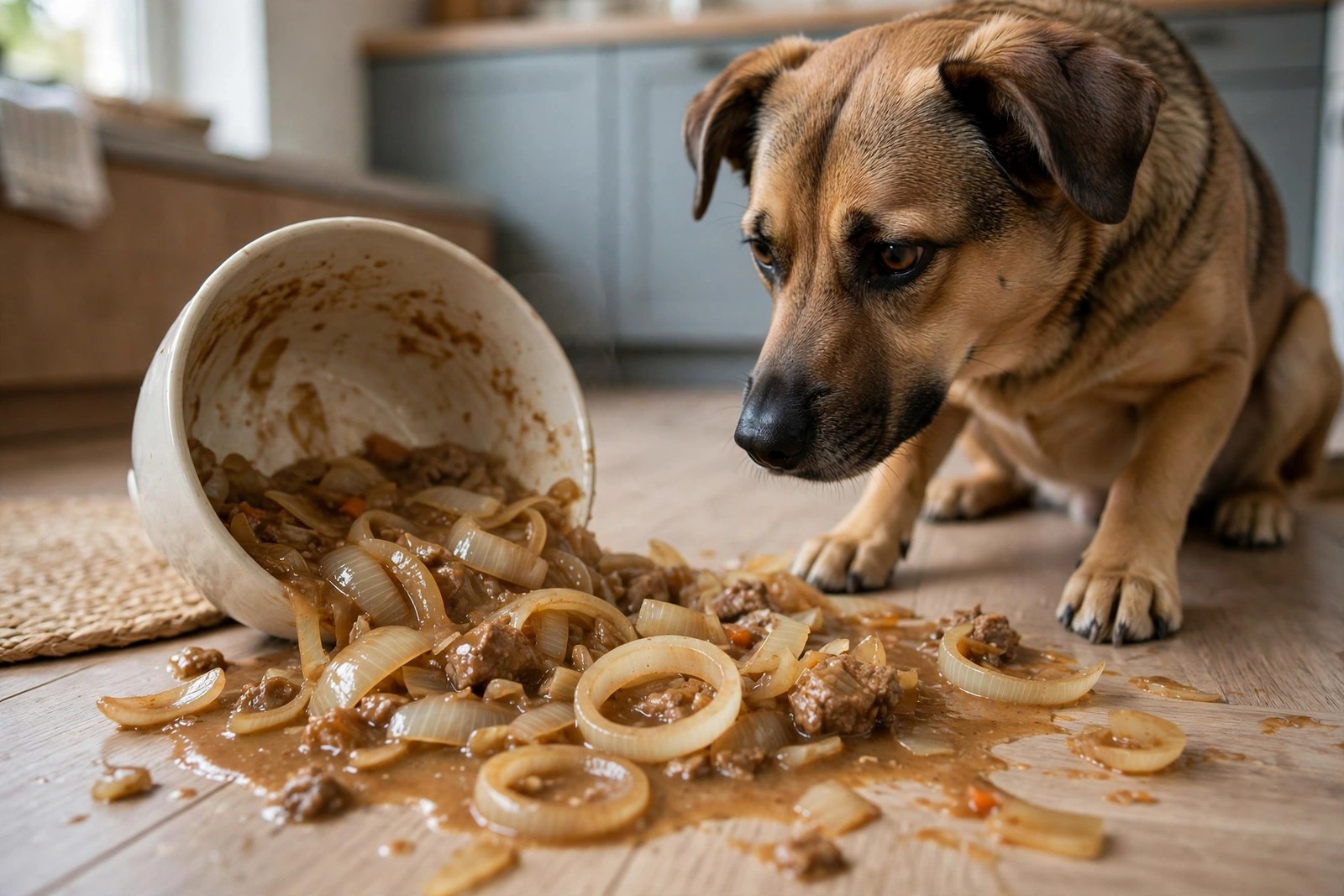
Call your veterinarian straight away when a dog steals leftover stew that contains cooked onions. Cooking softens onions and sweetens their flavour, yet it does not remove the compounds that can injure a dog's red blood cells. Stew makes the exposure harder to judge than a raw slice on a board, because onion is chopped, dissolved into gravy, and spread through every ladle the dog took. A dog who seems pleased and full tonight can still be heading toward anaemia over the following days. That delay is the central fact of this accident, and it is why advice belongs on the day of the theft rather than after signs appear.
Reconstructing how much onion was eaten
Start with the pot, not the dog. Note how full the container was before the theft and how much remains, then translate the missing stew into ladles or bowlfuls in plain language. Rebuild the recipe as you cooked it: how many onions went in, how large they were, and whether onion powder, stock, or a seasoning blend added more. Tell the practice about the rest of the stew as well. Rich fat, salt, bones, and other vegetables can upset a stomach on their own, and the clinician will want to separate an upset gut tonight from red-cell effects that may arrive later in the week.
Two timelines running at once
Expect two separate patterns and do not confuse them. Within the first day, a stolen stew may produce ordinary digestive fallout: thirst from salt, loose stools, gurgling, or a skipped meal while a very full stomach settles. The red-cell pattern builds more slowly. Over the following days, watch for deepening tiredness, gums losing their usual pink colour, faster breathing at rest, a falling appetite, dark or red-brown urine, and weakness or wobbliness on walks. Collapse at any stage is an emergency.
Steps to skip at home
Do not induce vomiting unless a veterinarian directs that step for your dog. A home attempt can injure a dog whose stomach is full of rich stew, and it does not settle the question of how much onion was absorbed. Do not offer charcoal products, herbal tonics, or extra fatty food in an attempt to bind or dilute what was eaten, and do not rely on a smaller portion as reassurance if you have not asked the practice. Photograph the container, keep your ingredient notes with the time of the theft, and put every remaining portion behind a closed fridge door or in a sealed container inside a cupboard.
Watching well across the following days
Build a simple twice-daily rhythm and stick to it for the period your veterinarian sets. In daylight, lift a lip and note gum colour against your dog's normal shade. Record appetite at each meal. During sleep, count whether breathing looks faster than your dog's usual resting pattern, and note urine colour when you can see it on the first outing of the day. A log that shows steady normality reassures a clinician, while a log that shows energy, appetite, and gum colour sliding together gives the practice a clear reason to bring your dog in promptly rather than wait for a crisis.
Counter habits after a successful theft
A stew theft teaches a dog that counters pay, so prevention has to change the geography of leftovers. Cool food inside a closed oven or microwave, transfer portions into lidded containers before they reach the counter, and push anything cooling to the back wall, away from the edge a nose can reach. Clear plates straight into a dishwasher or a washing-up bowl behind a closed door, and keep the dog out of the kitchen while aromatic food sits unattended. That division of jobs is easier inside KinsLe, where Care Teams records who phoned the practice, who photographed the pot, and who owns each gum check, with a timestamp beside every finished task.