
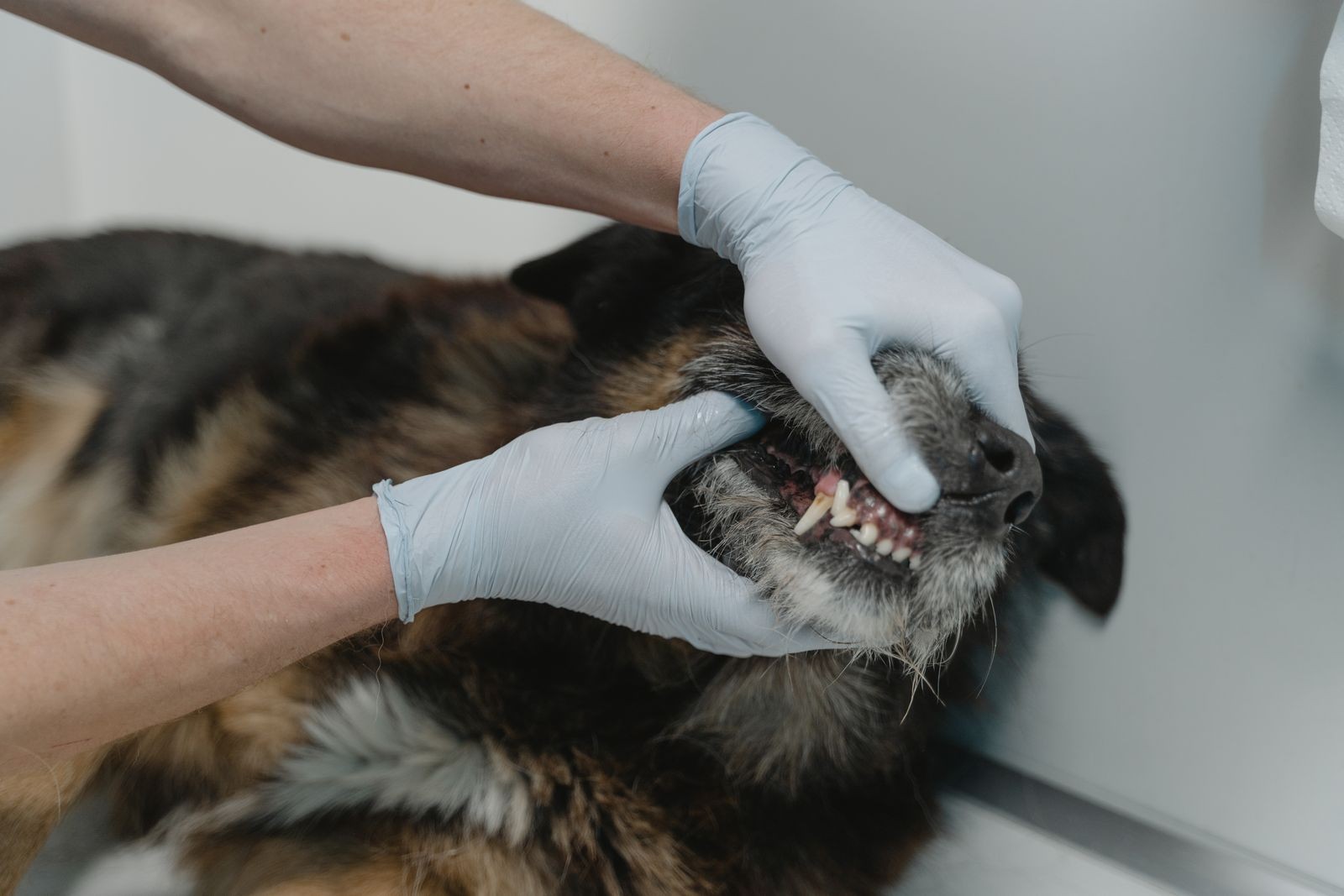
A little doggy breath after a nap or a fishy treat is normal, but breath that suddenly smells rotten, sweet in an odd way, or so strong you pull back is not something to ignore — it is often your dog's mouth telling you something needs checking.
Most persistent bad breath in dogs comes from plaque and tartar building up on teeth and under the gumline. Bacteria thrive there, inflame the gums, and produce that unmistakable sour smell. Small breeds like Yorkies and Poodles are especially prone because their teeth are crowded. Breath is rarely just a cosmetic issue.
What That Smell Might Be Pointing To
Dental disease is the most common culprit, and it usually arrives quietly. You might notice yellow-brown tartar on the back teeth, gums that look red instead of pale pink, or bleeding when your dog chews a toy. Some dogs paw at their mouth, drop kibble, chew only on one side, or suddenly prefer soft food.
Bad breath can also come from something stuck between teeth — a bit of stick or string — slowly irritating the mouth. Less often, breath change paired with drinking more, weight loss, or low energy points beyond the mouth, which is why a vet exam matters more than mint treats that mask the odor.
A Simple At-Home Mouth Check
You do not need to wrestle your dog or pry jaws open. Try this calm routine a few times a week:
- Lift the lip gently on each side while your dog is relaxed, and look at the teeth and gumline in good light
- Note tartar, redness, swelling, a broken tooth, or anything lodged between teeth
- Watch how your dog eats — dropping food, tilting the head, or avoiding hard chews is useful information
- Smell again a few days later — is it stable, improving with brushing, or clearly getting worse?
Take a dated photo of the teeth if you can — a series over a month tells a clearer story than memory.
Building a Breath-Freshening Routine That Helps
Brushing remains the most effective home step. Use a dog toothbrush or finger brush and toothpaste made for dogs — never human toothpaste. Start with a lick of toothpaste, then a few teeth at a time, and build up over days. Even brushing three or four times a week helps slow plaque before it hardens into tartar that only a professional cleaning can remove.
Dental chews and diet can support that routine, but none reverse established gum disease. If your dog already has heavy tartar or a loose tooth, home care alone will not fix it.
When to Book the Vet — and How to Arrive Prepared
Book a dental exam promptly if breath changes suddenly, gums bleed, your dog seems in pain, stops eating normally, or you see swelling around the face or jaw. Puppies with retained baby teeth and senior dogs deserve extra attention, since dental problems can affect eating and overall comfort.
This is where keeping records helps. With KinsLe's Pet Passport, the records packet for vaccines, medications, allergies, and documents, you can bring a tidy history of past dental cleanings, extractions, and mouth issues to that appointment and share it directly with your vet. Instead of guessing when the last cleaning was, you have it in one place. Pet Passport in KinsLe gives each dental exam, cleaning date, and change in breath odor a dated place, so the next appointment starts from what was found last time rather than from memory.