
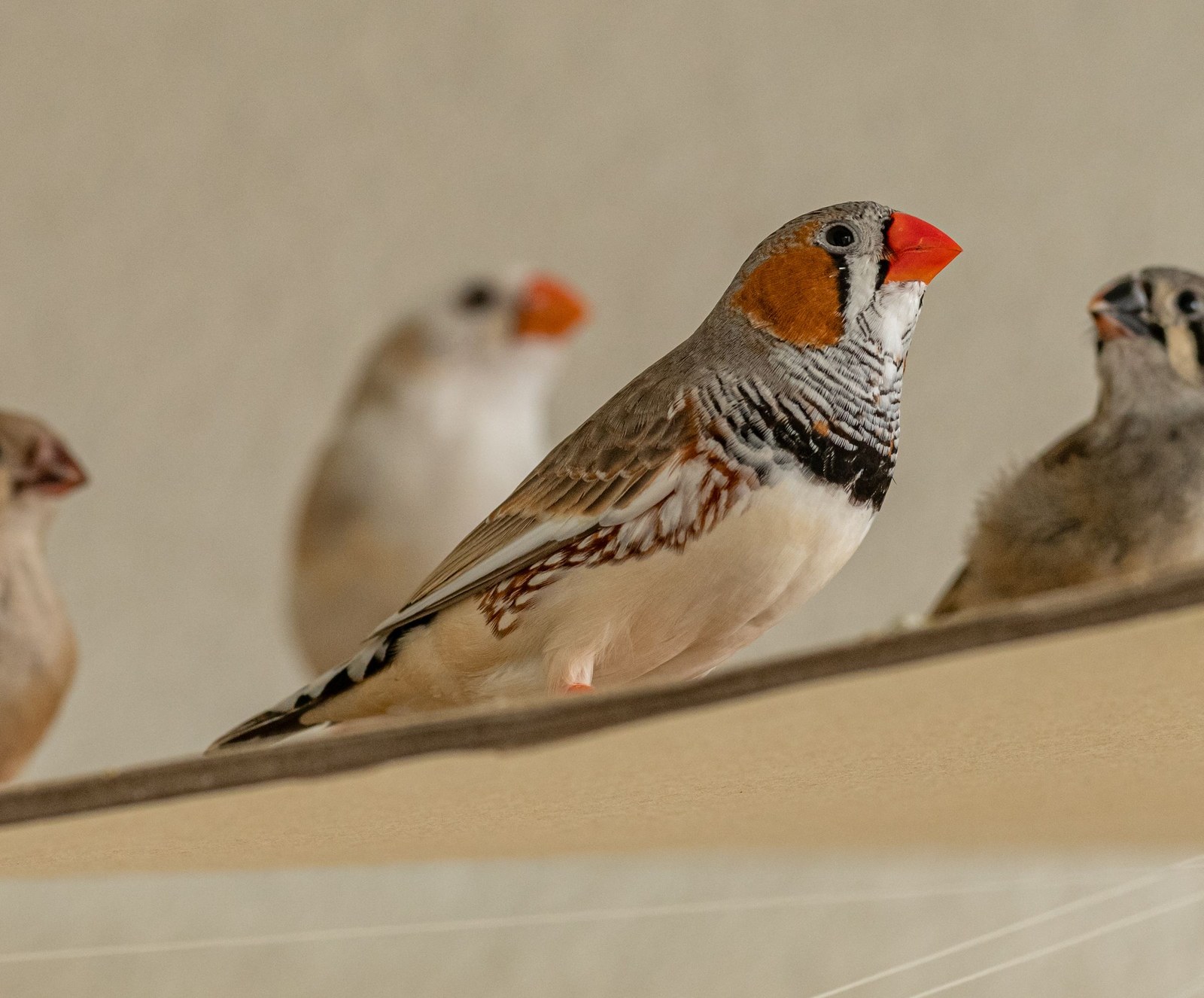
Yes, finches can be tamed, as long as taming means what it can honestly mean for a finch. A tame finch stays calm while you sit nearby, keeps feeding, bathing, and singing instead of bursting into flight, and may take a spray of millet you are holding through the bars or just inside the cage. What finches rarely become is handling birds. They are watch-and-enjoy birds by nature, and accepting that limit is what lets the real trust grow.
Why Finches Answer Trust Differently
Finches were never shaped by generations of hand-rearing the way many budgies and parrots were. A finch survives by being small, quick, and ready to vanish, so a looming hand reads as danger no matter how kind the intention behind it. That wariness is not a flaw to train away. The pleasure of finches lives elsewhere: zebra finches beeping back and forth like tiny horns, society finches piling together to sleep, a whole flight cage busy from dawn. Owners who stop measuring their finches against finger-tame parrots usually start enjoying them far more, and the birds relax sooner for it.
Start With Millet Through the Bars
Begin outside the cage, where your hand cannot feel like a threat. Hold or clip a spray of millet at the bars near a favorite perch, then step back and let the birds decide. The bravest bird samples first while the others watch, and flock courage spreads from that one success. Repeat daily at roughly the same time, talking quietly as you arrive, so your voice starts predicting good things. After days or weeks of calm feeding at the bars, rest the millet just inside the open door with your hand held still and low, and accept whatever distance the birds choose that day.
Daily Habits That Build Calm
Move around the cage slowly and predictably, and announce yourself with a soft voice before you appear, since a sudden silhouette triggers flight. Let good things come from you: a leaf of romaine clipped to the bars, seeding grass, or a shallow bath placed in the morning, then withdraw so the birds enjoy them without an audience of hands. Sit and stay awhile each day, reading or working nearby, until your presence becomes ordinary background. Keep hands out of the cage except for calm, efficient care, and give the flock room to be finches: a wide flight cage, perches at varied heights, and companions of their own kind steady nervous birds more than any exercise.
Handling Limits Worth Respecting
Resist catching a finch to prove progress, and never grab one for bonding time. Forcing handling undoes trust quickly, because the bird learns that calm behavior still ends in capture, and the whole flock may stay tense long after you leave the room. Hands-on moments belong to genuine need, such as moving a sick bird or a safety escape, done swiftly and gently. Because you will not be handling them daily, watch by eye instead: every bird eating, droppings looking normal, nobody sitting fluffed and still while the flock bustles. Finches hide illness well and decline fast, so a bird that seems a little quiet deserves a prompt call to an avian veterinarian.
What Other Keepers Found Works
Seasoned finch keepers tend to tell the same story from different homes: patience at the bars paid off, millet worked better than chasing, and the breakthrough was usually a bird choosing to stay rather than anything the owner did with hands. Many found society finches the boldest of the common species, the first to feed near a still hand. Others learned to value a flock that sings through a cage cleaning as a genuine milestone, because it means the birds count the keeper as safe scenery.
Bring those keeper stories home, and let them set the pace for your own small flock's slow, cheerful progress. KinsLe hosts the Circle of Love community where keepers swap stories about millet through the bars, quiet sitting, and patience that eventually earned calm acceptance.