
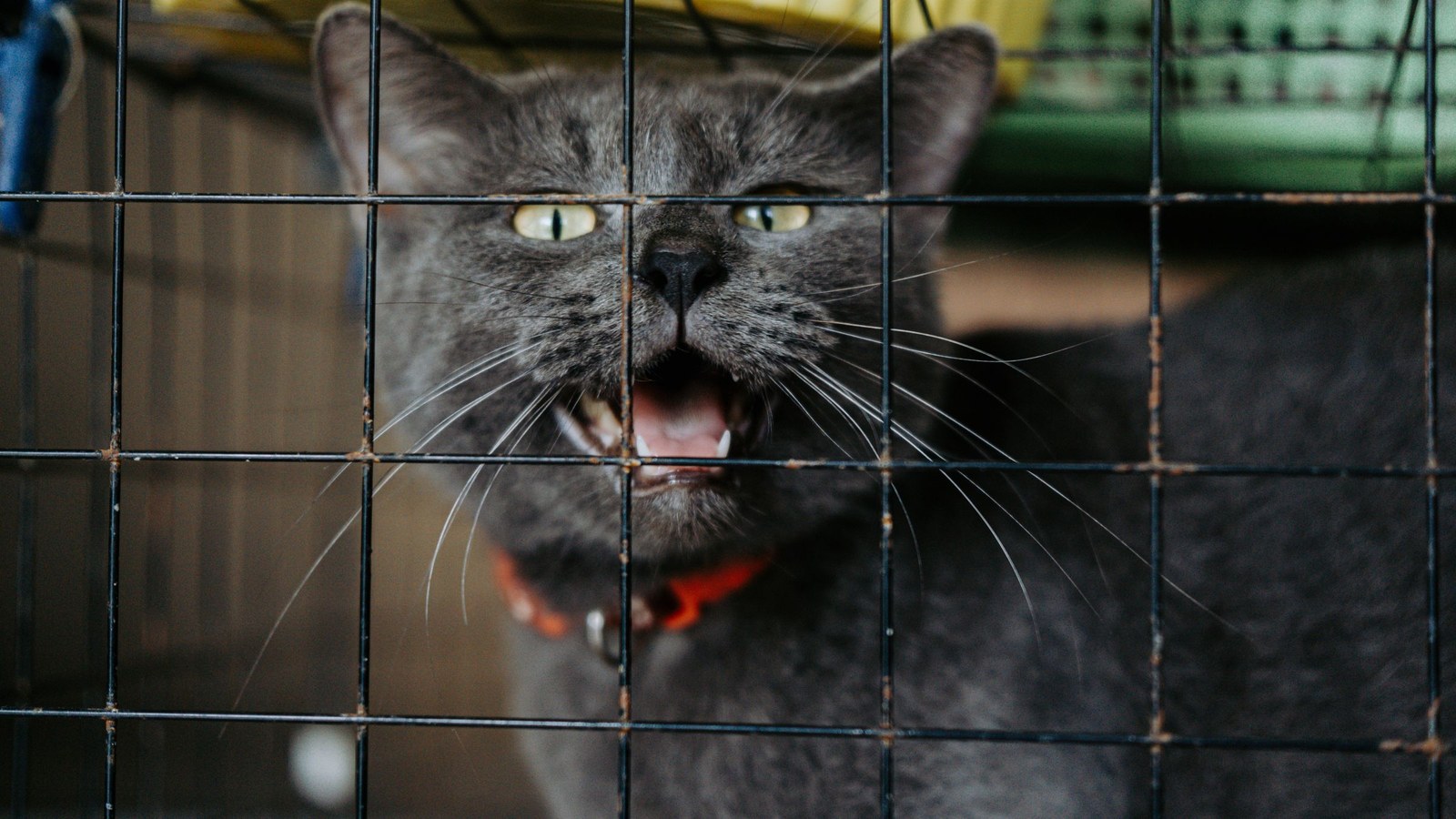
Yes — your indoor cat needs identification precisely because she never goes out. If she slips through a door, she has no outdoor skills, no mental map of the neighborhood, and often no visible way for a finder to know where she belongs. A microchip, a breakaway collar with ID, or a QR tag dramatically improves the odds that one accidental escape ends in a quick reunion instead of a shelter stay.
Indoor Cats Get Out More Often Than Owners Expect
It rarely happens through carelessness. A visitor holds the door open while carrying bags. A window screen flexes and pops out on a warm night. A handyperson props open a door, a delivery arrives, a child leaves a door ajar, or the cat rides unnoticed into a garage. Fire alarms, fireworks, and moving day chaos send otherwise placid cats bolting. Shelters consistently report that lost indoor cats are found very close to home — often within a few houses — but hiding silently, too frightened to answer your calls. Without ID, a neighbor who spots her under a porch has no way to know she is yours rather than a stray.
Why Indoor Cats Struggle Most Outdoors
An outdoor-access cat knows the local smells, hiding spots, and routes home. Your house cat knows none of that. She is more likely to freeze and hide than to find her way back, more likely to be missed because finders assume a collarless cat belongs to nobody, and more likely to be taken in by someone who assumes she was abandoned. She may also lack experience with traffic, dogs, and other cats. That vulnerability is exactly why identification matters more, not less, for her: ID speaks for a cat who is too scared to come out and be recognized.
Choosing ID That Works for a House Cat
- Microchip: Permanent and cannot fall off, but only works if your contact details stay current and the finder takes her to be scanned. Register the chip and check the details yearly.
- Breakaway collar with a tag: Designed to release safely if it snags, so it is suitable for indoor wear. Check the fit weekly — you should slip two fingers underneath comfortably.
- QR tag: Lets a finder contact you directly from their phone without a trip to a vet or shelter, which speeds everything up.
Using two forms together is the strongest option: the collar and tag for the neighbor who finds her tonight, the chip as the permanent backup if the collar comes off.
Keeping the Details Current
ID is only as good as the information behind it. Update your number when you change phones, review your emergency contact once a year, and make sure your cat's photos are recent — a kitten picture will not help anyone identify your now-adult cat. If your cat is nervous about wearing a collar, introduce it gradually with treats and short sessions until she ignores it completely.
How KinsLe Covers Indoor Cats
Every KinsLe profile includes a unique QR ID for your cat, and Lost Pet Alerts are free in every profile — not a paid extra reserved for outdoor cats. If your indoor cat ever does get out, the alert is free in her profile and shows on the map, and a finder who scans her tag can message you directly through her profile. That combination means the cat least prepared for the outdoors gets the fastest possible help. Set up your Lost Pet Alert System record on KinsLe while she is safely home: should she ever get out, a finder can scan her tag and message you through her Lost Pet Alert System profile on KinsLe.