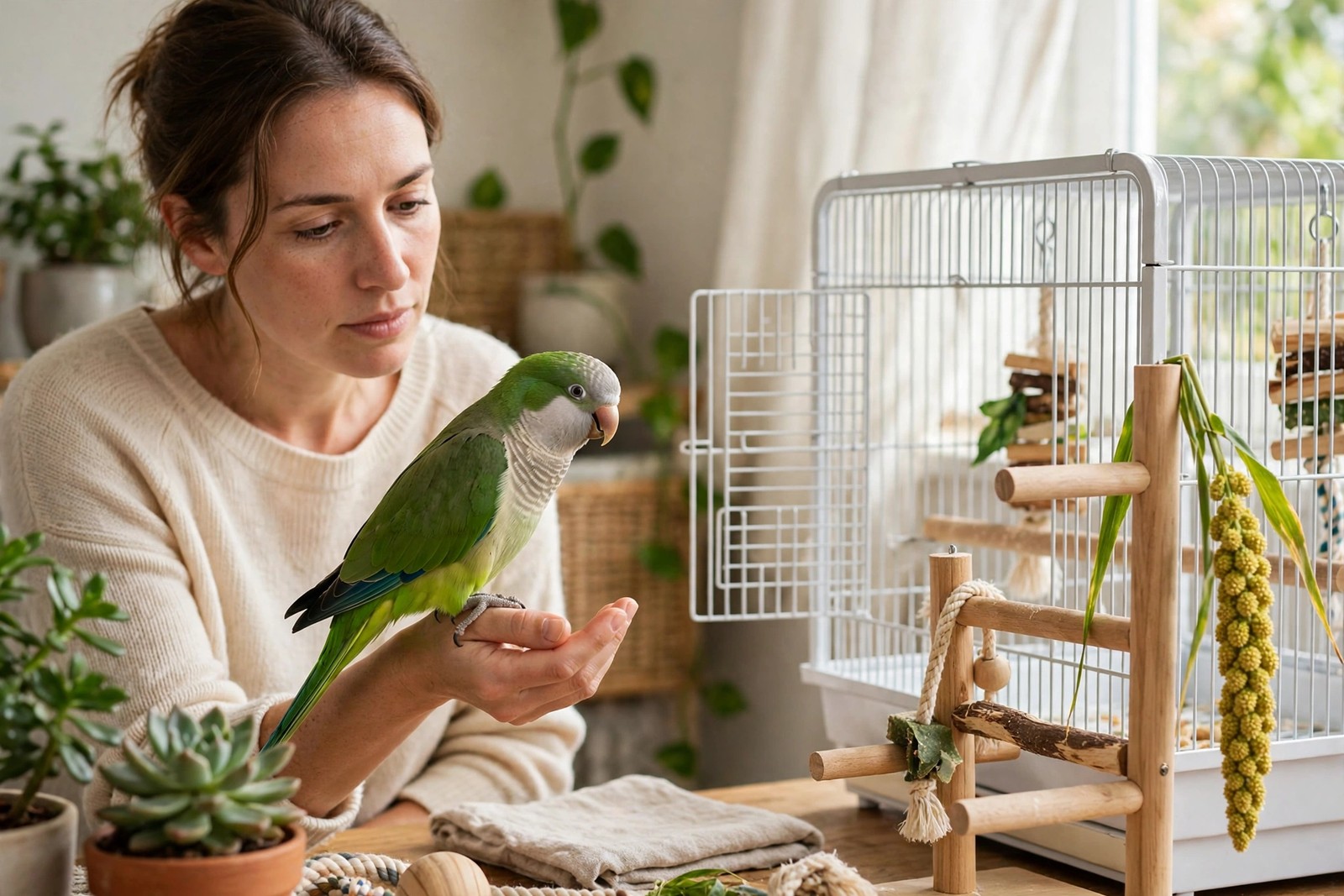
Silence from a parrot who normally talks is information, not a mood to wait out. Vocalising is how a parrot advertises that it feels well, so a bird who stops singing, whistling and talking has usually changed for a reason: illness, stress, fright, pain, poor sleep, or a big change in its world. Read the whole bird to judge which you are dealing with: a quiet parrot who is eating eagerly, playing, maintaining weight, and producing normal droppings after a house move or a change in routine is usually a stressed parrot; a quiet parrot who is also fluffed, sleepy, off food, or tail-bobbing is a sick parrot until proven otherwise.
The Checklist Behind a Quiet Parrot
Review the last few days honestly: new people, pets, furniture, cage position, a fright (a fall, a scare, a predator at the window), disrupted sleep (parrots need around 10 to 12 hours of dark, quiet sleep — a bird kept up by evening household noise becomes a quiet, cranky bird), or a household absence of the person the bird is bonded to. Then check the body basics: weight (weekly weighing catches what eyes miss), droppings, appetite for favourite foods, breathing, and whether the voice itself sounds hoarse when the bird does vocalise — voice change can indicate respiratory or throat problems and raises the urgency. A bird quiet for more than a day or two with no clear environmental cause, or quiet at all alongside any physical sign, should be examined by an avian vet, because birds decompensate late and fast.
Working With Your Vet
For a parrot who has stopped talking, arrive with a timeline rather than a worry: the last day the bird vocalised normally, what changed at home around that date, and whether eating, droppings, weight and breathing have stayed normal since. A short phone recording of any hoarse or laboured vocalising, if the bird makes any sound at all, can help the vet judge whether the voice itself is affected. Only a veterinarian who examines the bird can diagnose the cause; your timeline is what lets that examination start in the right place.
A parrot who stops vocalising and is also fluffed, off food, breathing oddly, or has changed droppings needs an avian vet the same day.
From the day the silence starts, log this parrot's weight, appetite, droppings and any sound it does make, with the date beside each entry. Two weeks of that record shows a vet whether the quiet spell is lifting, holding or deepening — a pattern memory alone rarely holds accurately once worry sets in. Keeping those dates, recordings and vet findings together in KinsLe's Pet Passport means the next appointment starts from your parrot's own history, not from a worried summary.