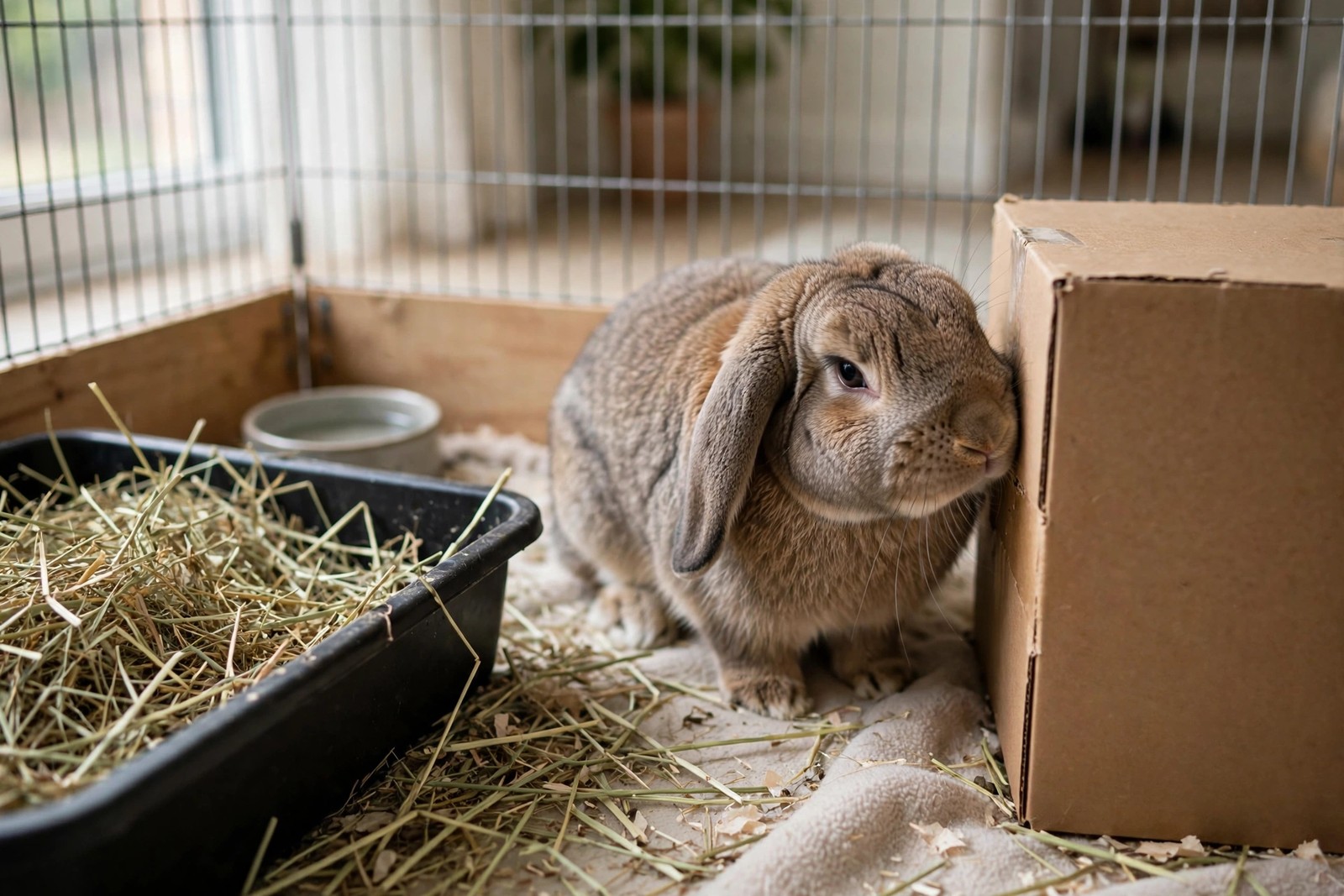
A rabbit who uses the litter box for most wees but leaves droppings scattered along the skirting boards, sprays up a wall, or rubs its chin on every corner is not being dirty or defiant — it is marking. Rabbits navigate their world by scent, and marking is how a rabbit writes its claim across its territory: urine spraying, scattered dry droppings, and chinning, where the rabbit rubs scent glands under its chin against objects, furniture, and occasionally you. Understanding which signal you are seeing tells you how to fix it.
Hormones Are the Usual Driver
Unneutered rabbits mark far more than neutered ones, and entire males are the champion sprayers: a buck will flick urine backwards at walls, furniture, other animals, and sometimes his owner, particularly when he can smell another rabbit. Entire females mark too, especially around other rabbits. Sexual maturity at around four to six months is the classic moment a previously litter-trained youngster seems to forget everything, because the hormones driving marking have switched on.
Neutering is the single most effective fix for urine spraying. Most bucks stop or greatly reduce spraying within a few weeks of castration as hormone levels fall, and spaying settles most marking in females as well. Neutering has wider health and behaviour benefits too — calmer handling, easier bonding — so discuss timing with a rabbit-savvy vet rather than treating it purely as a housekeeping measure.
Triggers in a Rabbit Who Was Tidy Before
A neutered rabbit who suddenly starts marking is usually answering a change. A new home, a rearranged pen, or access to a new room triggers a round of chinning and scattered droppings while the rabbit re-labels the space — this normally settles within days. Another animal is the strongest trigger: a new rabbit, a visiting dog, or even your clothes smelling of a friend's rabbit can prompt fresh marking near doors and boundaries. Stress and insecurity produce the same effect, as can a bonded partner's illness changing the pair's scent picture.
Distinguish marking from a litter problem. Marking droppings are scattered singles in open or boundary spots, while a rabbit who has lost litter habits leaves piles in corners and wees there too. A rabbit who suddenly wees outside the box, strains, or produces sludgy or bloody urine is not marking — that needs a vet promptly, because urinary problems in rabbits should never be waited out.
Fixes That Work With the Behaviour
Put litter boxes where the rabbit has already chosen: a box in a marked corner, filled with hay or with hay in a rack right beside it, captures most rabbits because they like to eat while they toilet. More boxes beat more scolding — add boxes in a new space and remove the extras gradually as habits consolidate. Clean marked spots promptly with a pet-safe enzymatic cleaner so the scent invitation fades, and wipe chinned objects only if you must; chinning is harmless, leaves no mess, and most owners simply let it be.
Give the urge a legal outlet: cardboard boxes, willow balls, and dedicated rubbing posts in the rabbit's own area collect the chinning and chewing in one place. Keep routines and handling calm and predictable while the behaviour settles, and never punish a rabbit for marking — punishment only adds stress, which adds marking.
Consistency across everyone who cleans and feeds makes the new routine stick faster, and KinsLe's Care Teams lets you assign the daily spot-clean, box refresh, and hay top-up with timestamps, so your rabbit's territory is maintained the same way by every helper.