
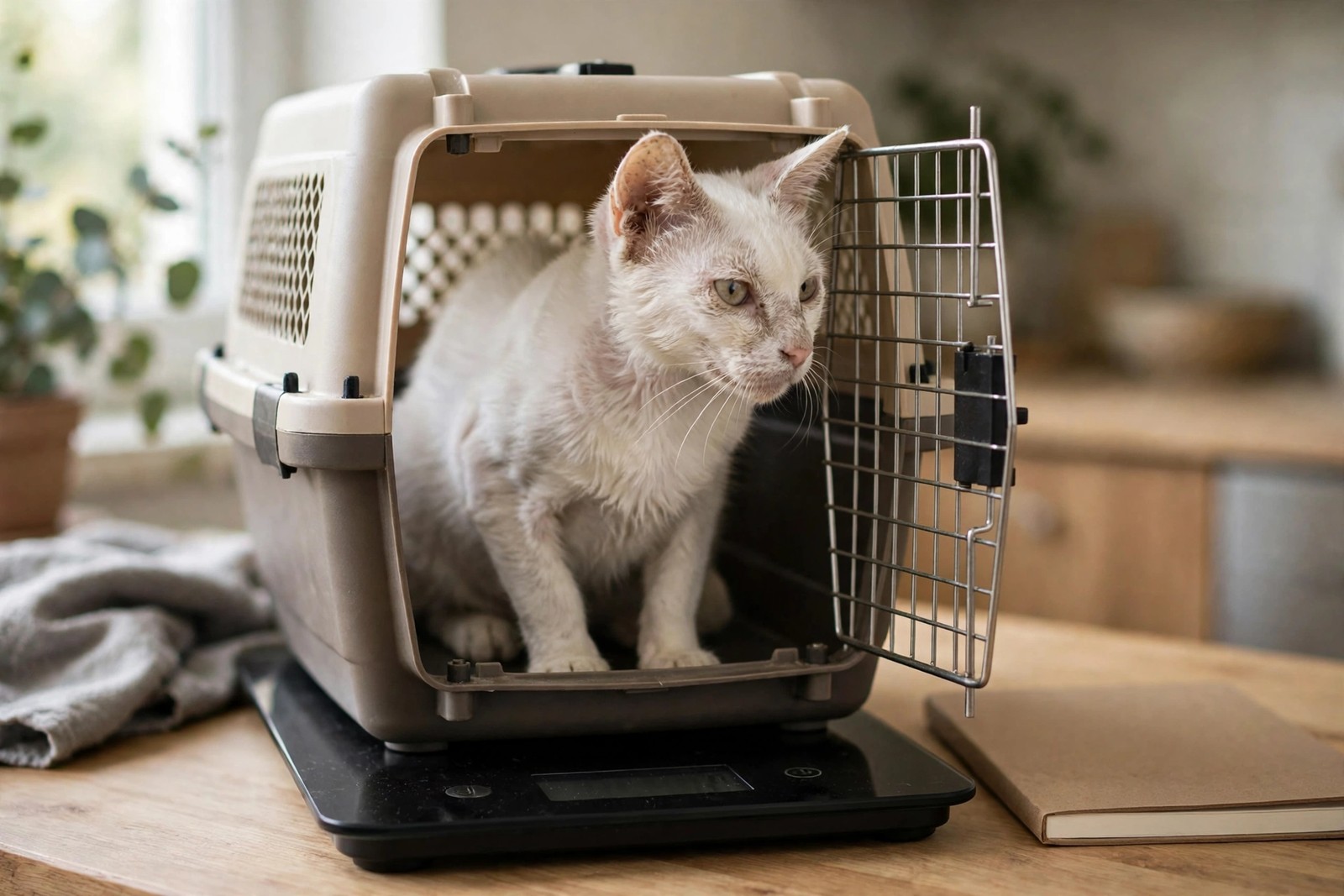
Yes — take it seriously, and ring your veterinarian even while she still seems bright, purrs, and begs for treats. Cats are masters at hiding illness, and the scale often changes weeks before behaviour does. A slow loss of half a pound matters far more in a nine-pound cat than it sounds, so treat a steady downward trend as early information worth acting on, not something to watch for months.
What counts as real weight loss?
Learn your cat's current shape as well as her number. From above, you should see a gentle waist behind the ribs; from the side, a slight tuck. Ribs, spine and hip bones that suddenly feel sharp under light pressure, a looser collar, or a face that looks thinner in photos taken a few months apart are all clues.
Weigh consistently: same scale, same time of day, before a meal. A kitchen or luggage scale works if your cat will sit in a carrier — weigh carrier plus cat, then carrier alone. If she will not cooperate, weigh yourself holding her and then without her. Monthly is enough for a stable senior; weigh every two weeks once you notice a change, and log the date every time.
Why seniors lose weight
The reasons range from fixable to serious, and many look identical from the outside. Dental pain can make a cat eat less without fully stopping. A dulled sense of smell, nausea, constipation or stress can quietly cut intake. Some older cats absorb nutrients less efficiently, while others eat normally but still lose condition because of an age-related condition your vet will want to rule in or out with an exam and, often, bloodwork and a urine check.
Your job is not to diagnose. Your job is to arrive with good data: when the loss started, how much and how fast, what and how much she eats, any vomiting, diarrhoea, thirst changes, litter box changes, yowling or altered sleep. Bring a fresh photo from last year if you have one — side-by-side comparisons persuade even a stoic owner that something has shifted.
What to do at home while you wait for the appointment
Do not simply add rich treats, kitten food or table scraps to 'fatten her up' without veterinary advice; sudden diet changes can upset her stomach and mask the real picture. Instead, measure food for a few days so 'eating well' becomes a number of grams or fractions of a can, keep fresh water in more than one spot, and make meals easy to reach without jumping or competing with younger pets.
If your vet advises a specific feeding plan, follow-up weigh-ins or monitoring, stick to the schedule even when she seems better. Early attention gives you the most options, and many causes are far easier to manage when caught before muscle loss sets in. Call promptly between visits if appetite drops further, vomiting starts, or she becomes withdrawn.
Bringing your weigh-in questions to Kinny
Each monthly weigh-in can raise fresh questions alongside the number itself. Those questions — whether a half-pound drop matters, how appetite changes alter the picture, what to track before the appointment — are worth raising while the trend is still early. A consistent record turns a vague worry — 'she feels lighter' — into a clear trend you and your vet can read at a glance.
That preparation is the real value: the vet conversation starts from your actual numbers and questions, not a vague sense that something has shifted. Put a follow-up question to KinsLe's Kinny; he answers using the KinsLe Answers library.