
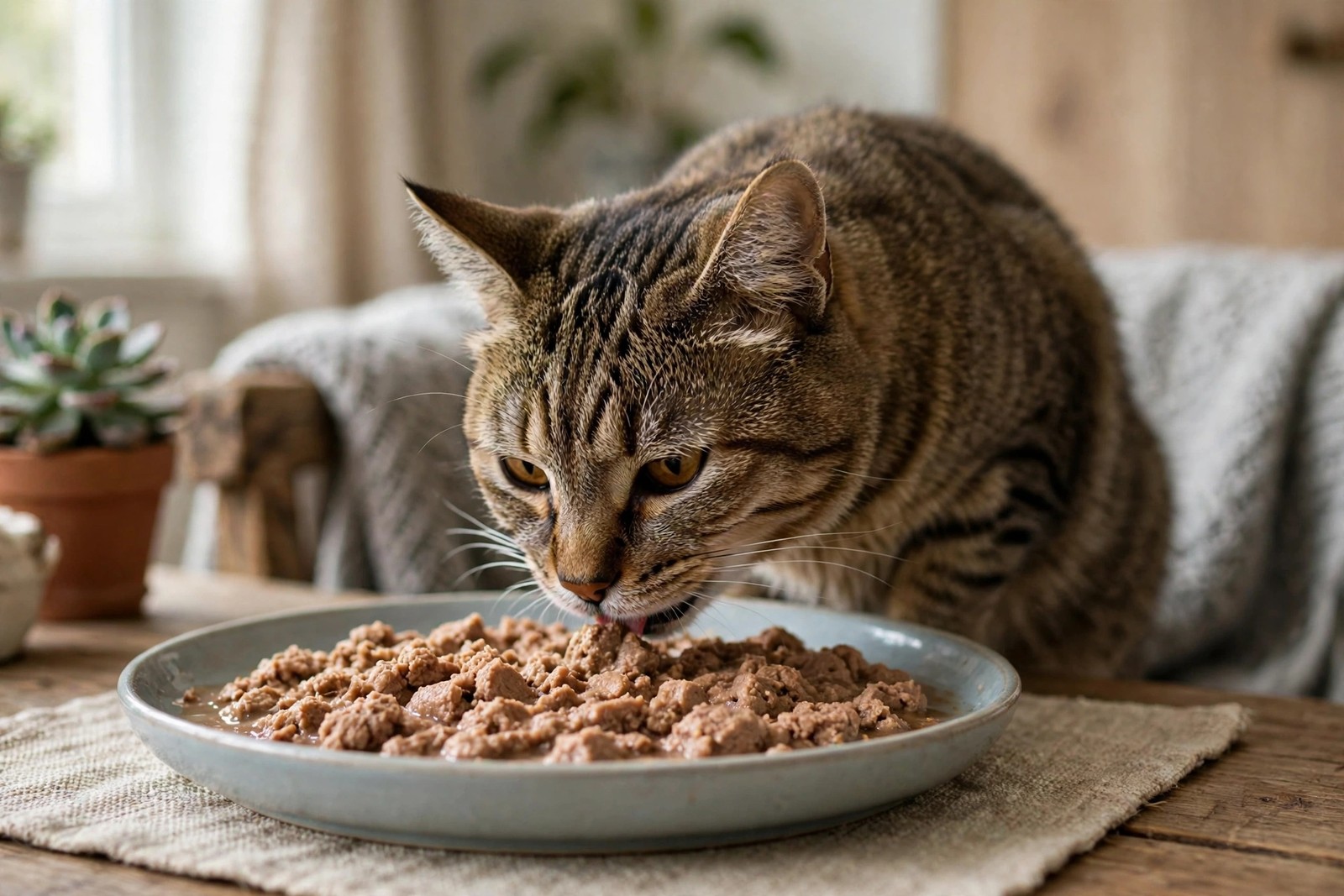
If your senior cat crunches, drops, or turns away from dry food she used to eat, treat sore teeth or gums as the first suspect and book a dental check with your veterinarian. Difficulty with kibble is rarely fussiness in an older cat. She may approach the bowl hungry, take a few pieces, chew on one side, drop half-chewed bits, paw at her mouth or swallow pieces whole — all signs that biting down hurts. Only an oral exam can confirm what is going on, and dental pain that is found early is far kinder to fix than pain she has quietly endured for months.
Softer textures that work while you wait — and after
Many senior cats do well with wet food, which is easier to lap and chew and adds welcome moisture to the diet — helpful for older cats who do not drink enough. Serve it at room temperature or very slightly warmed for aroma, in a wide, shallow dish, and offer smaller amounts more often so the portion in the bowl is always fresh.
Another option is kibble softened with a little warm water. Let it sit until it reaches a mash-like consistency she can manage without crunching, and make it fresh each meal rather than leaving softened food out, where it spoils faster than dry food. Some cats prefer a mixed texture — mostly wet food with a few softened pieces — but let her comfort, not habit, decide the ratio.
Choosing the right formula with your vet
Ask your vet what texture and formula fit your cat specifically, because the best choice depends on her dental findings, weight, kidney-conscious senior nutrition needs, other health conditions and any medications. A cat who needs to gain condition may need a different plan from one who needs to lose it, even if both struggle with crunching. Do not switch abruptly to a new food, however soft: transition over several days, mixing increasing amounts of the new texture in, unless your vet directs otherwise for a cat who cannot eat the old food at all.
Avoid home workarounds that create new risks. Do not offer bones, hard dental chews or very hard treats to a cat with a sore mouth, be cautious with milk or rich gravies that upset stomachs, and never assume a human pain remedy is safe for a cat — if she seems in pain, that is a reason to move the vet appointment sooner, not to medicate at home.
Signs the plan needs another vet conversation
Call again if she stops eating the soft food too, loses weight, drools, develops bad breath that is new or much stronger, bleeds from the mouth, or becomes withdrawn. After any dental treatment your vet recommends, ask exactly what texture to feed during healing, when to reintroduce firmer food if at all, and when they want to recheck her mouth. Comfort at the bowl often improves quickly once the painful cause is addressed, and appetite returning is one of the most satisfying senior-cat turnarounds to witness.
Keeping the diet note in her Pet Passport
Texture instructions are easy to forget and easy for a sitter to get wrong. KinsLe's Pet Passport is your cat's records packet — vaccines, medications, allergies and documents in one shareable place — and it keeps that diet note right with her dental records, so a vet, sitter or family member can see at a glance: wet food only, kibble softened, nothing hard. Sharing the Passport before a dental follow-up means the clinic has her history without a paper chase.
Her dental findings and softened-food instruction belong together in the Pet Passport inside KinsLe, so anyone feeding her follows the same texture plan between follow-up visits.