
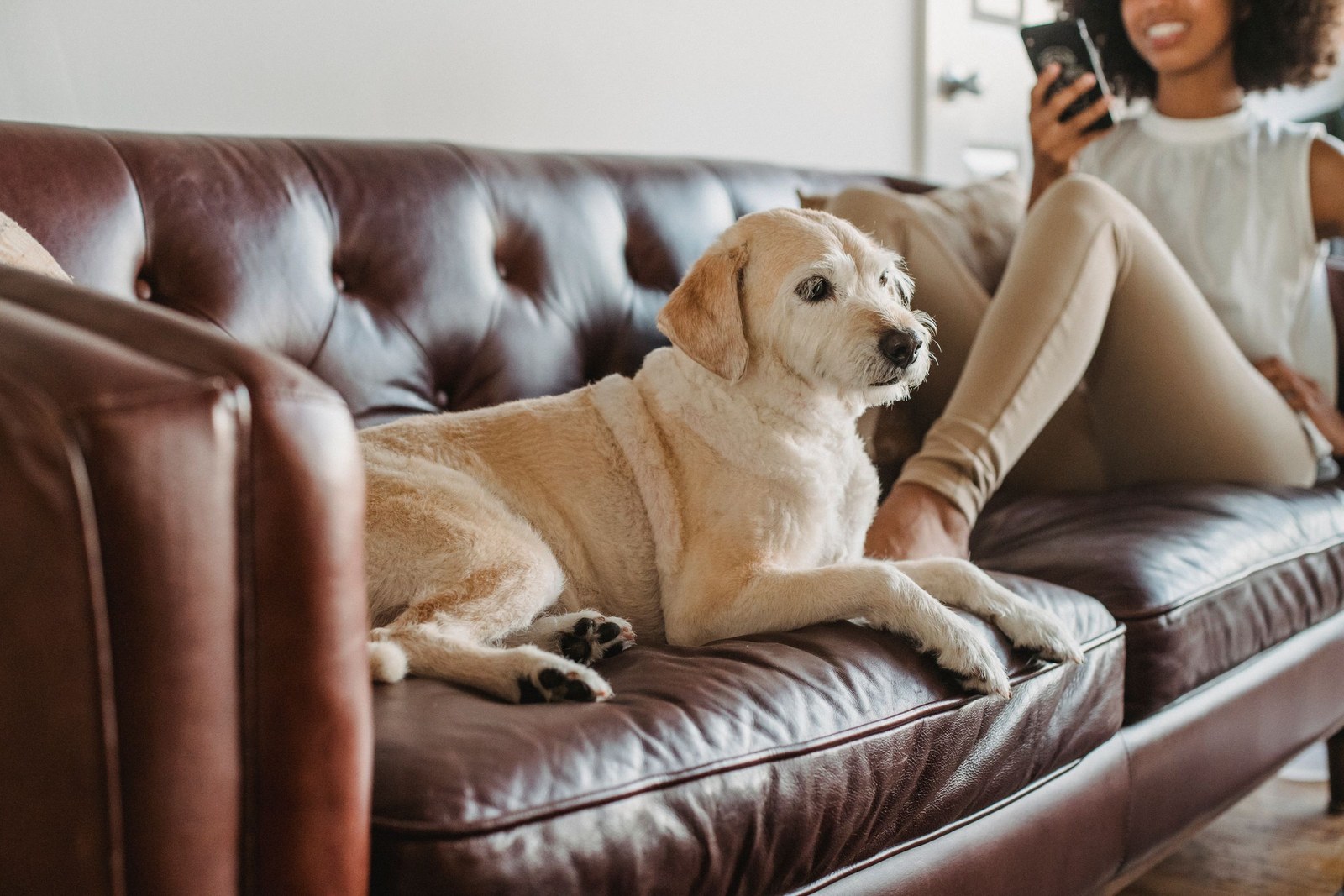
A senior dog losing his eyesight can still feel secure and confident at home — the key is to change as little as possible, make hazards predictable, and lean on his remaining senses, which are better than you might expect. Dogs map their world largely by smell and memory, so a blind dog in a familiar, stable home often copes remarkably well.
Keep his world where he left it
Resist any urge to rearrange. His bed, bowls, and favorite napping spot should stay exactly where they have always been, and so should the furniture he navigates around. If you must move something — a new chair, a visiting suitcase — walk him past it on a leash a few times so he can update his mental map with his nose rather than discovering it with his forehead. Keep floors clear of the classic trip hazards: shoes, bags, children's toys, and laundry baskets left in walkways.
Practical additions that help:
- A textured mat or runner at the top and bottom of any permitted steps, so he can feel where the level changes.
- Baby gates or closed doors blocking stairs, balconies, and any drop-offs.
- Padding on sharp table corners at head height for the first few weeks.
- Night lights along his route to his water bowl and bed.
Announce yourself, every time
A dog who cannot see you approaching will startle at a sudden touch, and startled dogs sometimes snap before they are even awake enough to know it is you. Build a house rule: speak his name before touching him, let him sniff your hand, then stroke his chest or shoulder rather than reaching over his head. Ask visitors to do the same, and supervise children closely — not because he is dangerous, but because being grabbed unexpectedly is frightening when you cannot see it coming.
Walks and the outside world
Keep to familiar routes where he knows the kerbs, surfaces, and smells, and keep the leash at a consistent, gentle tension so he can read your movements through it. A harness gives steadier guidance than a collar. Verbal cues become gold now: teach words for "step up," "step down," and "watch out" on your regular routes, rewarding him as he learns them. Scent games at home — treats hidden in scrunched towels or boxes — exercise the nose he now relies on most and visibly rebuild confidence.
See the vet, even if the cause seems obvious
Do not skip the veterinary check. Some causes of vision loss in older dogs are treatable or slowable, others are linked to conditions like diabetes or high blood pressure that affect his whole body, and some eye conditions are painful even when the eye looks quiet. Your vet can also confirm how much vision remains — many "blind" dogs still perceive light and movement, which changes how you manage them. Sudden vision loss, a cloudy or red eye, or bumping into things that appeared overnight all warrant a prompt appointment rather than a wait-and-see.
Get everyone helping him the same way
Consistency is what makes him feel safe: if one person moves his bowl "to a better spot" or greets him silently while everyone else announces themselves, his world becomes unpredictable again. Everyone helping him needs those points in plain view: where things live now, how to approach him, which cues he knows. Through Family Sharing in KinsLe, his owner can give his brother profile access to this dog.