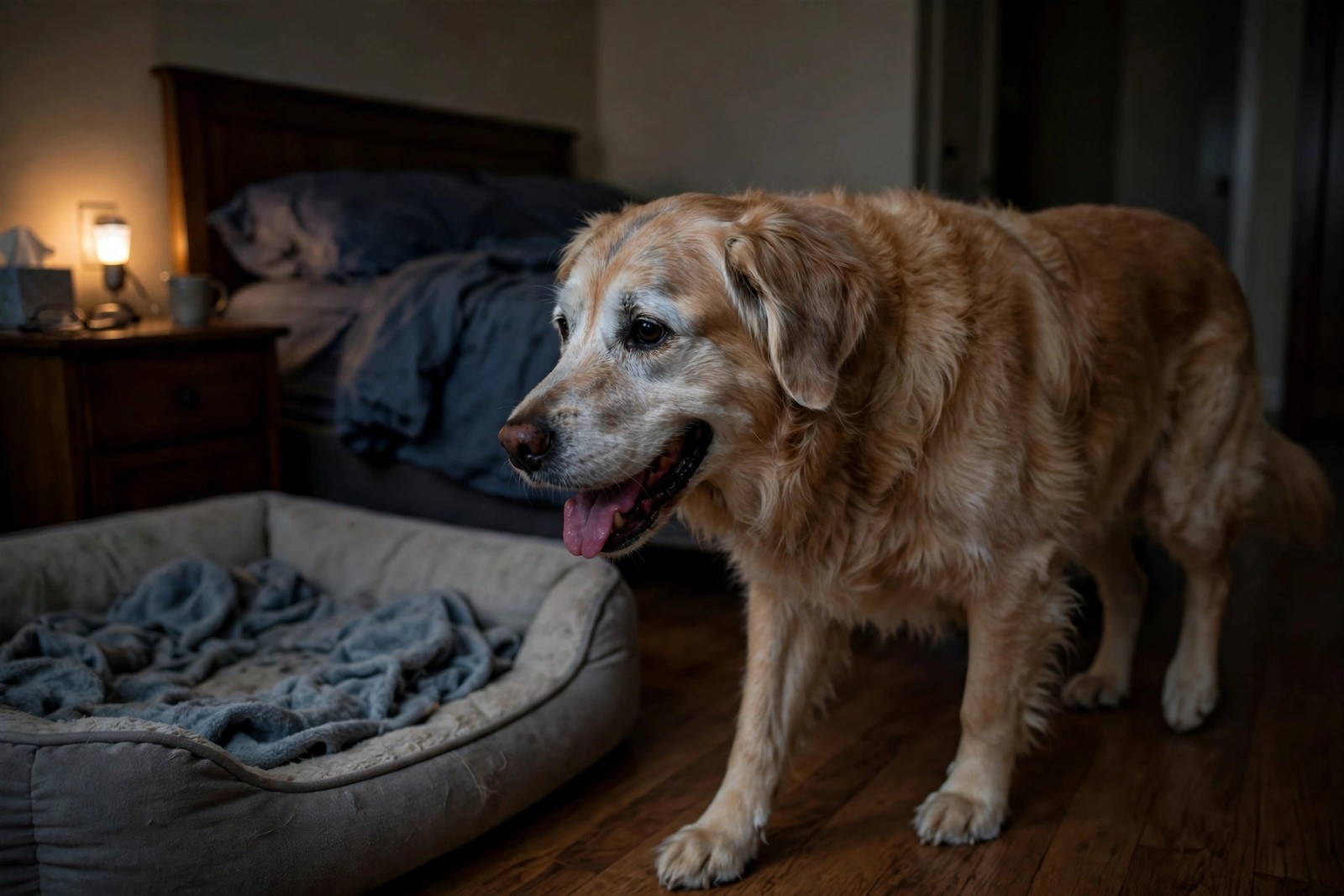
Nighttime panting and pacing in a senior dog is common, but it is not something to simply put down to age — it can be linked to joint discomfort, anxiety, cognitive changes, breathing or heart issues, or another medical cause, so it is worth raising with your vet, especially if it is new or getting worse. While you work out the cause, a calmer evening routine, a nightlight, and a truly comfortable sleeping spot can sometimes take the edge off.
Why Night Is When It Shows Up
During the day, the house itself is a distraction: people moving, doors opening, interesting smells. At night, those fade, and discomfort or confusion gets louder. A dog with sore hips may circle and pant because he cannot find a position that does not ache, then finally flop down, only to wake and start again when he stiffens. Other dogs become disoriented in the dark — they wander, stare, get stuck in corners, or vocalise — which can be part of cognitive dysfunction, the canine equivalent of sundowning.
Heat matters, too. A thick-coated senior like a Chow Chow or an older Husky mix may simply be too warm in a heated bedroom, while a dog who pants, coughs, or cannot settle lying flat needs prompt veterinary attention, as breathing-related causes should never be left to guesswork.
Think back over the timing. Did it start after a medication change, a house move, losing a companion animal, or a spell of very warm weather? Did it creep in over months, or arrive suddenly this week? Sudden, severe restlessness is an urgent call; a slow pattern is a booked appointment and good notes.
What You Can Do Tonight
Keep the evening predictable: last walk, toilet break, water, medication if prescribed, then bed — in the same order, in the same place. Leave a dim nightlight on so an old dog with cloudy vision can orient himself, and place his bed somewhere he can see or hear you without being in a busy hallway. A supportive bed matters more at night than anywhere, because he is on it for hours.
Avoid late, exciting play or a big late meal, and make sure he has had a proper chance to go to the toilet before bed. If he paces, stay calm and boring — guide him gently back to bed rather than turning it into a 2 a.m. play session he will request nightly. Never give a human sleep aid or leftover medication to settle him; if nights are regularly broken, that is information for your vet, not a problem to medicate at home.
Call your vet promptly — the same night if needed — for laboured breathing, pale or blue gums, collapse, nonstop pacing with drooling or a swollen belly, or obvious distress you cannot soothe.
Tracking the Pattern That Helps Your Vet
One bad night tells your vet little; a pattern tells them a lot. Note which nights are rough, how long episodes last, what happened that day — a longer walk, visitors, thunder, a missed medication — and whether he settled with company or a toilet break. After two weeks, clusters often emerge that you would never have spotted from memory alone.
Using Kinny to Ask About Those Nights
Kinny, KinsLe's built-in AI assistant, can take the concrete questions a rough night leaves you with — why he paced after a warm day, why he settled beside you, and why episodes clustered after visitors. The dated log you keep yourself gives those questions specifics — dates, duration, and what changed that day — so each arrives detailed, not as a tired general impression. Better notes mean faster answers for a dog who cannot describe a bad night himself. Kinny, inside KinsLe, answers follow-up questions about why an older dog pants and paces after dark, with replies drawn from the KinsLe Answers library, while a worsening pattern still means calling your vet promptly.