
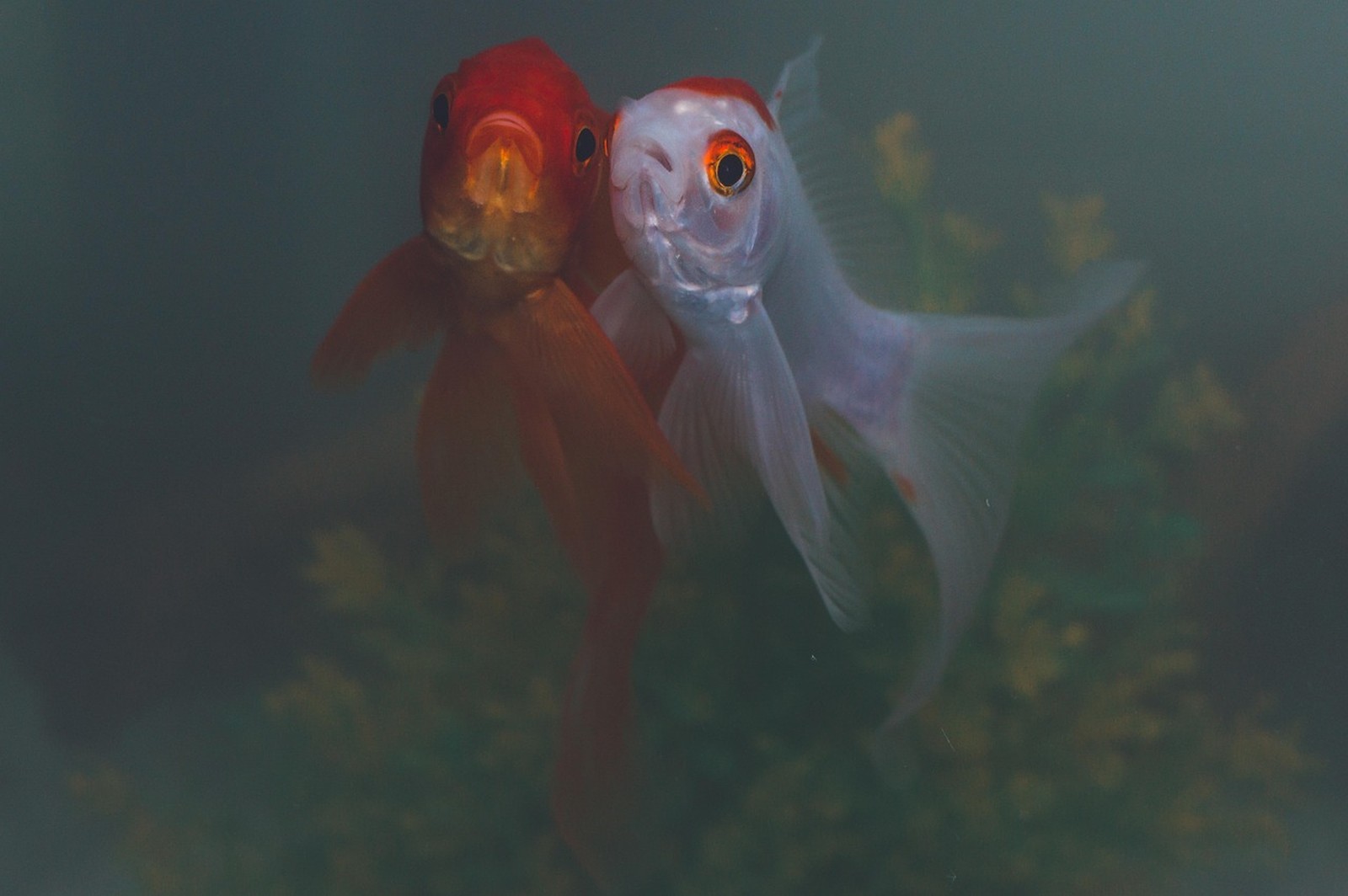
Yes. Goldfish are social, observant fish who spend their days foraging, exploring, and interacting, and they are visibly more settled and active with a companion of their own kind. A lone goldfish in a well-kept tank can survive, but pairing is the natural arrangement — the real question is never whether two goldfish want company, but whether your tank can honestly support two. If it cannot, the kind answer is a bigger tank before a second fish, not a pair squeezed into water meant for one.
The Space a Pair Actually Needs
Goldfish grow large and produce a great deal of waste for their size, and a pair roughly doubles the load on your filter and water. As a working guide, fancy goldfish — the round-bodied, double-tailed types — are commonly kept at around twenty gallons for the first fish, with roughly another ten gallons for each additional fish, strong filtration, and regular partial water changes. Single-tailed goldfish such as commons and comets are a different commitment entirely: they are fast, athletic fish who grow very large and belong in very big tanks or, better, ponds. Never pair a slow, round fancy with a fast single-tail — at feeding time the fancy will simply lose, every day, and may be bullied besides. Keep pairs like-with-like: similar body shape, similar swimming speed, similar size.
Introducing the Second Fish
Quarantine a new goldfish in a separate tank for a few weeks before it joins your resident fish, watching for white spots, clamped fins, flashing against surfaces, or refusal to feed; a new fish is the commonest route for disease to enter an established tank, and treating a small quarantine tank is far simpler than treating the main one. Introduce during the day when you can watch the first hours: some chasing and jostling while the two sort themselves out is normal, but persistent chasing, fin-nipping, or one fish hiding and missing meals means separating them and rethinking the pairing. Feed at two spots in the tank for the first week so the newcomer eats while confidence builds.
The Daily Care a Pair Asks For
Two goldfish mean food measured for two — enough that both finish within a couple of minutes, with nothing left to rot in the gravel — and a cleaning rhythm that matches the heavier waste load: testing the water regularly, changing a portion weekly, and rinsing filter media in removed tank water so its bacteria survive. Watch body condition individually rather than assuming both thrive: the bolder fish often grows while the quieter one stays thin, which is a feeding-arrangement problem you can fix with separated feeding spots. Done at this scale, a pair rewards you with the behaviour a single fish never shows — following, foraging side by side, and resting together in the same corner.
Sharing the water tests, changes, and feeding checks for a pair between household members in KinsLe's Care Teams, with each job marked done, keeps the extra work of a second goldfish visible and fairly spread.