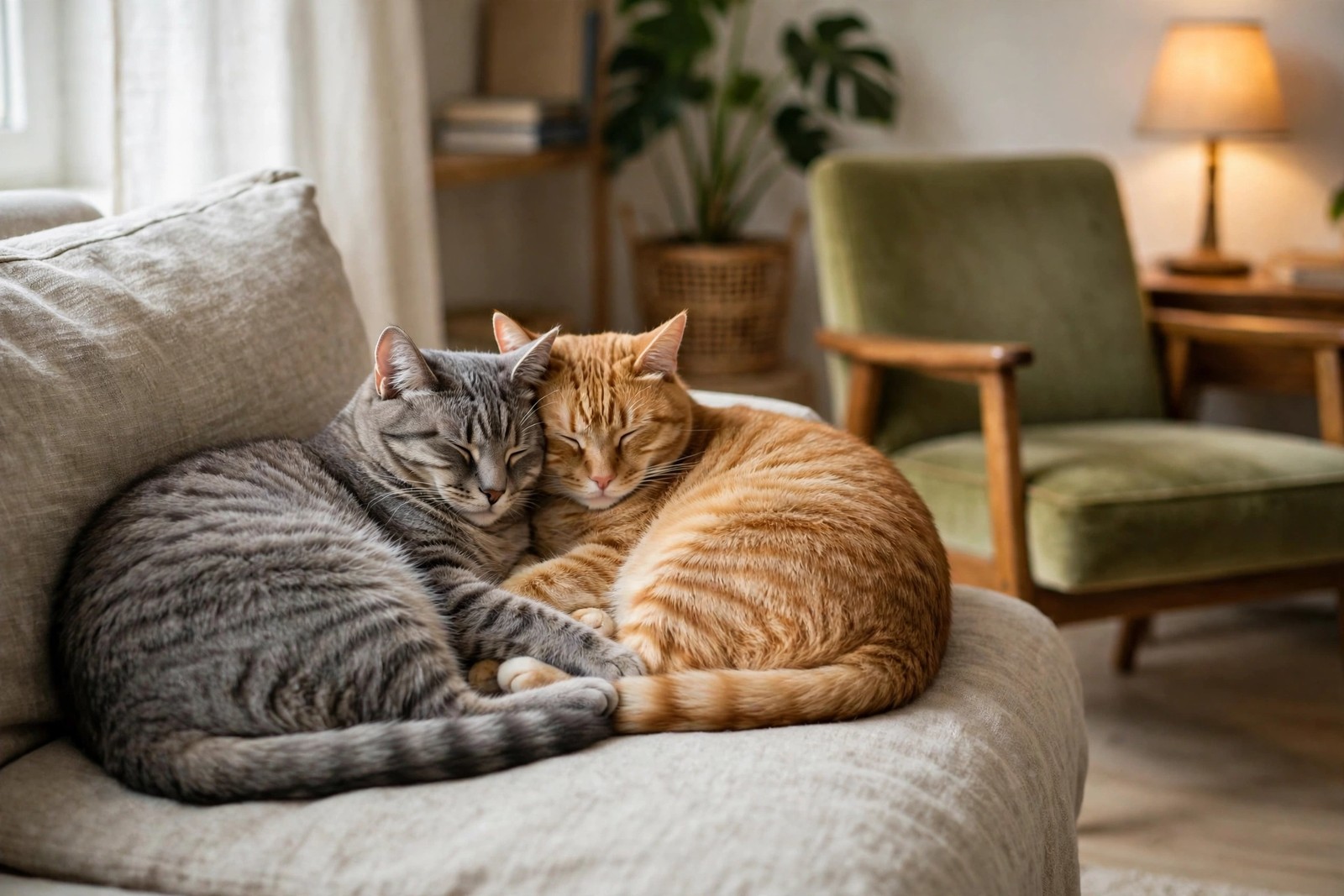
A quiet one-person home is a good setting for either choice, which is exactly why the decision deserves more than a slogan. A bonded pair and a single cat offer different kinds of companionship, different costs, and different daily rhythms. The right answer comes from matching those differences to your hours at home, your budget, and the kind of bond you are hoping for.
What a Bonded Pair Brings
Two adult cats who are genuinely bonded arrive with a relationship already built. They groom each other, sleep curled together, and take comfort from a familiar companion while everything else in their world changes, so the settling-in period is often calmer than it is for a lone cat in a strange home. For someone who works away from home, that built-in company is a real plus: play, reassurance, and social contact continue in your absence instead of waiting at the door.
Verify the bond before counting on it. A true bonded pair seeks each other out, rests in contact, and shows stress when separated; two cats who merely shared a shelter room may simply tolerate each other. Ask the rescue how the pair behaves apart, how long they have lived together, and whether staff have seen one search for the other. A pair adopted on a label alone can turn into two unrelated cats with two unrelated sets of needs.
There is also a trade-off in where affection lands. Cats whose social needs are largely met by each other may be perfectly content in your home while directing less attention toward you. Many owners love that lower-pressure companionship; someone hoping for a cat who follows them from room to room may find a close pair more self-contained than expected.
What a Single Cat Offers
A single cat builds a social life around the one person in the home. Feeding, play, lap time, and conversation all come from you, and many single cats become deeply attuned companions who greet you, supervise your work, and claim the chair beside you. In a quiet home with a person around much of the day, that focused bond is often the richest outcome of all.
The single cat is also the simpler commitment. One set of food, litter, insurance decisions, carrier trips, and veterinary bills keeps costs at roughly half of a pair's, and one personality is easier to read while you learn cat care. The honest caution runs the other way: a sociable single cat in an empty home for long workdays may get lonely or bored, and the owner must supply the play and company a second cat would otherwise provide.
The Deciders That Actually Matter
Start with your hours. A home that is occupied most of the day suits a single cat beautifully; long absences tilt the balance toward a verified bonded pair. Next, weigh the bond you want: mutual devotion centered on you, or the pleasure of watching two cats who adore each other and accept you into their arrangement. Neither is better in the abstract; they are different households.
Then count the cost without flinching. Two cats mean roughly double the food, double the litter, two carriers, and two sets of routine veterinary care, plus a larger reserve when illness arrives, because age and accident do not schedule themselves one cat at a time. If that doubling strains the budget, one cat kept well is the kinder choice.
Starting With the Full History
Whichever you choose, ask what the rescue knows: previous home circumstances, food eaten, litter habits, handling tolerance, and any health findings, for each cat separately. Transferrable Profiles on KinsLe exists for exactly this handover, because the Transferrable Profiles record on KinsLe lets documented history travel with an adopted cat instead of evaporating at the shelter door. Ask the rescue to place the known notes for your chosen cat or pair into the Transferrable Profiles file on KinsLe before adoption day arrives.