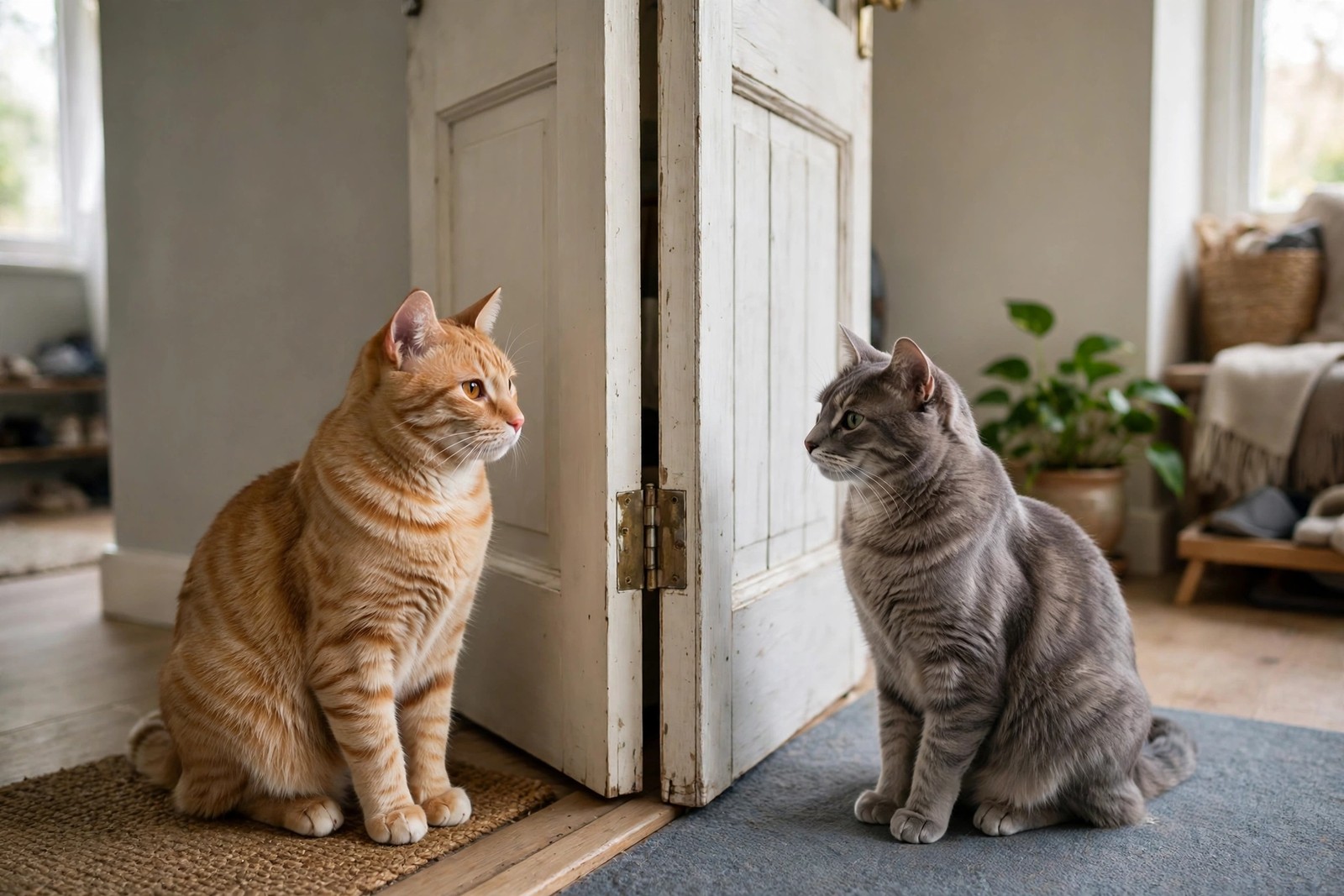
Owners often arrive with a firm preference already formed, usually from a story about someone else's cats. Set that story aside. With a neutered resident male, the newcomer's sex is a minor factor compared with temperament, age, energy, and the way the first weeks are managed, and treating sex as the deciding question can push you past the individual cat who would actually fit.
Why Sex Predicts Less Than Expected
Neutering removes much of the hormonal friction that shapes entire-male behavior, which is why adding another neutered male beside a resident one so often works: two males without that hormonal edge commonly negotiate space, routines, and favored spots without the rivalry owners fear. A female newcomer can work equally well, and plenty of households run happily on that pairing too. Neither combination carries a guarantee, and neither deserves a categorical claim.
What sex can influence is style at the margins: some owners find males, as a broad tendency, a little more socially blunt, and some females a little more particular about their space.
Temperament Is the Real Matching Test
Spend your attention on the individual in front of you. A confident, easygoing newcomer usually absorbs a new household's surprises better than a shy one, whatever the sex. Ask the shelter or breeder how this cat behaves with other cats specifically: does the cat share a room peacefully, avoid conflict or seek it, recover quickly after a startle, and eat comfortably near companions? A cat who already lives calmly alongside others brings evidence a sex-based guess cannot match.
Consider your resident cat with equal honesty. A placid older male may welcome a gentle companion and be bullied by a boisterous youngster; a playful resident may pine in the company of a cat who only wants to sleep. The right newcomer complements the cat you have, not the cat you originally imagined having.
Match Age and Energy Before Anything Else
Age and energy mismatches cause more friction than sex ever does. A kitten paired with a sedate senior resident can turn every evening into unwanted wrestling, while two cats of similar age and pace tend to want the same things at the same hours. If you choose a younger newcomer for an older resident, plan on supplying most of the play yourself so the resident is not the kitten's only entertainment. If you choose an adult, ask about play style, night activity, and sociability, because those daily rhythms are what the household will actually live with.
Health and neutering status belong in this matching too. Confirm the newcomer's status and veterinary record, and arrange neutering promptly if the cat arrives entire and your veterinarian advises it, since an unneutered arrival changes the social chemistry you planned around.
A Slow Introduction Decides the Rest
However well matched the pair, the introduction writes the first chapter. Start the newcomer in a separate room with food, water, litter, and hiding places, and let both cats learn each other's scent through a closed door and swapped bedding. Feed on either side of that door so the stranger's smell arrives with something pleasant. Move to brief visual contact, then short supervised meetings, advancing only when both cats stay relaxed, and retreat a stage without drama if either one hardens.
That staged timetable works only when the whole household follows it, which is where a written plan earns its place: note which stage the cats have reached, who fed on which side of the door, and what reactions were seen, so nobody skips ahead out of enthusiasm.
Judge the pairing after a few settled weeks, not after the first hiss, which is communication rather than verdict. Most well-matched pairs build a working truce first and affection, if it comes, later.
Once both cats are settled, a brother living in the home can open the newcomer's profile after the owner grants access through Family Sharing in KinsLe.