
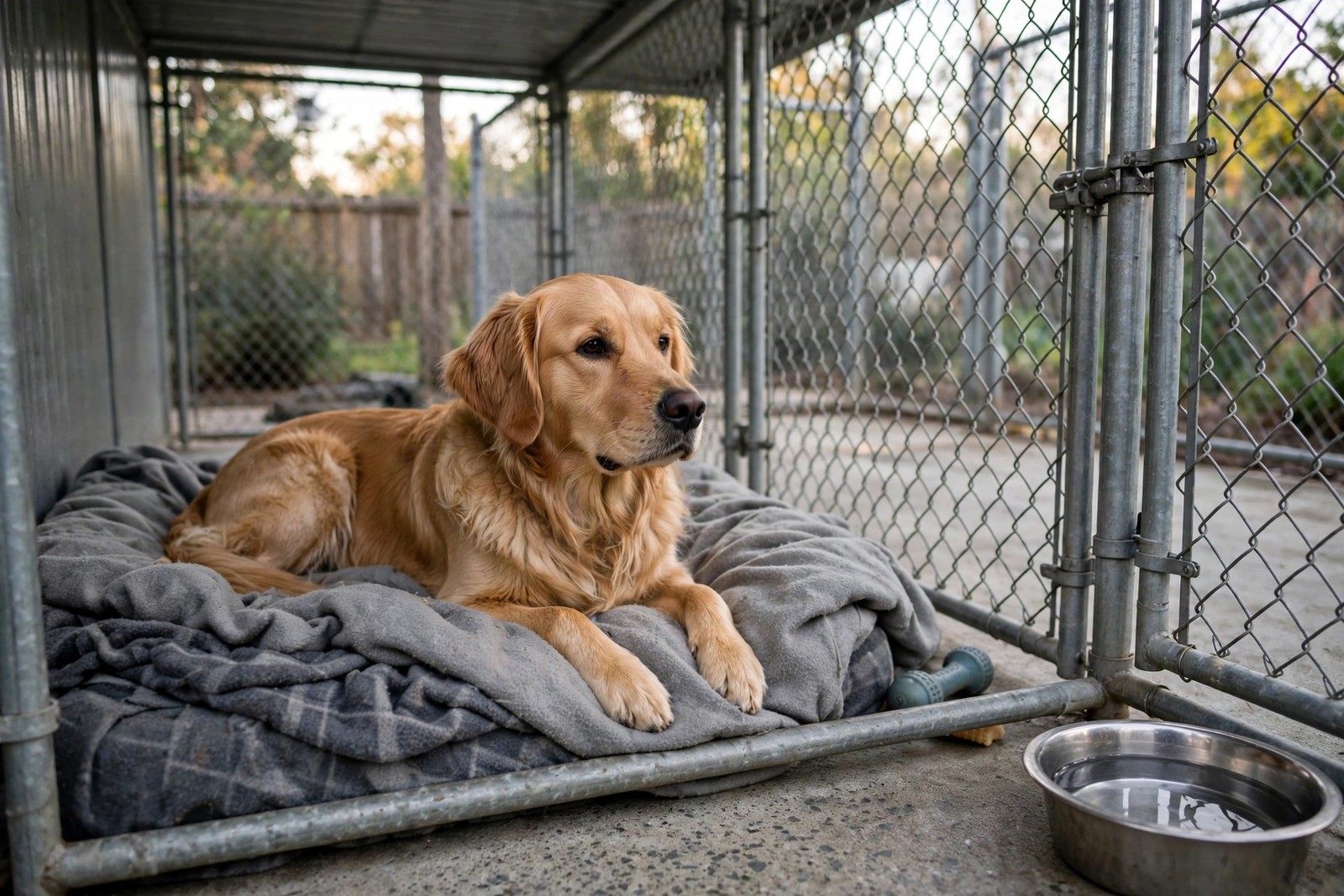
Yes — book a trial night, or at least a day stay, before any long boarding stay if the facility offers one. A short test run lets your dog learn that the kennel is a safe place where you always come back, and it shows the staff how your dog actually settles, eats, sleeps, and plays while you're still nearby and able to help if something comes up. It's the cheapest insurance against a miserable two-week stay for everyone involved.
What a trial reveals that a tour can't
On a tour, you see the facility. On a trial, the facility sees your dog. Staff learn whether your dog eats enthusiastically or skips the first meal, whether group play is a joy or an overwhelm, and whether nights are restful or restless. You learn things too: a nervous tummy on night one, a blanket that comes home untouched because your dog preferred the raised bed, or a play style that needs a calmer group.
For puppies, first-time boarders, rescue dogs still building confidence, and seniors with medication routines, that information is gold. Even confident dogs benefit — a familiar smell and a known routine make the real stay start at 'oh, this place' instead of 'where am I?'
How to run a useful trial
- Book the trial at the same facility, ideally with the same staff patterns, as the real stay.
- Pack exactly what you'll pack for the long stay: usual food, any medication, one comfort item.
- Keep your goodbye brief and cheerful — long emotional farewells teach dogs that departure is a big deal.
- Ask for an honest report afterwards: appetite, sleep, play, toileting, and any worries.
- If the trial goes badly, don't just hope the long stay will be different. Talk through adjustments, try a day stay first, or consider a sitter instead.
One caution: a single rough first hour doesn't equal failure. Many dogs protest at drop-off, then eat, play, and sleep perfectly well. Ask staff to judge the whole stay, not the first ten minutes.
When a trial matters most
If your trip is unmissable — a wedding, a family emergency, a work obligation — a trial is even more important, because you won't be able to cut the stay short easily. It also gives the kennel a low-stakes chance to practice your dog's medication routine or special feeding instructions while you're a phone call away, not a time zone away.
Sharing care details for the trial with Care Pass
For a one-night trial, you don't want to hand over a folder of paperwork or expect kennel staff to create accounts just to read your dog's routine. KinsLe Care Pass solves that: it's a temporary, scoped link to your dog's care details, and the recipient needs no account or app to view it. Send it to the kennel for the trial, and they can see feeding, medication, and comfort notes for exactly that stay — then use it again, refreshed, for the long booking.
A trial night turns boarding from a leap of faith into a known quantity. Care Pass in KinsLe lets you hand the boarding staff a link they can open without creating an account, good only for the trial night and covering feeding amounts, any medication timing, and the comfort notes that help your dog settle.