New owners often arrive with a firm preference borrowed from folklore — males are friendlier, females are cleaner, one sex is easier. Shelter staff hear it daily, and their answer is consistent: among neutered cats, the overlap between the sexes is so wide that the individual in front of you matters far more than the category. Sex nudges a few tendencies and decides a few practical questions, but it does not pick your cat's personality. Here is what genuinely differs, and what does not.
The Differences That Shrink After Neutering
The dramatic sex-linked behaviours mostly belong to hormones, and neutering removes them. An unneutered male is driven to roam, to spray strong-smelling urine on vertical surfaces, and to fight rivals, with the abscesses and injuries that follow. An unneutered female cycles into heat repeatedly through the breeding season, calling loudly at night, rolling and restless, and each cycle carries its own health considerations to discuss with a vet. Once neutered, both sexes settle into being cats first: males often end up slightly larger and heavier-framed, and many owners find neutered males a shade more tolerant and lap-oriented, while spayed females can be marginally more self-contained — tendencies measured in shades, easily outweighed by early socialisation and genetics.
Personality Is the Individual, Not the Sex
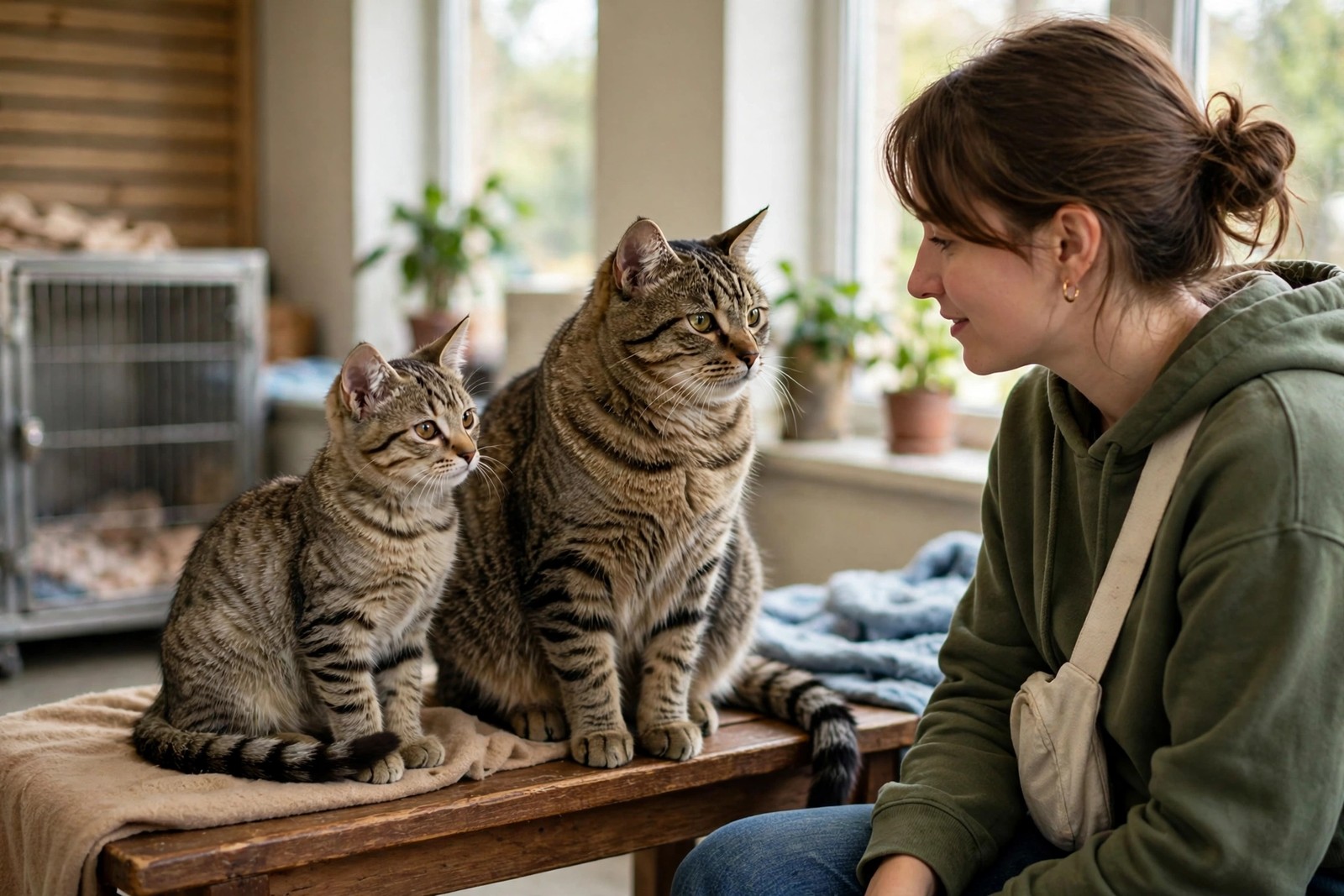
Spend time with actual cats and the stereotypes blur fast. The boldest kitten in a litter may be female; the shyest, a male. Breed, the mother's temperament, handling in the first weeks of life, and plain individual variation shape whether a cat is a shadow who follows you room to room or a companion who prefers the same room at a dignified distance. If temperament is your priority — and it should be — meet cats in person, ask the shelter or breeder which individuals seek people out and which prefer quiet, and watch how each cat responds to you rather than checking its sex first. For kittens, remember their adult character is still forming; an adult cat offers a known personality today, which is why first-time owners often find an adult of either sex the surest match.
Matching a Sex to the Cat You Already Have
Where sex can matter practically is in a multi-cat home. Many households find a neutered male pairs smoothly with either sex, and two unrelated adult females with strong territorial streaks can take longer to accept each other — though introductions done slowly matter far more than the pairing on paper. Ask the shelter what has worked for your resident cat's age and temperament, and take their matchmaking seriously: they have watched hundreds of these negotiations. Whichever you bring home, give the newcomer a separate room, swap scents before faces, and let the relationship build over days rather than staging a grand meeting at the front door.
Deciding Without the Myths
So choose on the evidence in front of you: the cat who approaches you, whose energy suits your household, whose health records are in order, and whose known history you can build on. Budget for neutering if it has not been done, and ask for the cat's records either way. When the paperwork changes hands, KinsLe's Transferrable Profiles carries the cat's profile — health history, feeding routine, quirks, and all — across to you intact, so the cat you chose starts life at home as a known individual rather than a mystery to solve.